
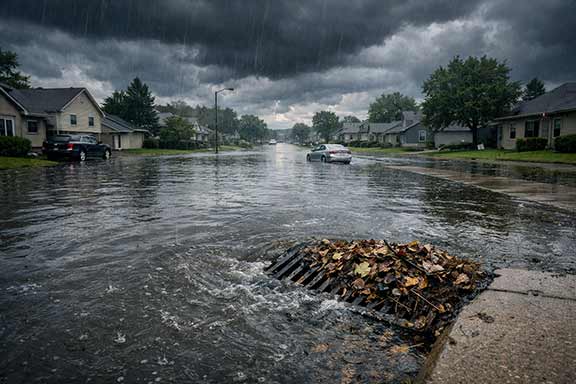
Catch basin cleaning and pumping is one of the most overlooked aspects of property maintenance in the Chicago area — and one of the most consequential when it gets neglected. A catch basin that hasn’t been serviced in years doesn’t fail gradually and politely. It backs up during a heavy rain event, sends water where it shouldn’t go, and turns a routine maintenance expense into an emergency repair bill.
Whether you own a single-family home, a commercial property, or manage a parking lot anywhere in Chicagoland, your catch basins are handling significant stormwater volume every time the sky opens up. This guide covers why regular cleaning matters, what happens when it’s ignored, and what property owners can do to stay ahead of the problem before the next major storm puts their drainage system to the test.
Understanding How Catch Basins Work
A catch basin — also called a storm drain or curb inlet — is designed to collect surface water runoff from driveways, parking lots, and other hard surfaces and direct it into the underground drainage system before it pools where it doesn’t belong. Most are positioned at the lowest point of a drainage area and consist of a surface grate, an inlet chamber, and a sump below. Rainwater flows through the grate, large debris gets filtered out, and water moves down into the sump where sediment and fine particles settle to the bottom before cleaned water exits through the outlet pipe.
The sediment that settles in the sump doesn’t go anywhere on its own — it stays there and accumulates until the basin is professionally cleaned. A catch basin can look completely clear from the surface while the sump below is nearly full of compacted sediment, grease, and debris. Most property owners have no idea there’s a problem until a heavy rain event exposes it. At that point the basin can no longer move water fast enough and the result is exactly what a catch basin is supposed to prevent — stormwater backing up onto the property instead of draining away from it.
The Critical Importance of Regular Catch Basin Cleaning and Pumping
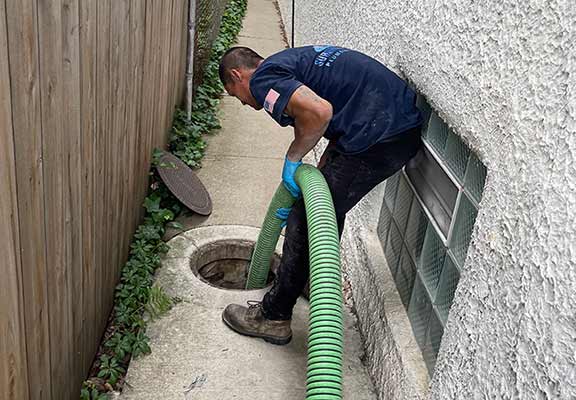
Regular catch basin cleaning and pumping is the single most effective way to maintain your drainage system and protect your property from water damage. When sediment accumulates and isn’t removed, the consequences escalate quickly — and so do the costs. Catch basin pumping removes the liquid waste and built-up sludge from the sump using a vacuum truck, while cleaning blasts the inlet, walls, and connected pipes with high-pressure water to restore full drainage capacity. Together, these services keep the entire system flowing the way it was designed to.
Drainage capacity doesn’t decline gradually — it drops sharply once the sump reaches the 50–60% fill mark, which is exactly the threshold most property owners never see because it’s below ground. By the time a basin is 75% full, it’s operating at a fraction of its design capacity, making even a moderate rain event a flooding risk. If you notice standing water around your catch basin grate after a moderate rain — not a major storm — your sump is likely approaching the critical fill threshold. This is also when catch basin repair or full restoration may be needed if the problem has been building for years.
Preventing Water Damage Through Effective Catch Basin Maintenance
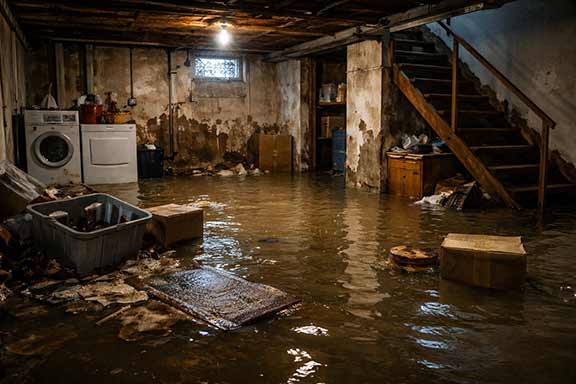
One of the most compelling arguments for regular catch basin cleaning is purely financial. Routine maintenance is among the lowest-cost services a Chicagoland plumber performs — and it prevents some of the most expensive damage a property can sustain. Water damage isn’t just about mopping up after a flood. It triggers a chain of consequences: warped flooring, ruined drywall, mold growth, structural deterioration, foundation compromise, and damaged HVAC systems.
Consider the cost difference: a routine professional cleaning runs about $400-600, while basement flood cleanup, mold remediation, foundation repair, and catch basin reconstruction can each run well into the thousands or tens of thousands. Scheduling routine catch basin cleaning and pumping one to two times per year is the most cost-effective drainage investment available to any property owner in the Chicago area. Beyond direct repair costs, water damage affects property values, triggers insurance claims that raise premiums, and in commercial settings can mean business interruption and significant liability exposure.
Ensuring Efficient Drainage Systems Through Regular Maintenance
Catch basins don’t operate in isolation. They’re the entry point to a larger underground drainage network — and when they’re compromised, the entire system suffers. A clogged catch basin forces water and debris into the connected pipe network, causing blockages, pipe stress, and accelerated deterioration that’s expensive and disruptive to repair. For commercial properties, parking lots, and multi-unit residential buildings in Chicagoland, this risk is compounded by higher surface runoff volumes, more foot and vehicle traffic generating debris, and greater liability exposure if flooding affects tenants or customers.
Watch for these signs that your drainage system may already be compromised: water pooling around the grate even during light rain, drainage that’s noticeably slower after storms, foul odors near the basin, visible sediment or debris built up around the grate, pavement erosion or soft spots nearby, or a service gap of more than 12 months since your last professional cleaning. If you’re checking multiple boxes, it’s time to call a licensed Chicagoland plumber who specializes in catch basin cleaning and pumping. The longer the situation goes unaddressed, the more likely you are to need catch basin repair — or full reconstruction — rather than a simple routine cleaning.
Seasonal Considerations for Catch Basin Cleaning in Chicagoland
Chicago’s weather puts catch basin systems through more stress across a single year than most property owners realize — and each season creates its own set of drainage challenges worth understanding.
Spring brings heavy snowmelt and rainfall landing on basins that are already carrying winter’s worth of accumulated debris. Frost heave can also damage basin walls over the winter months, making a professional cleaning and inspection before peak rain season one of the smartest maintenance moves a property owner can make.
Summer thunderstorms and flash flooding events are common across the Chicago area from June through August and put significant demand on drainage systems in a short period of time. Inspecting grates after major storms and addressing any odors promptly matters during this season — heat accelerates decomposition in the sump and a basin that smells in July is telling you something.
Fall is the single most critical season for catch basin maintenance in this market. Leaf drop is the fastest driver of clogging we see all year and a basin that was functioning fine in September can be significantly compromised by November. Scheduling your cleaning in October before the ground freezes is strongly recommended — once temperatures drop professional service becomes more difficult and the problem sits until spring.
Winter road salt, sand, and ice melt grit all accumulate in sumps throughout the cold months while ice formation can crack basin walls and grates. Monitoring during thaw events and planning early spring service before the rain season arrives puts you ahead of the problem rather than reacting to it.
For most Chicagoland properties, the optimal schedule is two professional cleanings per year: one in late spring (April–May) and one in late fall (October–November), covering the highest-risk periods and keeping the system operating efficiently year-round.
When Cleaning Isn’t Enough: Catch Basin Repair and Restoration
Routine catch basin cleaning and pumping restores drainage flow — but it can’t fix structural damage. Years of neglect, ground movement, freeze-thaw cycles, and heavy vehicle traffic can all compromise the physical integrity of a catch basin, and when that happens cleaning alone won’t solve the problem.
Common structural issues we encounter on catch basin calls throughout Chicagoland include cracked or deteriorating concrete walls from freeze-thaw stress, damaged or missing grates that create safety hazards and allow large debris into the system, collapsed or offset inlet and outlet pipes from ground shifting or root intrusion, sinkhole formation around the basin indicating soil erosion beneath the surface, and frame settlement that causes water to flow around the drain rather than into it.
A licensed plumber with catch basin experience will assess structural condition at every service visit — and catching damage early makes an enormous difference in what the fix costs. A small crack or a deteriorating mortar joint addressed promptly is a straightforward catch basin repair rather than a full replacement conversation. Having the outlet pipe assessed during your next service visit is one of the best investments you can make — a minor blockage or offset pipe found early can save thousands in emergency repair costs down the road.
Benefits of Professional Catch Basin Cleaning Services
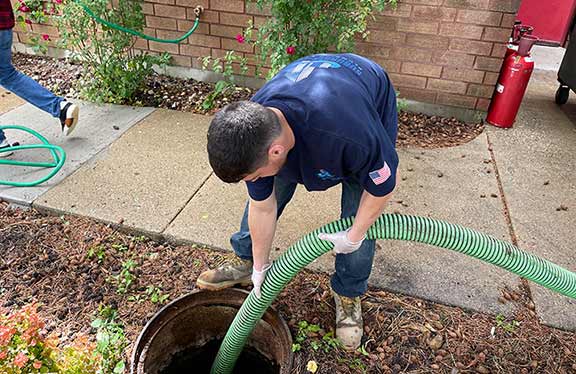
True catch basin cleaning and pumping requires specialized equipment and expertise that goes well beyond what any property owner can achieve with a shovel and a bucket. A professional service includes industrial vacuum truck pumping that removes hundreds of gallons of liquid waste and compacted sludge in a single visit, high-pressure hydro-jetting that blasts sediment and debris from basin walls and connected pipes to restore full flow capacity, camera inspection to identify cracks and structural issues not visible from the surface, a full structural assessment that flags any issues requiring catch basin repair, compliant waste disposal handled per Illinois EPA regulations, and a written service report documenting everything for your property records.
Between professional visits, property owners can help by clearing leaves and debris from around the grate regularly, carefully scooping out any material visible at the top of the sump, bagging all waste for proper disposal rather than sweeping it into the street, and scheduling a professional cleaning immediately if the sump appears more than halfway full or any structural concerns are spotted.
Choosing the Right Catch Basin Cleaning Service in Chicagoland
Not every plumbing company offers dedicated catch basin cleaning and pumping, and among those that do, experience and equipment vary widely. When selecting a provider, look for a valid Illinois plumbing license and active liability insurance, specific experience with catch basin cleaning and pumping equipment, knowledge of local Chicagoland soil conditions and Illinois EPA disposal requirements, transparent upfront pricing with firm quotes before work begins, verified Google reviews from customers in your specific area, and written service reports that document everything from waste removed to issues observed and next steps recommended. A Chicagoland plumber who checks all of these boxes will not only perform a better cleaning — they’ll also be positioned to identify and address catch basin repair needs before they become major expenses.
Frequently Asked Questions About Catch Basin Cleaning in Chicagoland
How often should catch basins be cleaned and pumped in the Chicago area? Most residential and commercial properties benefit from professional catch basin cleaning and pumping one to two times per year. Scheduling service in late spring and again in late fall provides the best year-round protection, though properties near heavy tree cover or high-traffic commercial lots may require more frequent service.
What’s the difference between catch basin cleaning and catch basin pumping? Catch basin pumping refers specifically to removing liquid waste and accumulated sludge from the sump using a vacuum truck. Catch basin cleaning is a broader service that includes pumping plus high-pressure hydro-jetting of the basin walls and outlet pipes to restore full drainage capacity. A complete professional service includes both.
Who is responsible for catch basin maintenance — the property owner or the municipality? In most Chicagoland municipalities, catch basins on private property or within a private parking lot are the property owner’s responsibility. Basins in the public right-of-way are typically handled by the city or village. When in doubt, contact your local public works department.
Can a clogged catch basin cause basement flooding? Yes — and it’s one of the most common causes of preventable basement flooding in the Chicago area. When stormwater can’t drain through a clogged catch basin, it seeks any available path including foundation walls, window wells, and basement floor drains. Regular catch basin maintenance is one of the most direct and cost-effective ways to reduce basement flood risk for any Chicagoland property owner.
How do I know if my catch basin needs repair rather than just cleaning? Drainage problems that persist after a professional cleaning often point to structural damage such as cracked walls, a collapsed outlet pipe, a settled frame, or soil erosion around the basin. Sinkholes or soft spots near the drain are a serious warning sign. A licensed Chicagoland plumber can perform a camera inspection to determine whether catch basin repair or restoration is needed.
How long does professional catch basin cleaning take? A standard single-basin service typically takes 20 to 30 minutes depending on the size, condition, and accessibility of the basin. Most catch basin cleaning and pumping jobs are completed in a single visit with minimal disruption to your property or business.
Protecting Your Property Starts With the Drain
The return on regular catch basin maintenance is hard to argue with. A modest annual cleaning prevents the kind of stormwater backup that leads to basement flooding, foundation damage, mold, and structural repairs that cost far more than any amount of routine service ever would. For residential and commercial property owners across the Chicago area it is one of the simplest and highest-value maintenance investments available.
Stay on a regular service schedule, take warning signs seriously when they appear, and work with a licensed plumber who has the equipment and experience to assess not just the basin but the full drainage system around it. Regular maintenance is always less expensive than emergency repairs — don’t wait for standing water in your yard or your basement to make the decision for you. Contact Suburban Plumbing Experts at 708-801-6530 and let’s make sure your catch basins are ready for whatever Chicago weather brings next.