Overhead Sewer Systems in Chicago, IL for Permanent Basement Flood Protection
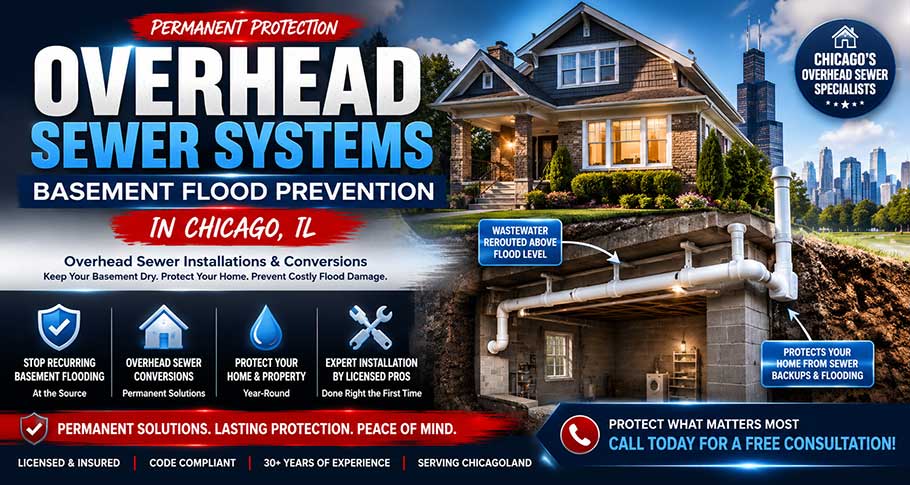
When you need overhead sewer system installation in Chicago, IL, you need a solution designed for the unique drainage challenges found throughout the area. Many Chicago homes, especially older properties with basement plumbing below the main sewer line, are vulnerable to sewer backups during heavy rainfall and overwhelmed municipal sewer systems. An overhead sewer system helps protect your home by redirecting wastewater above the backup elevation, reducing the risk of sewage entering your basement and causing costly damage.
At Suburban Plumbing Experts, we specialize in designing and installing overhead sewer systems customized to your home’s layout, plumbing configuration, and flood protection needs. From the initial inspection to the final installation, our experienced team explains your options, recommends the right solution, and completes each project with precision and attention to detail. Whether you are dealing with recurring basement backups or looking for a long-term flood prevention upgrade, we provide reliable overhead sewer solutions built to protect Chicago-area homes for years to come.
Professional Overhead Sewer Installation and Conversion Services in Chicago
Overhead sewer systems are one of the most effective ways to protect Chicago-area properties from basement flooding, sewer backups, and wastewater damage. Many older homes throughout Chicago and the surrounding suburbs were built with basement plumbing located below the elevation of the main sewer line, leaving these properties more vulnerable when heavy rainfall overwhelms municipal sewer systems.
At Suburban Plumbing Experts, we design and install overhead sewer systems that redirect basement wastewater above the potential backup elevation. Whether you need a new overhead sewer installation, want to convert an existing basement drainage system, or need an evaluation to determine the right flood protection solution, our team provides experienced recommendations and professional installation tailored to your property.
Overhead Sewer Installation in Chicago: Protect Your Basement From Sewer Backups
A properly designed overhead sewer system helps reduce the risk of sewage flowing back into basement plumbing fixtures when the municipal sewer system becomes overwhelmed. By raising the point where basement wastewater connects to the sewer system, an overhead sewer can provide significantly greater protection for homes with below-grade bathrooms, laundry areas, and other basement plumbing.
Our technicians evaluate your existing plumbing layout, basement configuration, sewer connection, and flood protection needs before developing the appropriate system design. We then install the necessary components with careful attention to proper drainage, reliable operation, and local plumbing requirements.
Overhead Sewer Conversion: Upgrade Older Chicago Plumbing Systems
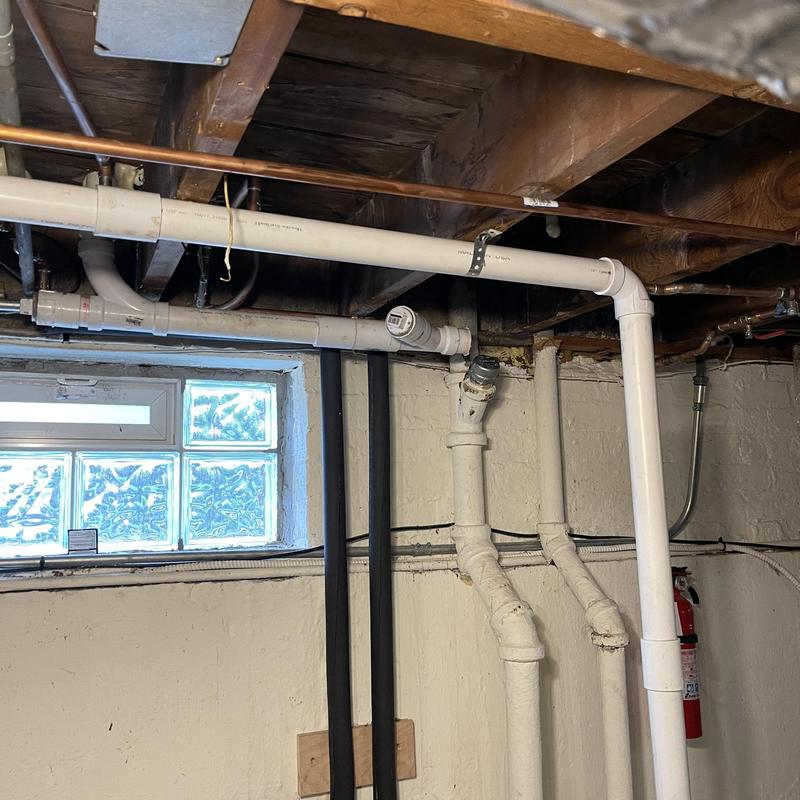
Many Chicago homes with a history of basement sewer backups can benefit from converting traditional below-grade plumbing to an overhead sewer system. During a conversion, we modify the existing drainage configuration so wastewater from basement fixtures is collected and pumped through an elevated discharge system designed to reduce the risk of sewage backing up into the lower level.
An overhead sewer conversion can be a valuable long-term investment for homeowners who want to protect a finished basement, reduce the likelihood of repeated cleanup costs, and improve overall flood protection. If you are comparing an overhead sewer with other sewer backup prevention options, our Complete Guide to Backflow Prevention in Chicago explains how different protection systems work and what may be appropriate for your property.
Residential and Commercial Overhead Sewer Installation Solutions
Every building has different plumbing and drainage requirements, which is why overhead sewer systems should be designed around the property rather than installed as a one-size-fits-all solution. We provide overhead sewer installation and conversion services for:
- Single-family homes with basement plumbing
- Older Chicago homes and two-flats
- Multi-unit residential buildings
- Commercial properties with below-grade plumbing
- Properties with recurring basement sewer backups
- Homes undergoing basement remodeling or plumbing upgrades
Our team evaluates the existing system and develops an overhead sewer solution based on the property's layout, wastewater needs, and long-term flood protection goals.
Overhead Sewer System Inspection and Performance Evaluation
Before installing or converting an overhead sewer system, a professional evaluation can help determine how your existing plumbing is configured and what changes may be required. Our team can inspect the drainage system, identify potential problem areas, and evaluate the components responsible for moving basement wastewater.
For properties that already have an overhead sewer system, periodic inspections can also help identify developing problems with pumps, discharge piping, check valves, or other critical components before they contribute to a backup.
Expert Overhead Sewer Installation Using Quality Components
A dependable overhead sewer system starts with proper design and experienced installation. The system must be configured correctly so basement wastewater can be collected, pumped, and discharged reliably while reducing the opportunity for sewer water to flow back into the home.
Suburban Plumbing Experts uses quality components and proven installation methods to build overhead sewer systems designed for long-term performance. From evaluating your existing plumbing through final system testing, our team focuses on creating a reliable drainage solution that fits your home's specific needs.
For Chicago homeowners and businesses dealing with recurring basement sewer backups, an overhead sewer installation or conversion can provide a significant upgrade in flood protection. A properly designed system can reduce the risk of wastewater entering your basement while providing greater confidence that your property's drainage system is prepared when heavy storms put Chicago's sewer infrastructure under pressure.
Benefits of Overhead Sewer Installation for Chicago Homes
An overhead sewer system is more than a plumbing upgrade. For Chicago homeowners with basement bathrooms, finished lower levels, or a history of sewer backups, it can provide a long-term improvement in basement flood protection and wastewater management. Instead of relying on traditional below-grade drainage that can be vulnerable when municipal sewer levels rise, an overhead sewer system collects basement wastewater in an ejector basin and pumps it through an elevated discharge connection.
This elevated configuration helps reduce the risk of sewage flowing backward through basement toilets, showers, laundry drains, floor drains, and other plumbing fixtures when heavy rainfall or an overwhelmed municipal sewer system causes wastewater levels to rise. This can be particularly valuable in older Chicago homes where basement plumbing was installed decades ago, before modern sewer backup protection became common.
Better Protection Against Basement Sewer Backups
One of the primary benefits of an overhead sewer system is reducing the risk of sewage entering your basement through plumbing fixtures. Traditional below-grade connections can leave lower-level fixtures vulnerable when wastewater levels in the municipal sewer system rise during severe storms.
An overhead sewer system changes the configuration of the basement drainage system by collecting wastewater and using an ejector pump to discharge it through an elevated connection. This provides an important layer of protection for homes that have experienced recurring basement sewer backups.
Protect Finished Basements and Valuable Property
Finished basements can contain flooring, drywall, furniture, electronics, appliances, and personal belongings that can be severely damaged by sewage and contaminated wastewater. Even a single major backup can result in significant cleanup, restoration, and replacement costs.
An overhead sewer system can help reduce the likelihood of wastewater entering the finished portion of your basement through plumbing fixtures. For homeowners who have invested heavily in their lower level, improving sewer backup protection can be an important part of protecting that investment.
Greater Flexibility for Basement Bathrooms and Remodeling
Basement renovations frequently involve adding bathrooms, laundry rooms, wet bars, sinks, and other plumbing fixtures below the main sewer elevation. Traditional gravity drainage can create limitations when fixtures are located below the sewer connection.
An overhead sewer system uses an ejector basin and pump to move wastewater from these below-grade fixtures to an elevated discharge point. This can provide greater flexibility when designing or remodeling basement plumbing while giving the wastewater a reliable path into the main sewer system.
Reduced Risk When Chicago's Sewer System Becomes Overwhelmed
Chicago's aging sewer infrastructure and combined sewer system can create difficult drainage conditions during intense rainfall. When municipal sewer systems become overwhelmed, wastewater levels can rise and increase the risk of backups into properties with vulnerable basement plumbing.
An overhead sewer system is designed to address this type of sewer backup risk by changing the elevation and configuration of the basement wastewater connection. While no plumbing system can eliminate every possible source of basement flooding, a properly designed overhead sewer can provide significantly greater protection against sewer-related wastewater intrusion.
Accessible Components for Easier Service and Repairs
An overhead sewer system relies on components such as an ejector pump, basin, float controls, check valve, and discharge piping. Proper installation keeps these critical components accessible so they can be inspected, serviced, repaired, or replaced when necessary.
Regular evaluation of the ejector pump and other components can help identify developing problems before they contribute to a wastewater backup. Keeping the system accessible also makes future repairs more straightforward and can help minimize disruption to your basement.
A Long-Term Upgrade for Older Chicago Homes
Many Chicago homes were built long before modern basement flood protection systems were widely used. If your property has an older below-grade drainage configuration or a history of repeated sewer backups, converting to an overhead sewer system can provide a significant long-term upgrade.
Rather than continuing to deal with recurring backups and the damage they can cause, homeowners can redesign the basement drainage system around modern flood protection principles. The right solution depends on the home's plumbing configuration, sewer connection, basement layout, and history of water problems.
How an Overhead Sewer Compares With Other Flood Protection Systems
Not every basement water problem requires an overhead sewer system. An overhead sewer primarily addresses sewer backup risk, while a sump pump is designed to remove groundwater that collects around the foundation. A backwater valve can provide another form of sewer backup protection, depending on the property's plumbing configuration.
Choosing the right system starts with determining where the water is coming from and how your existing plumbing is configured. Homeowners comparing these options can learn more in our complete guide to Chicago flood control systems that actually work, and ones that don't.
For many Chicago homeowners, the greatest benefit of an overhead sewer system is the added protection it provides to the lowest level of the home. When properly designed and installed, it can help reduce the risk of sewage entering the basement while providing a more reliable wastewater drainage configuration for years to come.
Overhead Sewer Installation Process in Chicago: What Homeowners Can Expect
Installing an overhead sewer system requires careful planning, proper system design, and experienced plumbing knowledge. Because Chicago-area homes can have very different basement layouts, sewer connections, and existing drainage configurations, a professional overhead sewer installation should begin with an evaluation of the property rather than a one-size-fits-all approach.
At Suburban Plumbing Experts, we take a systematic approach to overhead sewer installation and conversion. Our team evaluates your existing plumbing, develops a system design around your property's needs, installs the necessary components, and tests the completed system to help ensure reliable wastewater removal and improved protection against basement sewer backups.
Step 1: Evaluate Your Existing Plumbing and Basement Drainage
The process begins with an evaluation of your existing plumbing system and basement. Our plumbers examine the basement layout, plumbing fixtures, drainage configuration, sewer connection, and existing flood protection to determine whether an overhead sewer system is appropriate for the property.
This evaluation also helps identify potential issues that could affect the installation, including outdated plumbing, limited access, existing ejector pump problems, or other drainage concerns.
Step 2: Design an Overhead Sewer System for Your Property
Once the existing system has been evaluated, we determine how the overhead sewer should be configured around your home's specific plumbing layout. This includes planning the location of the ejector basin, pump, discharge piping, and other necessary components.
A properly designed system should provide a reliable path for basement wastewater while integrating with the property's existing plumbing and minimizing unnecessary changes to the rest of the home.
Step 3: Address Permits and Applicable Local Requirements
Overhead sewer installations may be subject to local plumbing codes, permitting requirements, and inspection procedures. Requirements can vary depending on whether the property is located in Chicago or one of the surrounding suburbs.
We account for applicable requirements as part of the installation process and help ensure the completed work is performed according to the standards that apply to the property.
Step 4: Install the Overhead Sewer System
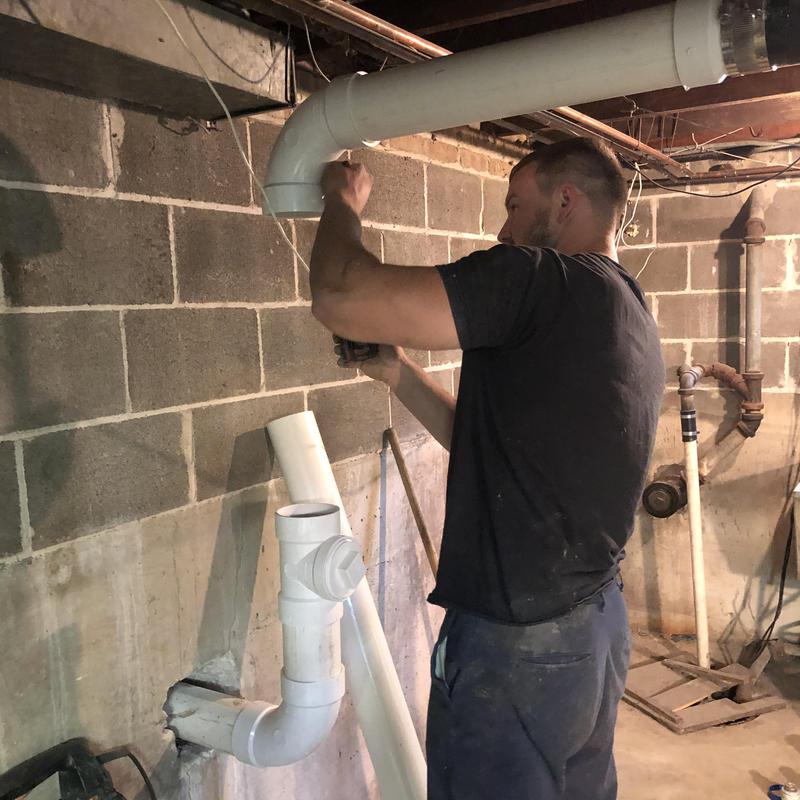
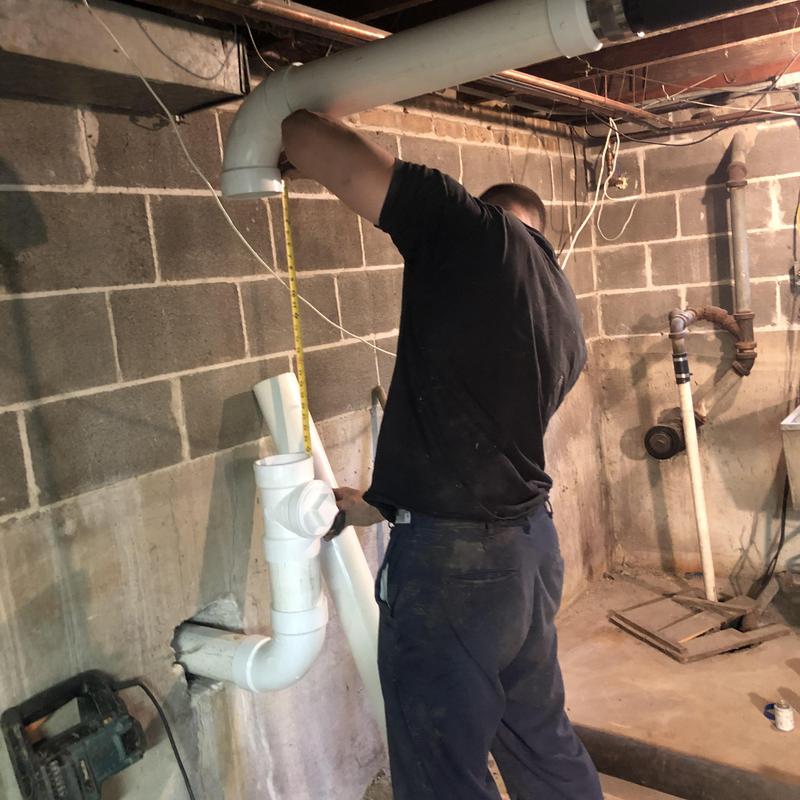
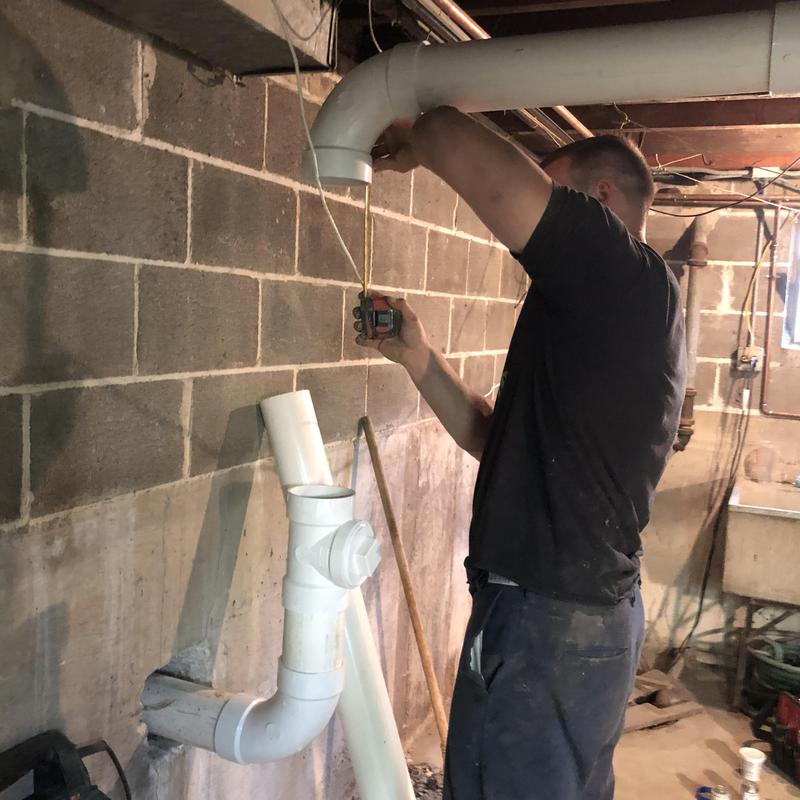
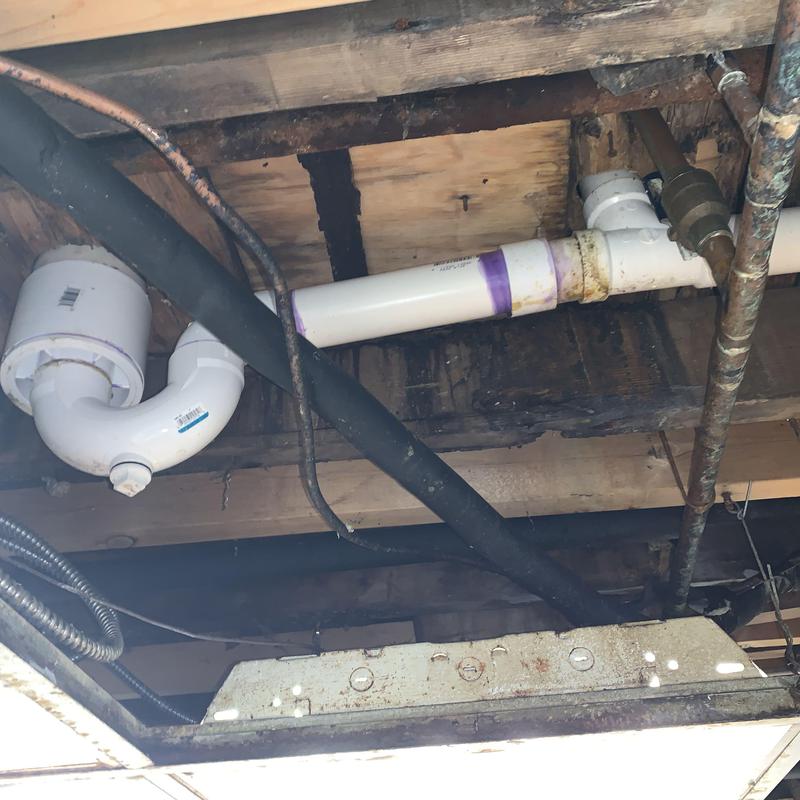
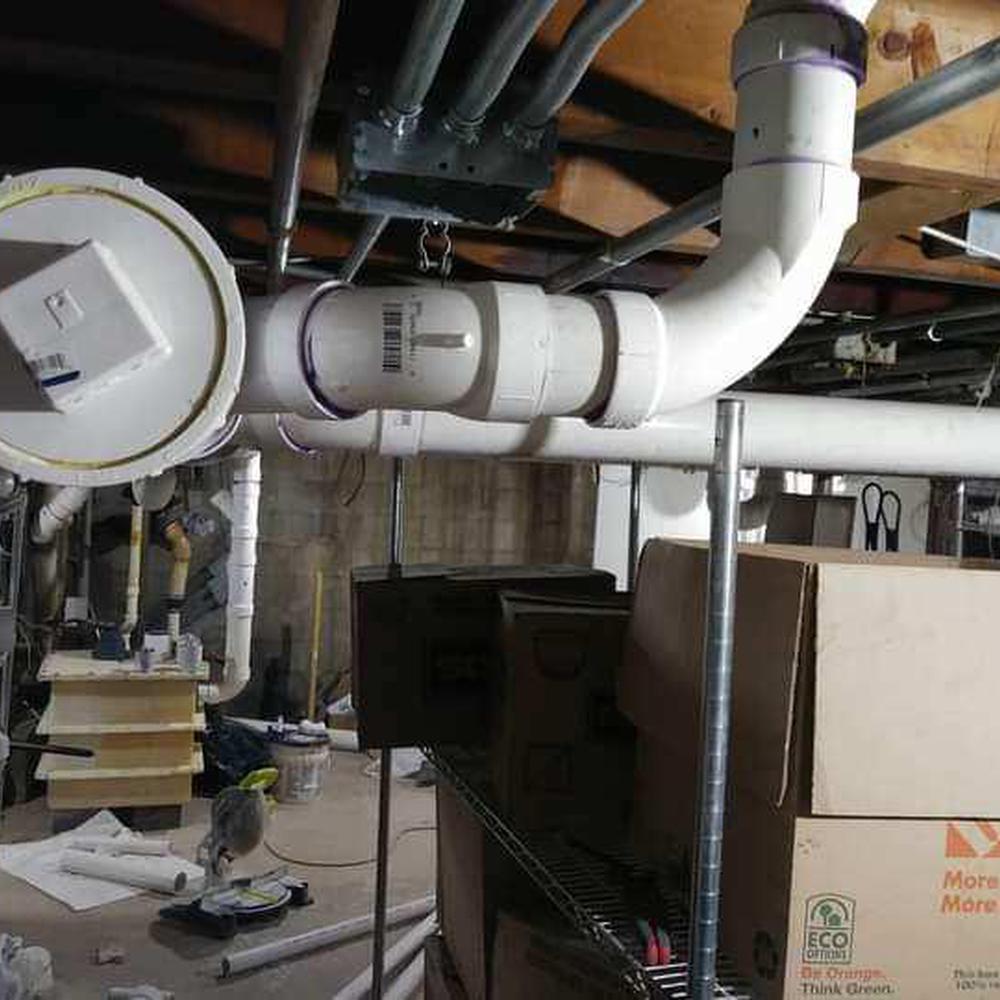
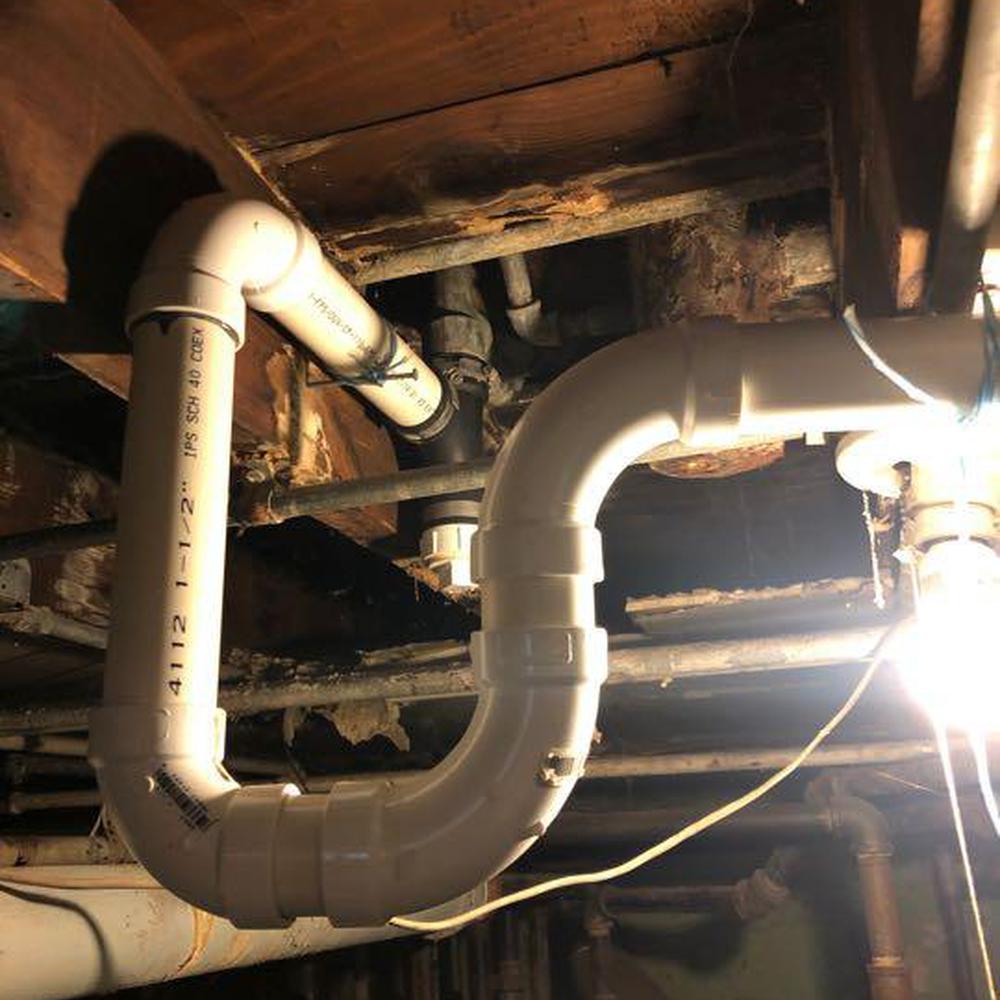
After the system design and required preparations are complete, our plumbers install the overhead sewer components. Depending on the property's configuration, this can include the ejector basin, sewage ejector pump, elevated discharge piping, check valve, controls, and connections to the existing basement plumbing.
Our team focuses on proper sizing, secure connections, appropriate component placement, and reliable wastewater flow while working to minimize disruption to your basement.
Step 5: Test the Complete System
Once installation is finished, we test the system to verify that wastewater is being collected and discharged properly. We check the ejector pump, float controls, discharge piping, and other critical components to make sure the system operates as intended.
Testing the completed installation is an important final step because an overhead sewer system depends on multiple components working together correctly.
Step 6: Explain System Operation and Maintenance
Before completing the project, we explain how the new overhead sewer system operates and what homeowners should watch for over time. Because the system relies on an ejector pump and other mechanical components, recognizing warning signs early can help prevent unexpected failures.
We can also recommend appropriate maintenance and inspections based on the age of the equipment, the property's wastewater demands, and how heavily the system is used.
A professionally designed overhead sewer system can provide Chicago homeowners with a significant improvement in basement sewer backup protection. By evaluating the property first, designing the system around the existing plumbing, and properly testing the completed installation, homeowners can have greater confidence in their basement wastewater system for years to come.
Overhead Sewer Conversion Services for Chicago and Chicagoland Homes
Older Chicago homes can have basement plumbing configurations that leave lower-level fixtures vulnerable to sewer backups. Converting an existing drainage system to an overhead sewer can provide a more reliable way to manage basement wastewater while reducing the risk of sewage entering your home when municipal sewer levels rise.
Suburban Plumbing Experts provides professional overhead sewer conversion services throughout Chicago and the surrounding suburbs. Our plumbers evaluate your existing drainage layout, determine how the basement plumbing can be converted, and design a system around the specific needs of your property. We can also service the ejector pumps, discharge piping, and other components that are part of the completed system.
An overhead sewer conversion can be particularly beneficial for older homes, properties with finished basements, homes with basement bathrooms or laundry rooms, and properties that have experienced recurring sewer backups. Rather than continuing to rely on a vulnerable below-grade configuration, the plumbing system can be redesigned to provide improved protection against wastewater backing up into the lowest level of the home.
When you choose Suburban Plumbing Experts, you are working with a licensed, insured, and experienced Chicago-area plumbing company that understands the drainage challenges found in older homes and throughout Chicagoland. We focus on practical solutions based on your property's existing plumbing, sewer connection, and flood protection needs.
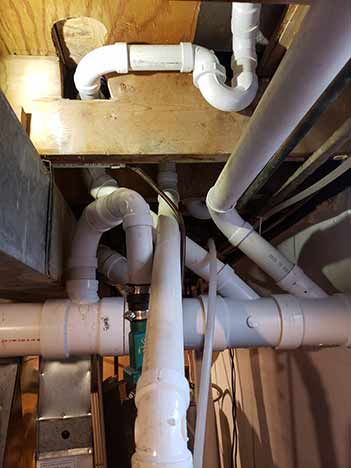
Why Choose Suburban Plumbing Experts for Overhead Sewer Installation in Chicago?
Choosing the right plumber for an overhead sewer installation is an important decision. These systems require more than basic plumbing knowledge. Proper installation involves understanding basement drainage, sewage ejector pumps, sewer backup prevention, existing plumbing configurations, and the conditions commonly found in Chicago-area homes.
Suburban Plumbing Experts provides professional overhead sewer installation and conversion services throughout Chicago and the surrounding suburbs. Our team evaluates your existing plumbing system, basement layout, sewer connection, and flood protection needs before recommending a solution. This allows us to design the system around your property rather than forcing your home to fit a standard installation.
Experience With Chicago's Older Homes and Basement Plumbing
Many Chicago homes were built decades ago with basement plumbing configurations that were never designed with modern flood protection in mind. Older sewer connections, finished basements, basement bathrooms, and recurring backup problems can all create unique challenges during an overhead sewer conversion.
Our plumbers understand these conditions and can evaluate how an overhead sewer system can be incorporated into your home's existing plumbing while addressing the specific risks associated with your property.
Complete Overhead Sewer Installation and Conversion Services
An overhead sewer system involves more than installing an ejector pump. The basin, pump, float controls, check valve, discharge piping, and plumbing connections all need to work together properly.
We provide comprehensive overhead sewer services, including system evaluation, new installations, conversions, ejector pump installation, repairs, replacements, and related plumbing work. Our team can identify problems with an existing system and determine whether repair, replacement, or a complete conversion makes the most sense.
Honest Recommendations Based on Your Property
Not every Chicago basement requires an overhead sewer system, and we don't believe in recommending equipment simply because it can be installed. Our plumbers evaluate the source of your flooding or sewer backup problems and explain which solutions may be appropriate for your home.
Depending on your property's plumbing configuration, the right solution could involve an overhead sewer, flood control system, sump pump, backwater protection, or a combination of systems. Our goal is to recommend practical improvements that address the actual problem.
Professional Workmanship From Evaluation Through Testing
A properly designed overhead sewer system needs to function reliably long after installation is complete. We pay attention to system layout, component placement, plumbing connections, pump operation, and wastewater flow throughout the installation.
After the work is completed, the system is tested to verify that the critical components are operating properly and that basement wastewater can be discharged as intended.
To better understand how these systems work, what an overhead sewer conversion involves, and when this type of upgrade may be appropriate, read our complete guide to overhead sewer conversion in Chicago.
When you choose Suburban Plumbing Experts for overhead sewer installation or conversion, you get a system designed around your home's plumbing, basement configuration, and sewer backup concerns, not a one-size-fits-all approach.
Frequently Asked Questions About Overhead Sewer Systems in Chicago
What exactly is an overhead sewer system, and how is it different from what many older Chicago homes have?
Many older Chicago homes have basement plumbing connected to below-grade sewer lines that rely on gravity to carry wastewater toward the municipal sewer. When the public sewer system becomes overwhelmed during heavy rainfall, wastewater can rise within the sewer and increase the risk of backups through vulnerable basement fixtures.
An overhead sewer system changes this configuration by collecting basement wastewater and using an ejector pump to discharge it through piping positioned above the typical sewer backup elevation. This can significantly reduce the risk of wastewater backing up into basement plumbing fixtures and is one of the more comprehensive options available for protecting Chicago basements from sewer-related flooding.
My basement floods every time it rains hard. Would an overhead sewer system fix the problem?
It depends on where the water is coming from. If wastewater is backing up through basement floor drains, toilets, showers, or other plumbing fixtures during heavy rain, the problem may be related to a sewer surcharge, and an overhead sewer system may provide an effective long-term solution.
If water is entering through foundation walls, window wells, cracks, or other exterior areas, an overhead sewer will not address that source of water. In some homes, multiple causes contribute to basement flooding, which is why identifying the source of the water is an important first step before choosing a flood protection system.
How long does an overhead sewer conversion take?
The timeline depends on the size of the property, the number of fixtures involved, the existing plumbing configuration, and the complexity of the conversion. Many residential projects can be completed within a few days, although larger homes, multi-unit properties, and commercial buildings may require additional time.
There may be periods during the installation when certain plumbing fixtures are temporarily unavailable. Before work begins, we can explain the expected sequence of work and what to expect throughout the project.
How much does an overhead sewer conversion cost in Chicago?
There is no single price for an overhead sewer conversion because every property has a different plumbing layout and installation requirements. Factors that can affect the cost include the number of basement fixtures, concrete cutting and excavation, ejector pump requirements, discharge piping, existing plumbing conditions, and the overall complexity of the system.
The best way to determine the cost is to have the property evaluated so the required work can be identified and an accurate estimate prepared before installation begins.
Can an overhead sewer system increase my home's value?
An overhead sewer system can be an attractive improvement for a Chicago-area home with a history of basement sewer backups, particularly when the system is professionally installed and properly documented. It can provide buyers with greater confidence in the property's basement drainage and sewer backup protection.
However, the effect on resale value varies by property and market conditions. The primary benefit is improved protection and reduced exposure to potentially expensive sewer backup damage rather than a guaranteed increase in market value.
Does an overhead sewer conversion require breaking up my basement floor?
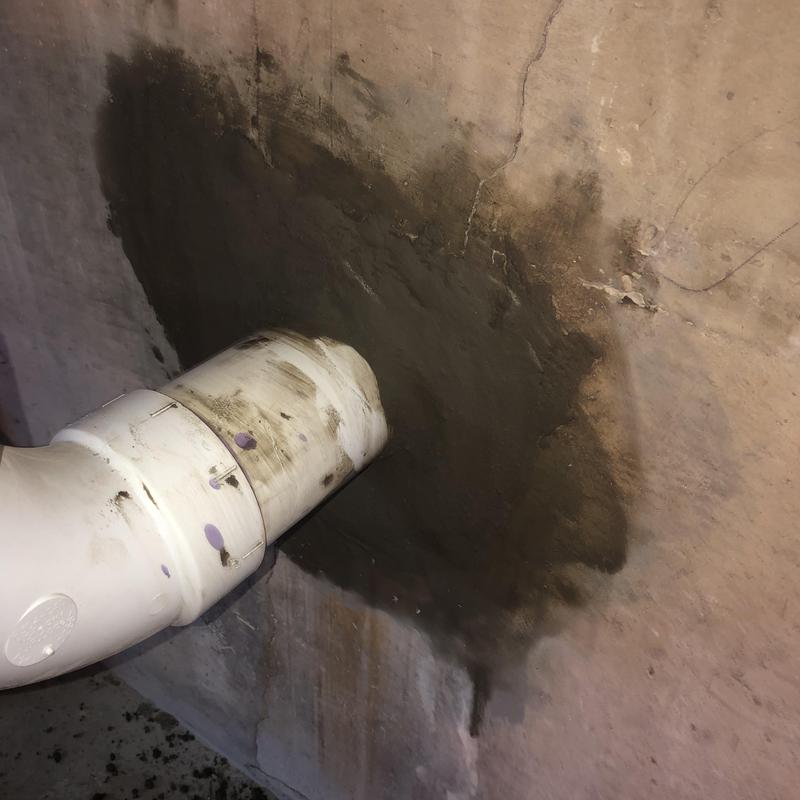
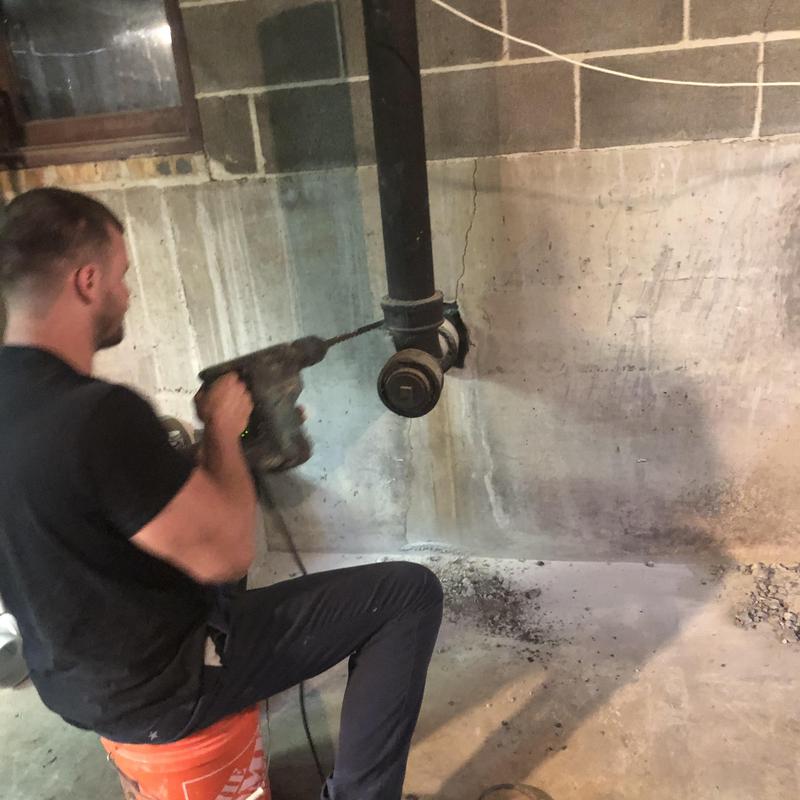
In many installations, some concrete cutting and excavation are required to access existing below-grade drain lines and modify the basement plumbing. The amount of concrete that needs to be opened depends on the home's existing layout and the scope of the conversion.
Our team plans the work around the existing plumbing configuration and restores the affected areas as part of the installation process. We can explain what areas of the basement will be affected before work begins.
Can my basement bathroom and laundry still function after an overhead sewer conversion?
Yes. Basement bathrooms, laundry rooms, sinks, showers, and other below-grade fixtures can remain functional after an overhead sewer conversion.
These fixtures typically drain into a sewage ejector basin, where an ejector pump lifts the wastewater to the elevated sewer connection. Proper pump sizing, basin configuration, discharge piping, and controls are important to ensure the system can reliably handle the wastewater demands of the connected fixtures.
Will an overhead sewer conversion require permits?
Overhead sewer installations and conversions may require permits and inspections, with requirements varying between Chicago and the surrounding municipalities. The specific requirements depend on the property's location and the scope of the plumbing work.
We can help determine the applicable requirements for your project and make sure the installation is performed in accordance with the plumbing codes and regulations that apply to the property.
Is an overhead sewer system worth the investment compared with repeated basement flooding?
For homeowners who experience recurring sewer backups, an overhead sewer conversion can be a worthwhile long-term investment. Repeated flooding can result in cleanup expenses, damaged flooring and drywall, ruined belongings, unpleasant odors, and disruption to finished basement living space.
An overhead sewer system addresses the vulnerability of the basement plumbing configuration itself rather than simply dealing with the aftermath of each backup. Whether it is the right investment depends on the property's flooding history, plumbing configuration, and other available flood protection options.
How long does an overhead sewer system last, and what maintenance does it require?
The plumbing components of an overhead sewer system can provide many years of service when properly installed and maintained. The ejector pump and other mechanical components require more attention because they are responsible for moving basement wastewater to the elevated sewer connection.
Regular inspections can help identify problems with the pump, float controls, check valve, discharge piping, and other components before they result in a backup. The appropriate maintenance schedule depends on the equipment installed and how heavily the system is used.
We just bought an older home in the Chicago suburbs and the inspector flagged the sewer system. Where should we start?
Start with a professional evaluation of the existing sewer and basement plumbing system. A sewer camera inspection may be appropriate if the condition of the main sewer line or underground piping is unclear.
Suburban Plumbing Experts can evaluate the existing configuration, identify potential problem areas, and explain whether an overhead sewer conversion or another flood protection solution makes sense for the property. Call 708-801-6530 to schedule an evaluation.
Do you install overhead sewer systems in commercial buildings and multi-unit properties?
Yes. Overhead sewer systems can be installed in a variety of properties, including single-family homes, two-flats, multi-unit buildings, restaurants, offices, and other commercial properties with below-grade plumbing.
Commercial and multi-unit properties often have more fixtures, higher wastewater demands, and more complex plumbing configurations. We evaluate the existing system and design the installation around the property's specific requirements, with applicable permitting and code requirements taken into consideration.
Schedule Professional Overhead Sewer Installation in Chicago Today
If your Chicago home has experienced basement sewer backups, recurring wastewater problems, or flooding during heavy storms, an overhead sewer system may provide the long-term protection your property needs. Suburban Plumbing Experts provides professional overhead sewer installation and conversion services throughout Chicago and the surrounding suburbs, with solutions designed around your home's plumbing configuration and basement flood risks.
Whether you need a complete overhead sewer conversion, a new system for a basement renovation, or help determining which sewer backup protection solution is right for your property, our experienced plumbers can evaluate your existing system and explain your options. We focus on proper system design, quality installation, and reliable operation so your basement has stronger protection when sewer conditions become unfavorable.
Call 708-801-6530 today to schedule your overhead sewer evaluation with Suburban Plumbing Experts. We'll assess your existing plumbing, answer your questions, and help you determine the right path toward protecting your Chicago-area home from costly basement sewer backup damage.
Schedule Overhead Sewer System Service Now
Suburban Plumbing Sewer Line & Drain Cleaning Experts
⏰ Open 24 Hours
📞 Phone: Suburbs: 708-801-6530 Chicago: 773-570-2191
📧 Email: info@suburbanplumbingexperts.com
🚨 Emergency Hotline: 708-518-7765
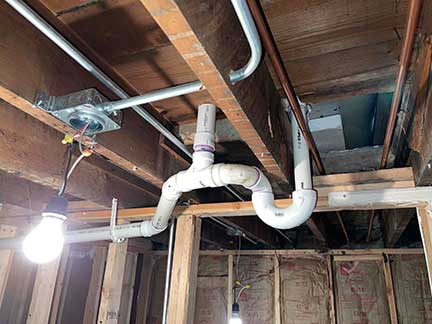
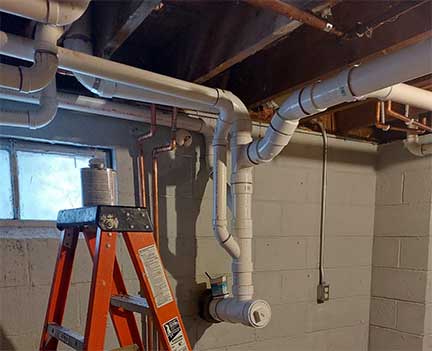
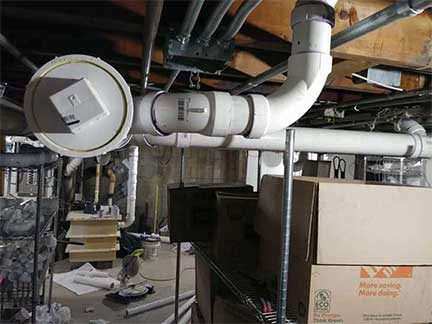
Trusted Overhead Sewer Installation & Basement Flood Prevention in Chicago, IL
Permanent basement flood protection solutions across Chicago and surrounding suburbs—specializing in overhead sewer systems, flood prevention upgrades, and long-term drainage corrections for older homes.
Chicago & Chicagoland Service Area
Serving Chicago, Naperville, Downers Grove, Hinsdale, Oak Brook, Elmhurst, Wheaton, Glen Ellyn, Lombard, and surrounding Chicagoland suburbs with overhead sewer systems and basement flood prevention solutions.
Licensed, Insured & Flood Prevention Specialists
- ✔ Licensed Illinois Plumbing Contractors
- ✔ Fully Insured Residential & Commercial Service
- ✔ Overhead Sewer Installation & System Design
- ✔ Basement Flood Prevention Solutions
- ✔ Sewer System Rerouting & Drainage Upgrades
- ✔ Flood Risk Reduction for Older Chicago Homes
- ✔ Code-Compliant Plumbing System Conversions
- ✔ Fast Dispatch Across Chicagoland
Trusted across Chicago and surrounding suburbs for reliable overhead sewer installations and long-term basement flood prevention systems.
Most Recent Pins (9)

Most Recent Reviews (9)