If you’ve got a drain backup or a sewer line that keeps giving you problems, you’ve probably heard two options come up: sewer rodding and hydro jetting. They’re both effective — but they’re not interchangeable, and choosing the wrong one for the situation either leaves the problem partially solved or risks damaging a pipe that needed a gentler approach.
Here’s how the two methods actually differ, when each one makes sense, and how to know which one your situation calls for.
What is sewer rodding?
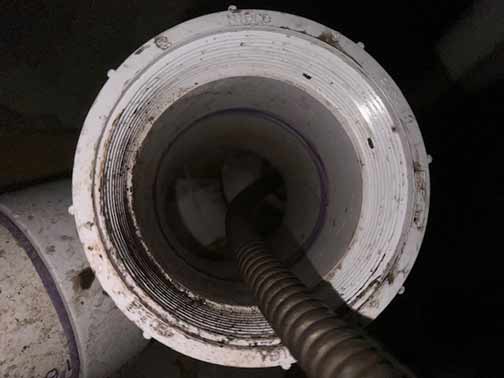
Sewer rodding uses a flexible cable fed directly into the drain line to break up or retrieve whatever is causing the blockage. The cable is made of polypropylene with steel fittings at each end — flexible enough to navigate the bends in a typical sewer line, rigid enough to push through compacted debris and root intrusion. Each section is about three feet long and threads onto the next, so the cable can be extended as far into the line as needed.
Depending on the location of the blockage, the cable enters through a floor drain, toilet, manhole, or dedicated sewer cleanout. A cutting or scraping attachment on the working end is selected based on what’s in the line — different obstructions require different tools, and an experienced plumber will match the attachment to the job before feeding the cable in.
For most residential and commercial blockages, a power rodding machine does the work — a motorized unit that rotates the cable as it moves through the line, making it more effective against stubborn obstructions than manual rodding alone. In some situations a kinetic water ram, which uses a burst of compressed air, is used to dislodge blockages that are closer to the access point.
When should you use sewer rodding?
Sewer rodding can be adapted for all plumbing pipes and drainage problems. Since the rods come in different sizes, the plumber only needs to select a rod that matches the diameter of the pipe that is being cleaned, as well as, the kind of blockage inside it.
Examples of situations where sewer rodding works well include:
- Clogs in a bathroom or kitchen sink
- Overflowing or slow-draining toilets
- Major blockages inside the main sewer line
- Restoring the flow of water in blocked pipes
- Removing tree roots from the main sewer line
- Getting rid of sludge and other difficult buildup
Advantages of sewer rodding
Sewer rodding is affordable
It is less expensive than hydro jetting because the equipment used in sewer rodding is easier to use.
Sewer rodding is highly accurate
The biggest advantage of sewer rodding is that it is very effective for targeted cleaning of drainpipes. When trying to clean a specific section of your sewer line, instead of its entire length, sewer rodding is the better method.
Breaks up debris
Power rodding, a type of sewer rodding, will break up the debris in the sewer line into small bits that are easier to wash out of the line.
What is hydro jetting?
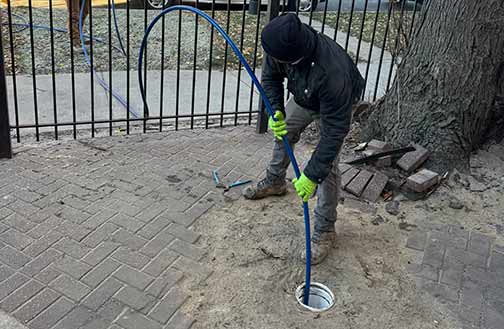
Hydro jetting cleans the pipe rather than just clearing it. A flexible hose with a specialized stainless steel nozzle is fed into the line and driven by water pressure — typically up to 3,500 PSI — that’s strong enough to cut through grease buildup, break apart root intrusion, and blast solidified debris off the pipe walls as the nozzle moves through.
The nozzle sprays in multiple directions at once. Forward-facing jets break up whatever is ahead of it. Rear-facing jets propel the hose deeper into the line while simultaneously flushing dislodged debris back out toward the access point. The result isn’t just an open drain — it’s a pipe that’s been scrubbed clean from the inside.
Nozzle selection matters. Different sizes and spray patterns are matched to the pipe diameter and the type of obstruction — what works on a four-inch residential drain line isn’t necessarily right for a six-inch commercial main. Getting that match wrong reduces effectiveness and can put unnecessary stress on older pipe walls.
When should you use hydro jetting?
Hydro jetting is not just for solving the problems in a sewer line. Along with getting rid of the debris inside the line, it can prevent these problems. Hydro jetting your sewer line at least once a year helps to prevent the processes that lead to clogs and blockages.
Here are examples of when to use hydro jetting:
- When there is calcified scale inside the sewer line
- To get rid of silt and sand inside your pipes
- To remove tree roots and sludge
- To flush systems that have become stagnant
- As a preventive maintenance tool
- When you want to clean the entire length of your sewer line
Advantages of hydro-jetting
Hydro-jetting will clean your pipes
This drain cleaning method scours the walls of pipes to terminate the biochemical process that aids aging.
Cleans the entire length of the drain
Hydro jetting will not just clear out a section of your blocked drain it will clean the whole pipeline.
Removes debris
This method dislodges debris and washes them out of the line, to fully restore the function of the sewer line.
Final verdict
Sewer rodding versus hydro jetting, which drain cleaning service is better?
The truth is that there is no right or wrong answer to this question. The correct drain cleaning service for your home or business depends on the drainage problem you are dealing with and whether you are cleaning the entire sewer line or just a section.