
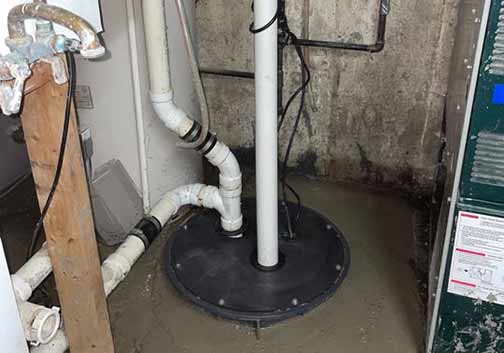
An ejector pump is what makes below-grade plumbing possible. If your home has a basement bathroom, laundry room, or any fixture that sits below the main sewer line, an ejector pump is what moves that waste uphill and out to the sewer or septic system. Without it, nothing drains.
The pump sits inside a sealed basin in the floor — wastewater flows in, and when it reaches a set level, a float switch kicks the pump on and forces everything up through a discharge line to where gravity can take over. Unlike a sump pump, which only handles groundwater, an ejector pump is built to handle both liquid and solid waste. That’s an important distinction, because the two are not interchangeable — and swapping one for the other is a mistake we see more often than we should.
Signs Your Ejector Pump Needs Replacement
Recognizing when your ejector pump needs replacement can save you from potential water damage and costly repairs. Common signs include unusual noises, frequent cycling, visible rust or corrosion, foul odors, and sewage backups. If you notice any of these symptoms, it’s time to consider replacing your ejector pump to maintain the efficiency and safety of your home’s wastewater management system.
Unusual noises, such as grinding or rattling, may indicate that the pump’s motor or impeller is failing. Frequent cycling, where the pump turns on and off repeatedly, can be a sign of a malfunctioning float switch or an undersized pump. Visible rust or corrosion can weaken the pump’s structure, leading to leaks and reduced performance. Foul odors and sewage backups are clear indicators that the pump is not effectively removing waste, posing health risks and potential property damage.
Initial Troubleshooting: Assessing the Problem
Before deciding to replace your ejector pump, it’s important to conduct some initial troubleshooting. Check for power issues, such as a tripped breaker or a blown fuse. Ensure that the float switch, which activates the pump, is not stuck or obstructed. Additionally, inspect the pump for clogs or debris that may be hindering its operation. If these basic checks do not resolve the issue, a replacement may be necessary.
Start by verifying that the pump is receiving power. If the breaker has tripped or the fuse has blown, reset or replace them as needed. Next, examine the float switch to ensure it moves freely and is not blocked by debris. A stuck float switch can prevent the pump from activating. Finally, remove any clogs or debris from the pump and discharge pipe to restore proper flow. If these steps do not resolve the problem, it may be time to replace the pump.
Choosing the Right Ejector Pump for Your Home
Selecting the appropriate ejector pump for your home is crucial for effective wastewater management. Consider factors such as the pump’s horsepower, capacity, and the type of materials it can handle. Ensure that the pump is compatible with your existing plumbing system and meets local building codes. By speaking with a local plumber, you can help you make an informed decision and choose a pump that suits your specific needs. The pump’s horsepower determines its ability to move wastewater efficiently. A higher horsepower pump can handle larger volumes and higher lift requirements.
Capacity refers to the amount of wastewater the pump can move per minute, which is important for homes with high water usage. Additionally, consider the type of materials the pump can handle, such as solids and liquids, to ensure it can manage your home’s waste effectively. Compatibility with your plumbing system and adherence to local codes are essential to avoid installation issues and potential legal problems.
Preparing for Ejector Pump Replacement
Proper preparation is key to a successful ejector pump replacement. Begin by gathering all necessary tools and materials, including a new ejector pump, wrenches, pipe fittings, and a utility knife. Ensure that the area around the pump is clean and free of obstructions. It’s also important to review the manufacturer’s instructions and safety guidelines before starting the replacement process.
Clear the area around the sump basin to provide ample working space. Gather all tools and materials in advance to avoid interruptions during the replacement. Review the manufacturer’s instructions to familiarize yourself with the specific steps for your pump model. Additionally, follow safety guidelines, such as wearing protective gloves and eyewear, to prevent injuries during the replacement process.
Step-by-Step Guide to Ejector Pump Replacement
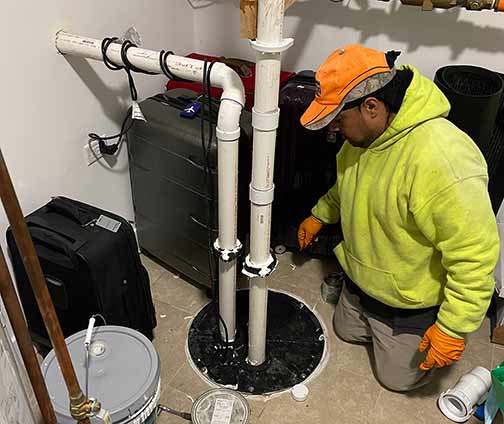
Replacing an ejector pump involves several steps. First, disconnect the power supply to the pump to ensure safety. Next, remove the old pump by disconnecting it from the discharge pipe and lifting it out of the pit. Install the new pump by connecting it to the discharge pipe and securing it in place. Finally, reconnect the power supply and test the pump to ensure it is functioning correctly. Detailed instructions and diagrams can help guide you through each step of the process. Begin by unplugging the pump or turning off the circuit breaker to eliminate the risk of electrical shock.
Use wrenches to disconnect the discharge pipe from the old pump. Carefully lift the old pump out of the sump basin, taking care not to damage the surrounding pipes. Position the new pump in the basin and connect it to the discharge pipe using appropriate fittings. Secure the pump in place and ensure all connections are tight. Reconnect the power supply and test the pump by running water through the system. Observe the pump’s operation to ensure it activates and shuts off correctly, and check for any leaks or issues.
Ensuring Proper Installation and Functionality
After installing the new ejector pump, it’s important to ensure that it is properly installed and functioning correctly. Check for any leaks or loose connections, and make sure the float switch is operating smoothly. Test the pump by running water through the system and observing its performance. If any issues arise, address them promptly to prevent future problems.
Inspect all connections for leaks and tighten any loose fittings. Ensure the float switch moves freely and activates the pump at the appropriate water level. Run water through the system to simulate normal operation and observe the pump’s performance. Listen for unusual noises and watch for signs of improper cycling. Address any issues immediately to prevent further problems and ensure the pump operates efficiently.
Maintaining Your Ejector Pump for Longevity
Regular maintenance is essential to extend the lifespan of your ejector pump and ensure its continued efficiency. Schedule periodic inspections to check for signs of wear and tear, and clean the pump and pit to prevent clogs and build-up. Additionally, consider installing a backup power source, such as a battery or generator, to keep the pump running during power outages. Proper maintenance can help you avoid unexpected failures and costly repairs.
Conduct visual inspections of the pump and sump basin every few months to identify any potential issues. Clean the pump and basin regularly to remove debris and prevent clogs. Check the float switch for smooth operation and ensure it is not obstructed. Consider installing a backup power source to maintain pump operation during power outages, protecting your home from potential flooding.
When to Call a Professional
While many homeowners can handle ejector pump replacement on their own, there are situations where professional assistance is necessary. If you encounter complex plumbing issues, lack the necessary tools, or feel uncomfortable performing the replacement yourself, it’s best to call a licensed plumber. A professional can ensure that the job is done correctly and safely, giving you peace of mind.
Complex plumbing issues, such as incompatible fittings or extensive pipe modifications, may require professional expertise. If you lack the necessary tools or experience, attempting the replacement yourself can lead to mistakes and potential damage. A licensed plumber can diagnose and address any underlying issues, ensuring the new pump is installed correctly and functions efficiently.
Cost Considerations for Ejector Pump Replacement
The cost of replacing an ejector pump can vary depending on several factors, including the type of pump, labor costs, and any additional plumbing work required. On average, homeowners can expect to pay between $500 and $1500 for a complete replacement. It’s important to obtain quotes from multiple contractors and consider the long-term benefits of investing in a high-quality pump.
The type of pump you choose, such as a basic or high-capacity model, will impact the overall cost. Labor costs can vary based on the complexity of the installation and the rates charged by local plumbers. Additional plumbing work, such as modifying pipes or installing new fittings, can also affect the total cost. Obtain quotes from several plumbers to compare prices and services. Investing in a high-quality pump can provide long-term benefits, such as improved performance and reduced maintenance costs.
Frequently Asked Questions About Ejector Pump Replacement
How long does an ejector pump last? Most ejector pumps last 7 to 10 years with normal use, but that range assumes the pump was correctly sized for the basin and waste load from the start. An undersized pump running near capacity every cycle will burn out in half that time. If you’re replacing a pump that’s only 4 or 5 years old, the pump probably wasn’t the problem — the system around it was.
Does ejector pump replacement require a permit? In most areas, yes. Any work involving your sanitary sewer system — including pump replacement — typically requires a permit and inspection. Requirements vary by municipality, so check with your local building department before starting. A licensed plumber will pull the permit for you and schedule the inspection as part of the job.
My ejector pump is running but nothing is draining — what’s wrong? Nine times out of ten it’s one of three things: a failed check valve letting waste flow back into the basin, a clogged discharge line, or a float switch that’s stuck and triggering the pump at the wrong water level. Start by checking the float switch for freedom of movement, then inspect the check valve. If the discharge line is blocked, that’s a job for a plumber.
Can I replace an ejector pump myself? Mechanically, yes — but you’re working with sewage, a sealed basin, and a system that needs to be properly vented and fitted with a functioning check valve to work safely. If any of those pieces are off, you’ll know it quickly and unpleasantly. If you’re comfortable with plumbing work and know what you’re dealing with, a straightforward swap is doable. If there’s any doubt, it’s not the repair to guess on.
How do I know if my ejector pump is failing before it quits completely? Slow drainage from basement fixtures, gurgling sounds, pump cycling more frequently than usual, or sewage odors near the basin are all early warning signs. Catching a failing pump before it stops working entirely is the difference between a planned replacement and an emergency call at midnight.
Conclusion: Ensuring a Smooth Ejector Pump Replacement
Replacing an ejector pump isn’t complicated, but it does need to be done right. A pump that’s improperly sized, incorrectly vented, or installed without a check valve will fail faster than the one it replaced — and you’ll be back to square one within a year or two. Take the time to match the pump to your basin size and the waste load it’s handling, and the installation will hold up for a decade or more.
It’s also worth thinking beyond the pump itself. An ejector pump is one piece of a larger flood control system — and if your basement is finished or you’re in an area prone to heavy rain and sewer surcharge, a single pump isn’t enough protection on its own. A battery backup, a backwater valve, or an overhead sewer conversion may be worth considering depending on what your home is actually up against. We see plenty of basements that flooded not because the ejector pump failed, but because no one ever addressed the bigger drainage picture.
When in doubt, have a licensed plumber assess the full system before replacing just the pump. Sometimes the pump is the problem. Sometimes it’s a symptom.