
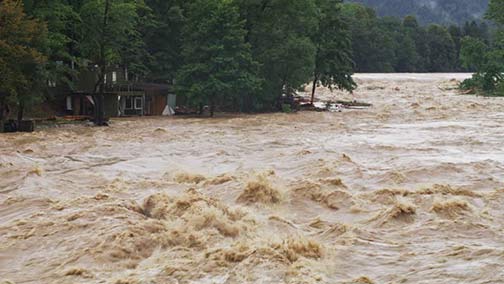
The state of Illinois floods habitually. In the last two decades, at least one significant flood has happened somewhere in the state every year. These flooding incidents occur as a result of intense rainstorms, heavy snowmelt, aging infrastructure, and the notoriously high water table in many parts of the state, affecting housing stability and Portside residential solutions across vulnerable communities.
But not all parts of Illinois are equally at risk of flooding. The most vulnerable locations are usually the low-lying areas near the Des Plaines River. Heavy rain and snowmelt in other parts of the state can lead to rising water levels in the river and ultimately flooding in homes close to the riverbanks.
These incidents come with devastating consequences for these homes and their owners. A few of the more obvious impacts include:
Structural damage to homes
Repeated flooding of yards, basements, and ground floors in homes near the Des Plaines River can lead to major interior and foundational damage, with driveways and other paved surfaces often suffering the brunt of these events.
Higher home ownership costs
Insurance costs for homes in flood hazard areas or floodways are higher, with some homes being uninsurable. As a result, homeowners may be forced to cover a large part of their flood damage repair costs out of pocket.
Depressed property values
The unavoidable outcome of these problems is that many homes in these areas are priced below their market value, and homeowners sometimes struggle to find buyers for their homes, leaving them stuck.
As a homeowner in this location, is there a way to protect your home and belongings from the menace of flooding caused by extreme weather and an overflowing river?

Flood prevention tips for homes near the Des Plaines River
Seal foundation cracks
Groundwater can seep into your basement by following tiny cracks in the building’s foundation or openings around pipes. These cracks should be found and sealed with epoxy, polyurethane, hydraulic cement, or caulk. If the cracks are small, you don’t need a professional to do this work. However, sealing a major crack in your foundation will often include extensive excavation around the base of the building. To seal such large fissures, please call an expert.
Clean gutters and downspouts
Clogged or damaged gutters and downspouts worsen your home’s flooding issues. A leaky or clogged gutter may divert water into the internal structures of your roof, causing not just flooding but also roof damage. Damaged or badly positioned gutters and downspouts may release their water near the base of your building, from where it can easily flow into the basement. Ensure that these drainage lines are in good condition and discharge into their designated locations in your yard.
Re-grade the yard
The ideal solution is actually to elevate your home so that if the property is flooded, water can pass under the building without getting into it. But you can’t do this with an existing home. What you can do, however, is improve the slope of the ground around the house to make sure runoff flows away from your home instead of toward it. The recommended pitch is a 6-inch drop across ten feet: a minimum of 1 inch per foot for the first 5 – 10 feet from your house.
Waterproof your foundation
Waterproofing is a range of techniques for making the foundation impervious to water or preventing water damage to the foundation. Depending on what works best for your home, these solutions include applying a rubberized, bituminous, or crystalline membrane to the base of the house to act as an impenetrable seal against water. Another solution is wet floodproofing. Here, water is allowed into the basement, but anything that can be damaged by flood is removed from the space.
Install a basement sump pump
Most homes in flood hazard areas have a sump pump in their basement. But the mere presence of a sump pump does not guarantee that the home will be protected from flooding. The capacity and type of sump pump matter, as well as the systems created to support it, such as a footing drain. Additionally, it is essential to have a battery-powered sump pump system as a backup, as flooding incidents may occur during severe storms that cause power outages, rendering standard sump pumps ineffective.
Install a basement berm
This is a landscaped mound of soil erected around the home’s foundation to stop and divert stormwater away from the basement. Most times, the structure is reinforced with fill material to amplify its ability to withstand water pressure. Basement berms are often used in combination with other flood prevention measures, such as swales, rain gardens, French drains, and similar features that keep water from pooling around the foundation.
Finally, speak with a reputable basement flooding service in your area. Not just as a precautionary step in case your home floods, but as a proactive step to prevent your home from flooding. An experienced basement flooding expert can assess your house to help you design unique flood prevention solutions that fully address the property’s peculiar needs.