
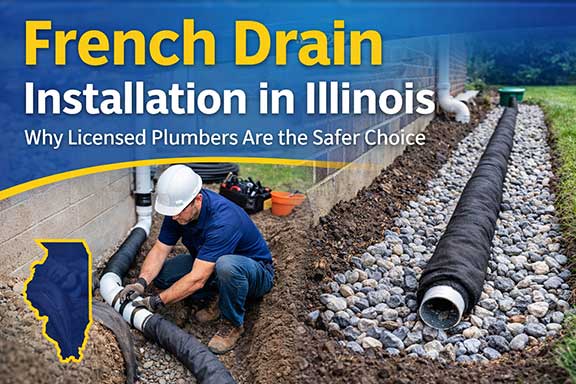
When Illinois homeowners deal with standing water, foundation seepage, or recurring basement moisture, a French drain system often becomes part of the solution. However, one critical decision determines whether that system protects your home long-term or creates bigger problems later: who installs it. In Illinois, hiring a licensed plumber for French drain installation is not just a preference—it is often a legal, structural, and financial safeguard. Understanding the difference between a licensed plumbing contractor and a landscaper can prevent code violations, foundation damage, and costly drainage failures.
Understanding What a French Drain Actually Does
A French drain is more than a trench filled with gravel. It is a subsurface drainage system engineered to redirect groundwater away from a structure’s foundation. In many Illinois homes, especially in areas with clay-heavy soil and freeze-thaw cycles, hydrostatic pressure builds around foundations. Without proper drainage relief, that pressure forces water through cracks, joints, and porous masonry. A properly designed French drain installation manages groundwater flow, relieves pressure, and protects structural integrity. When tied into existing drainage infrastructure such as sump systems or storm sewer connections, the system must comply with plumbing code requirements. That is where licensed plumbing expertise becomes essential.
Illinois Plumbing Code and Drainage Regulations
In the State of Illinois, plumbing work that connects to a drainage system, storm sewer, or sanitary sewer typically falls under the authority of the Illinois Department of Public Health. Licensed plumbers are regulated under the Illinois Plumbing License Law, which establishes education, testing, and compliance standards. When a French drain ties into a sump pump discharge, storm line, or underground drainage piping, it may legally require a licensed plumbing professional. Landscapers are not licensed under Illinois plumbing statutes and cannot legally modify or connect to regulated drainage systems. Choosing a contractor without proper licensing can result in failed inspections, municipal fines, or forced removal of non-compliant work.
Permit Requirements in Many Illinois Municipalities
Many municipalities throughout Chicagoland require permits for drainage modifications, especially when altering discharge locations or connecting to storm systems. A licensed plumber understands permitting processes, inspection requirements, and local amendments to state code. This protects homeowners from future complications when selling or refinancing their property.
The Technical Differences: Plumber vs. Landscaper
While landscapers may be skilled in grading and surface water control, subsurface drainage systems involve hydraulic calculations, pipe sizing, slope calibration, and discharge compliance. A licensed plumber evaluates:
Proper Pitch and Flow Rate
Drainage pipe must maintain adequate slope to ensure gravity-driven flow without sediment buildup. Improper pitch can cause standing water inside the pipe, defeating the purpose of a French drain system.
Soil Conditions in Illinois
Illinois soil, particularly in northern counties, contains high clay content. Clay expands and contracts dramatically with moisture changes. A licensed plumber understands how soil composition affects drainage capacity, filtration fabric selection, gravel sizing, and long-term system durability.
Safe and Code-Compliant Discharge
Improper discharge locations can flood neighboring properties or violate municipal stormwater ordinances. Licensed plumbers ensure that French drain discharge integrates properly with flood control systems, sump pump systems, or approved storm outlets without cross-connecting to sanitary sewer lines.
| Feature / Consideration | Licensed Plumber Installation | Landscaper Installation |
|---|---|---|
| Legal Compliance | ✅ Meets Illinois plumbing code; permitted connections | ⚠️ May violate plumbing regulations; no legal authority to tie into sewer/storm lines |
| Hydraulic Design | ✅ Correct pipe size, slope, and flow for long-term performance | ⚠️ May guess pipe sizing or slope; higher risk of drainage issues |
| Soil & Site Assessment | ✅ Evaluates soil type, clay content, and hydrostatic pressure | ⚠️ Focuses on surface grading; may miss subsurface water issues |
| Connection to Existing Systems | ✅ Proper tie-in to sump pumps, storm drains, or flood control systems | ⚠️ Limited knowledge; may connect incorrectly, causing backups |
| Inspection & Permits | ✅ Handles all permits and inspection requirements | ❌ Usually cannot secure permits; non-compliant work may need redoing |
| Warranty & Liability | ✅ Licensed and insured; accountable if issues arise | ⚠️ Limited or no insurance coverage; homeowner assumes risk |
| Long-Term Durability | ✅ Gravel, pipe, and fabric installed per professional standards | ⚠️ Higher likelihood of clogs, standing water, and system failure |
| Resale & Home Value | ✅ Documented professional installation; adds value | ⚠️ Unpermitted or unlicensed work can affect appraisal and sales |
Protecting Your Foundation from Hydrostatic Pressure
Basement flooding in Illinois is often caused by hydrostatic pressure buildup around foundation walls. A French drain installed without proper depth, gravel envelope, or filter protection can clog quickly, allowing pressure to return. Licensed plumbers design drainage systems with long-term performance in mind, often coordinating French drain installation with basement flooding prevention strategies and comprehensive flood control systems. The goal is not just to move water temporarily but to permanently reduce water intrusion risks.
Liability, Insurance, and Long-Term Risk
Hiring a licensed plumber provides an additional layer of consumer protection. Licensed contractors carry appropriate insurance coverage and are accountable to state regulatory standards. If an improperly installed French drain causes structural damage or sewer backup, homeowners may face denied insurance claims if the work was not performed by a qualified professional. Choosing a licensed expert reduces liability exposure and ensures the installation meets recognized safety and building standards.
Integration with Basement Waterproofing and Flood Control
French drains are often one component of a broader water management plan. In Illinois homes prone to heavy rainfall and snowmelt, combining French drain installation with flood control systems, sump pump upgrades, and basement flooding mitigation provides comprehensive protection. A licensed plumber evaluates the entire drainage ecosystem, ensuring exterior and interior systems work together rather than against each other. Landscapers typically focus on surface grading, not full-system hydraulic integration.
Resale Value and Inspection Considerations
During real estate transactions, undocumented drainage modifications can raise red flags. Home inspectors frequently check for improper sewer tie-ins or unpermitted drainage work. A professionally installed French drain system completed by a licensed plumber provides documentation, compliance assurance, and peace of mind for buyers. Proper installation supports home value rather than jeopardizing it.
The True Cost of Cutting Corners
While hiring a landscaper for a French drain may appear less expensive initially, the long-term cost of failure can be substantial. Foundation repairs, basement flooding remediation, mold removal, and drainage reconstruction often exceed the original installation cost many times over. Investing in licensed plumbing expertise from the beginning prevents recurring water intrusion and protects your property for decades.
Why Illinois Homeowners Should Always Choose a Licensed Plumber
French drain installation in Illinois is not just about digging a trench—it involves understanding plumbing code, groundwater behavior, soil science, hydraulic design, and safe discharge methods. Licensed plumbers operate under state-regulated standards, ensuring every component of the drainage system functions safely and legally. When protecting your home from water damage, basement flooding, and foundation deterioration, choosing a licensed plumbing professional is the safest and most responsible decision.
—
Are you in need of a professionally installed French drain on your Chicagoland property? We can help! Reach out today at 708-801-6530 with any questions and or to schedule a free consultation.