Naperville is one of the most notable and fastest growing cities in the Greater Chicago Metropolitan Area. Recognized as a major suburban metropolis in the state of Illinois, it is frequently voted as one of the best cities to live or buy a house in the USA, much like other desirable housing markets that offer reliable Sarasota rental services for residents and investors.
Factors like the strong presence of major employers in tech, manufacturing, and healthcare, plus high-end homes with lots of walkable streets, top-rated school districts, and an abundance of community amenities, make Naperville a very attractive place for families.
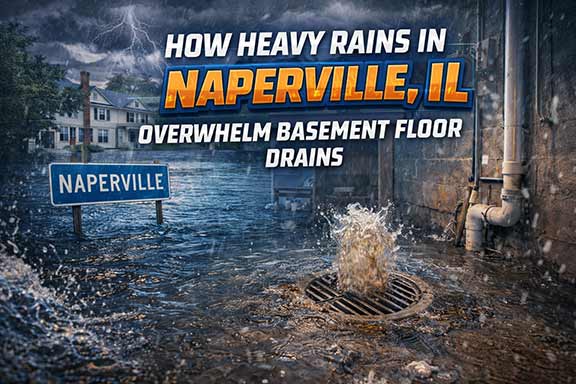
But like most of the Greater Chicago Metropolitan Area, Naperville is also prone to flooding. During periods of heavy rain, homes in this area face a significant threat of basement flooding and sewer backups. These problems are due to a range of natural, infrastructural, and human problems.
If you are a homeowner in Naperville, this post will help you understand why your home floods when it rains and what you can do to prevent the problem.
Why heavy rains overwhelm basement floor drains in Naperville homes
The city’s topography
The city of Naperville is characterized by a flat to gently rolling prairie landscape, with many parts of the city having a low-lying terrain that predisposes them to flooding. In places like Downtown Naperville, large parts of the neighborhood fall into this category, with up to 23.7% of homes being at a moderate to high risk of flooding. On the Naperville Riverwalk, the situation is worse; over 62% of properties in this area face a major risk of flooding whenever it rains.
Heavy rainfall and low infiltration
Also, most parts of Naperville have soils with poor drainage. The heavy prairie clay and glacial till, commonly found in the city, have fine particles that impede their ability to absorb water fast, while also letting them hold water for longer periods than other soil types. The result is that rainwater is more likely to pool on the soil surface than soak into the ground. This increase in the volume of surface runoff raises the risk of basement flooding in homes. At the same time, because these soils hold water for longer periods, they quickly become oversaturated, leading to even more flooding.
Sanitary sewer system overload
Naperville is one of the locations in the Greater Chicago Metropolitan Area without a combined sewer system, but this does not stop the city’s sanitary sewer system from overflowing. Groundwater entering the system via cracks and manholes or through illicit connections from homes can cause system overload. Fats, oils, grease, and non-flushable items from residential sewer lines can also find their way into the system. If the city’s sewer lines are blocked and overflow, it can cause basement flooding in nearby homes.
Blockages in private sewer lines
Tree roots and all kinds of debris in private sewer lines can increase the risk of basement flooding in those homes. Tree roots may invade old or damaged sewer lines through cracks and weak spots in the pipes. If allowed to establish themselves inside the line, they will prevent the free flow of wastewater. When high volumes of water enter these pipes, the blocked sections act as bottlenecks that force wastewater to back up into the basement. In addition to tree roots, other things that can cause these problems are fats, oils, grease, and all kinds of non-flushable items.
How to protect your Naperville home from basement flooding
Install backwater valves
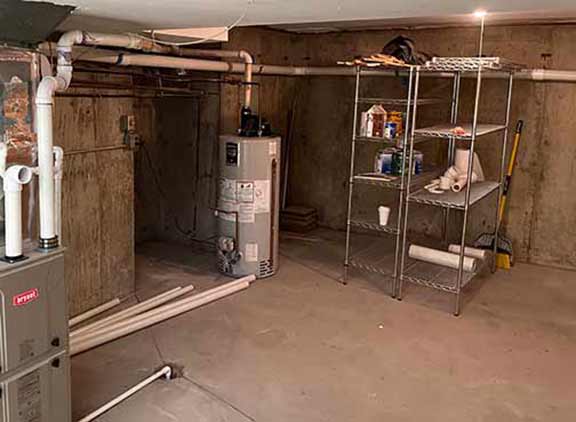
Backwater valves prevent basement flooding in your home by stopping backflow inside your sewer lines. The valve ensures that water can only flow in one direction within the line. If the water inside the pipe reverses flow, either due to problems in the city sewer lines or blockages in your home’s sewer system, the valve closes and blocks the pipe. This stops the water inside the sewer line from backflowing into your basement.
Install an overhead sewer system
For Naperville homeowners facing extreme chronic basement flooding in their homes, lifting the sewer lines above flood levels might be the best option. Although this is a costly project that involves abandoning your home’s existing sewer line and installing a new system that is above ground, it permanently solves your home’s basement flooding issues. However, the cost of this installation is far less than the financial, physical, and psychological toll of dealing with basement flooding in your home every year.
Professional sewer line inspection and cleaning
You can also address the problem by removing the clogs and blockages in your sewer line. By having a professional plumber conduct a sewer camera inspection, you can identify the location of every clog and blockage inside your sewer line. To remove debris and restore optimal flow within the pipes, you may use either hydro jetting or sewer rodding, two of the most effective drain cleaning solutions used by plumbers. Following these steps annually will significantly reduce the risk of basement backups in your home, especially when combined with backwater valves.
But these are not the only options for solving these problems. An experienced Naperville professional plumber can help you find the best solutions for your home by assessing your property to understand the root cause of the issues.
—
In need of some assistance with basement flooding issues in Naperville, IL? We can help! Reach out to us today at 708-801-6530.