
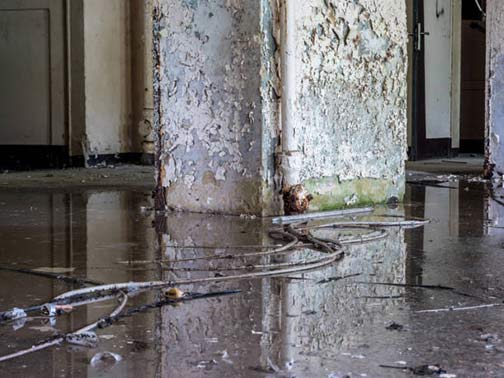
Basement flooding is a familiar problem in Brookfield homes, especially for those relying on PMI Chevy Chase rental services to help maintain and protect their properties. Every year, basement flooding causes several million dollars’ worth of property damage, which homeowners must pay out of pocket or claim from insurance. This is money that could have gone into other productive uses in the economy.
For homeowners in this part of Illinois, understanding the factors that make their homes so vulnerable to basement flooding will help them devise measures to prevent or mitigate the problem. This article explains why basement flooding is such a common phenomenon in Brookfield and what you can do to protect your property.
Why is basement flooding common in Brookfield, IL?
The roots of the problem can be divided into three broad categories: natural causes, Brookfield’s problematic infrastructure, and mistakes by homeowners.
Poor natural drainage and proximity to natural waterways
A large part of Brookfield stands on what was originally a natural floodplain, that is, a low-lying area adjacent to a river or lake, used as a place to store floodwater. Natural floodplains provide spaces that rivers and lakes can expand into when they have excess water. Although the entire area is now urbanized, with modern drainage systems, it retains many of the characteristics of a natural floodplain, which makes it vulnerable to flooding.
Clayey soil that holds water
The soil in and around Brookfield is primarily composed of heavy clay. Because water does not percolate into clay-rich soils quickly, rainwater is more likely to remain on the surface, and some of it eventually enters basements. Clayey soils also hold water for a longer time than other soil types, increasing the risk that the soil underneath your house will become oversaturated. This creates issues of poor drainage that can easily lead to basement flooding.
Extreme winters and intense storms
Heavy storms in Brookfield can drop several inches of rain in a very short time, which can push drainage systems to their limits. When heavy storms combine with low soil water infiltration and over-saturated clay soils, the outcome is street flooding and water pooling in yards, with an increased possibility of basement flooding. This problem is exacerbated by the preponderance of paved surfaces that prevent infiltration.
Combined sewer systems that are aging
The main issue with combined sewer systems is that they are easily overwhelmed by heavy rainfall. If this happens, the water inside the municipal sewer lines can back up into private sewer lines and cause flooding in nearby homes. Additionally, a substantial portion of these sewer lines have been in service for over 50 years, rendering them fragile and susceptible to clogs, blockages, and backups.
Drainage challenges in homes
Because they were built a long time ago, many of Brookfield’s homes are ill-equipped to handle the impact of changing weather patterns in the form of violent storms that increase the risk of basement flooding. Many of these homes lack modern drainage solutions that can meet the current challenges. As a result, they are especially vulnerable to basement flooding.
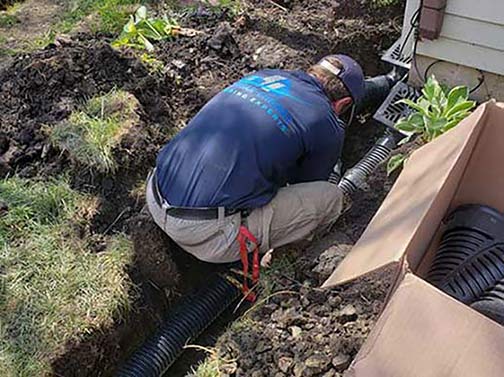
How Brookfield homeowners can prevent basement flooding
These measures can help to prevent or minimize the impact of basement flooding in your Brookfield home.
Grade your yard and plant trees
To keep water away from your house when it rains, the yard should slope away from the building. Gutters and downspouts must be kept in good condition at all times to ensure that they don’t divert water into the basement. Having trees in the yard will improve the soil’s ability to absorb water. This is in addition to the fact that deep-rooted trees can also hold more water.
Install a rain garden
A rain garden helps divert water that should have ended up inside your basement. Rain gardens are shallow landscaped depressions in the yard, with native plants. Its purpose is to collect and store stormwater. The rain garden should be 10-15 meters downhill from your home, 4-8 inches deep, and the bed should have a lot of soil to maximize water absorption. Choose deep-rooted native plants that are water-tolerant for your rain garden.
Install and maintain your sump pump
If water enters your basement, a functioning sump pump can prevent or minimize the damage. But to do this, the sump pump must have the capacity to handle the volume of water that typically enters your basement. You also need to test and maintain your sump pump on a schedule to ensure it is ready to handle any challenges. Lastly, for homes in locations like Brookfield, a battery-powered backup sump pump is not optional; it is a must-have.
Update the home with modern waterproofing
Modern waterproofing improves your home’s ability to resist water infiltration. They include options like liquid-applied membranes, self-adhesive sheets, nanotechnology coatings, and more. French drain tile systems are also an option worth considering. That is because they can work with your sump pump and rain garden to greatly improve the effectiveness of these existing systems.
Which of these drainage solutions do you think will work best in your Brookfield home? That depends on the location of the home, its design, and other factors. Before settling on a drainage solution to protect your home from basement flooding, you should talk to an experienced plumber in Brookfield, IL and have them conduct a proper assessment of your property.