
A common reason why homebuyers often prefer a condo to a single-family home is the lower maintenance cost of the former. Since repair costs are shared by all the owners, the maintenance costs of these large complexes often average out below what owners of independent residential structures might spend, which is why some turn to rental services when evaluating long term housing options.
However, this is not always true, especially for dwelling units in the lowest floors of the complex. That’s because the effects of plumbing issues in the other parts of the building often show up in the lowest levels of a condominium, with the result that these apartments often become prone to problems like backed-up drains.
Why does this happen?
For Chicago condo owners, the cause of the problem is fourfold:
Interconnected plumbing systems
Backed-up drains can happen in any of the units in an apartment complex. But for units on the higher floors of the building, these problems are often the direct result of issues in their apartments’ drainage systems. However, for apartments on the lower levels, this is not always the case. Problems that originate in the upper floors may ripple downwards and manifest in the worst possible ways in their units. In other words, lower units are more likely to inherit the drainage problems of the units above them.
Aging city infrastructure
Chicago’s sewer infrastructure is old, and sizable portions of the greater Chicago area still use combined sewer systems, which are prone to overflow. When the city’s sewer lines are overwhelmed by heavy rain and intense snowmelt, they divert the excess wastewater into streets and nearby homes. The result is basement flooding and sewer backups in those buildings. These problems affect apartment complexes too, but the impact is worse in units located on the lowest floors of the building.
Extreme weather events
Chicago is well-known for its cold winters and severe rainstorms. Over the years, these problems have worsened as the effects of climate change become more severe globally. In one single day in 2025, as much as 5.61 inches of rain fell in Chicago within the space of two hours, flooding streets and overwhelming infrastructure. Additionally, during winter, extreme cold reduces the flow rate of sewage through underground lines, leading to increased buildup in those pipes and an increased risk of blockages and backups.
Chicago’s low-lying terrain
Another issue is Chicago’s naturally low-lying terrain and high water table, which reduces the amount of runoff that the soil can absorb during heavy rains. The result is increased surface runoff across the entire city, leading to higher rates of street/yard flooding and a greater risk of sewer backups in homes. These problems also affect apartment buildings, but once again, the units on the lowest floors of the complex bear the brunt.
Protecting your Chicago condo from drain backups
Install a backflow preventer
Since you don’t have any real influence over what other residents do in their homes, the first step should be to try to gain some control over what happens in your sewer line. A backflow preventer gives you that. This simple plumbing device protects your home from drain backups by ensuring that wastewater only flows in one direction inside your drain lines. The valve stays open as long as wastewater flows outwards. If there is a reversal of flow inside the pipe, it closes to protect your home. Installing these devices at various points in your drainage system will prevent backups.
Routine professional drain cleaning
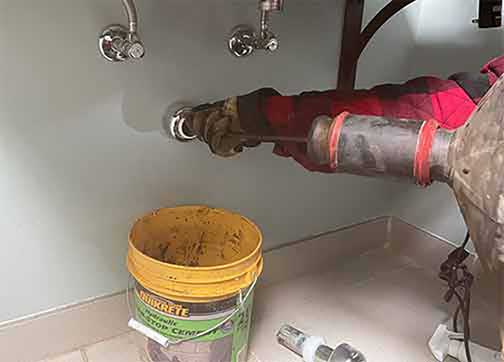
The risk of drain backups in your apartment increases with the amount of buildup in your drainage lines. Scheduled drain cleaning using professional methods such as sewer rodding and hydro jetting can help mitigate this risk. This step improves optimal flow within the line. The recommended frequency for cleaning your drain is once a year, unless the pipes are vulnerable to tree root intrusion.
Work with your HOA
Your building association can mobilize other owners to work with you to solve the problems. Sometimes, neighbors don’t realize the impact of their actions on other apartments. By involving the HOA, you can reduce the amount of debris that gets flushed into the building’s drainage system. You may be able to get others to install strainers on their drains and refrain from dumping certain items or materials into the drains.
Install an automatic pop-off valve
Whenever there is a clog in the main line, a garage pop-off protects the living areas of an apartment complex from drain backups. This device has a release valve that allows sewage to be dumped inside the garage instead of homes. It works whether the cause of the impending backup is located in a unit on the upper floors of the building or originates from the city sewer system. Installing and maintaining a pop-up valve in the common areas is usually the responsibility of the HOA.
Finally, you need the know-how of a local Chicago plumber to help you implement the above strategies. A good plumber will also conduct periodic inspections of your drainage and regular system maintenance to ensure that you are never surprised by a drain backup.