
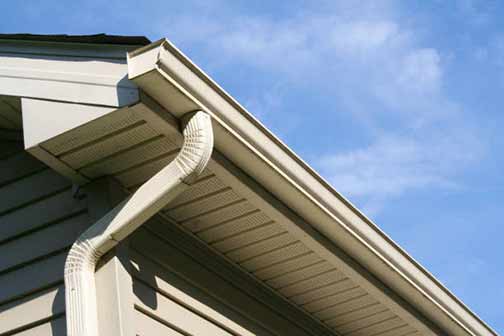
Gutters and downspouts have one job: move water away from your foundation. When they’re clogged, sagging, or directing water toward the house instead of away from it, that water has to go somewhere — and it usually goes into the soil directly against your foundation wall, into your basement, or under your slab.
The damage that follows is rarely dramatic at first. It shows up as efflorescence on basement walls, a damp smell after rain, or soil erosion along the foundation line. By the time its obvious, water has usually been finding the same path for months or years. Keeping gutters clear and downspouts properly directed is one of the simplest things a homeowner can do to avoid foundation and drainage problems that are expensive to fix once they’re established.
What Gutters and Downspouts Actually Do
A properly functioning gutter system controls where rainwater goes after it hits your roof. Without it, water sheets off the roofline and drops directly at the base of the house — exactly where you don’t want it. Over time that concentrated flow erodes soil, undermines landscaping, and drives moisture into the foundation wall through the ground rather than away from it.
Downspouts are the part most homeowner’s underestimate. A gutter that collects water but dumps it two feet from the foundation through a short downspout extension isn’t much better than no gutter at all. The water needs to be carried far enough away from the house that it drains away from the structure rather than back toward it. How far depends on the grading around your foundation — but the further the better.
Regular Inspection of Gutters and Downspouts
Regular inspection is key to gutter and downspout maintenance. Check for debris, obstructions, and damage at least bi-annually, preferably in the spring and fall. Look for rust, leaks, and sagging gutters which can impair their functioning.
How to Clean Your Gutters and Downspouts
Clean gutters at least twice a year — once in late spring after seeds and helicopter pods have fallen, and once in late fall after the leaves are down. If you have overhanging trees dropping debris consistently, more frequent cleaning keeps buildup from compacting and blocking flow between those intervals.
Use a stable ladder positioned so you’re not overreaching — moving the ladder more often than you’d like is safer than leaning. Work gloves are worth it; wet decomposed leaves and debris hide sharp edges from metal gutters and broken shingle material. Remove debris by hand or with a gutter scoop, working toward the downspout rather than pushing material into it.
Once the gutter is cleared, run a hose from the end opposite the downspout toward it to flush remaining debris and confirm the downspout is flowing freely. If water backs up instead of draining, the downspout is clogged — feed the hose down from the top or use a plumber’s snake to clear it before calling the job done.
Installing Gutter Guards
Consider the installation of gutter guards to reduce the frequency of cleanings. Gutter guards prevent debris from entering the gutters while allowing water to flow in. Gutter guards exist in various types, including mesh screens, foam inserts, and brush filters. Choose one that best suits your needs and budget.
When to Repair or Replace Gutters and Downspouts
Walk the gutters after a heavy rain if you can — that’s when problems show up that are invisible during a dry inspection. Water dripping from seams, pooling in sections that should be draining, or cascading over the front edge of the gutter instead of flowing toward the downspout all point to specific issues worth addressing.
Small holes and pinhole leaks can be patched with gutter sealant from the inside — clean and dry the area first or the sealant won’t bond. Separated seams on sectional gutters can be resealed the same way. If a section is visibly sagging, the hangers have either failed or pulled away from the fascia board and need to be replaced or repositioned to restore proper slope toward the downspout.
More significant damage — sections that are crushed, corroded through, or pulling away from the roofline entirely — is better replaced than patched. A repaired gutter that fails again in six months costs more in the long run than a replacement section done once. Check that downspout brackets are tight against the wall and that the bottom extension is directing water at least four to six feet from the foundation before considering the job complete.

Proper Gutter Slope and Alignment
Gutters need to be sloped so that water drains to the downspouts. The ideal slope is about 1/4 inch for every 10 feet of gutter. Check the alignment of your gutters and adjust as needed to maintain the gutters sloped correctly. If the gutters have sagged or shifted, use brackets or hangers to hold them in place.
Downspout Extensions and Diverters
Install downspout extensions to direct water away from your home’s foundation. Downspout extensions are either rigid or flexible and prevent water from collecting near your home foundation. Downspout diverters can be used to direct water into other areas of your yard or into a rain barrel to utilize it later.
Preventing Ice Dams in Winter
During cold temperatures, ice dams can form on your gutters and roof, causing water to accumulate and ruin your home. To prevent ice dams, ensure that your attic is insulated well to avoid warm air from causing the snow on the roof to melt. You can also place heated gutter cables that will melt the ice before it causes any problem.
Safety Precautions for Gutter Maintenance
Always take safety precautions when undertaking gutter maintenance. Use a reliable ladder with a stabilizer, and if possible, have someone holding the ladder. Do not work on gutters when the weather is poor and ensure that you use the right tools to avoid harm. If you are afraid of heights or do not feel like doing the maintenance job, then hire a professional.
Hiring Professional Maintenance Services
If you prefer to leave gutter maintenance to the experts, hire a professional plumber or company who specializes in gutter maintenance. They have the experience, tools, and knowledge to keep your gutters and downspouts in top condition. Regular professional maintenance can save you time and prevent costly repairs in the long run.
Gutters Are Cheap Maintenance. Foundation Repairs Aren’t
Most gutter problems that turn into expensive foundation or drainage issues started as something minor — a clogged downspout, a sagging section that pooled water instead of draining it, an extension that stopped two feet from the house instead of six. None of those are difficult or costly to fix. They just don’t get noticed until water has been finding the wrong path for a season or two.
Cleaning twice a year, checking for damage after major storms, and making sure downspouts are actually moving water away from the foundation covers most of what gutters need. It takes a couple of hours a year and costs almost nothing. The problems it prevents can cost thousands.