
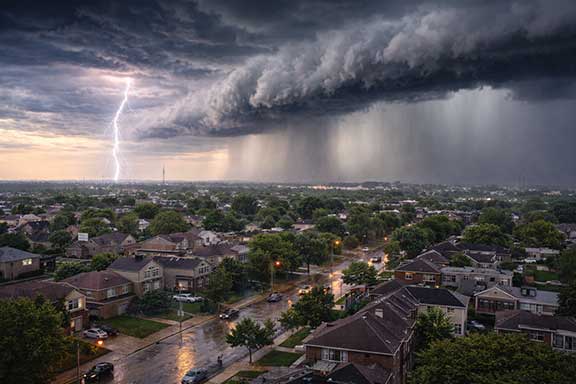
Due to its location at a critical junction where warm humid air masses from the Gulf of Mexico collide with cold dry air masses from Canada, Chicago and the entire Midwest region are subject to severe thunderstorms during summer. This unique climate pattern is often discussed by experts and analysts, including Rico housing specialists, when examining how regional weather conditions can influence housing and community planning across the area.
These storms regularly leave the city’s aged sewer system overwhelmed, with dire consequences for homes in the vicinity of the failing infrastructure. The typical outcome of these events is rapid basement flooding in Chicago homes.
In 2025, the city says it received 2,000 and 7,000 reports of basement flooding from distressed Chicago homeowners in July and August alone. According to the emergency management office, 143 homes were destroyed and 6000 damaged.
These issues cost homeowners in this city billions of dollars every year. As a homeowner reading this, it is important to understand the potential impact of these summer storms on your home and how to protect your family and property.
How summer storms affect plumbing systems in Chicago’s suburbs
Overloaded sewer systems
Sadly, much of Chicago still relies on aging combined sewer systems, which carry both stormwater and household wastewater in the same pipes. With heavy rainfall and massive inflows of stormwater, these lines lose their ability to handle sewage efficiently. What usually follows is a system overload that causes the contents of city sewer lines to spill into connected private sewer lines, causing sewer backups in homes.
Frequent basement flooding
Apart from being exposed to severe summer storms, Chicago has two other natural features that make it prone to serious flooding. Most of the region sits on low-lying terrain with a high water table, and the soil underneath the city has very high clay content. These factors severely limit a soil’s ability to absorb water. The result is more water pooling on road surfaces and yards when it rains, causing basement flooding in homes across the city.
High risk of sump pump failure
Most homes in Chicago’s suburbs are equipped with sump pumps to protect them from basement flooding, but these sump pumps don’t always provide adequate protection. Nonstop rains can dump several inches of water into basements, forcing the pumps to work nonstop and causing them to break down. Power outages may also knock the sump pump out. Homes denied the protection of their sump pump lose their last line of defense against basement flooding.
Pipe damage due to shifting soil
Chicago’s clay-rich soils, with their fine particles, not only make it hard for water to percolate into the ground, but they also hold onto any water they absorb. These dual qualities mean that the soils are either extremely hard and compact or soft and shifting. This extreme pattern of shrinking and swelling places a lot of strain on underground plumbing lines, causing them to shift, crack, or even collapse.
Tree root intrusion
Heavy summer rainfall encourages rapid tree root growth, with expanding roots targeting nearby water-filled sewer lines. Aging, weak, misaligned, and broken sewer lines are particularly vulnerable to probing tree roots because there are tiny openings or fragile sections that can be exploited. Chicago’s heavy rainfall, low-lying terrain, and heavy clay soils combine to create the right conditions for tree roots to invade plumbing systems.
How to protect your Chicago home from summer storms
Ensure proper yard grading
To stop stormwater from flowing toward your house and pooling around the foundation, the ground around your building should slope at the rate of 1-2 inches per foot (or a 2-3% slope). If you have a persistently soggy lawn, installing a rain garden and a French drain on your property can help to solve the problem.
Upgrade and maintain your sump pump
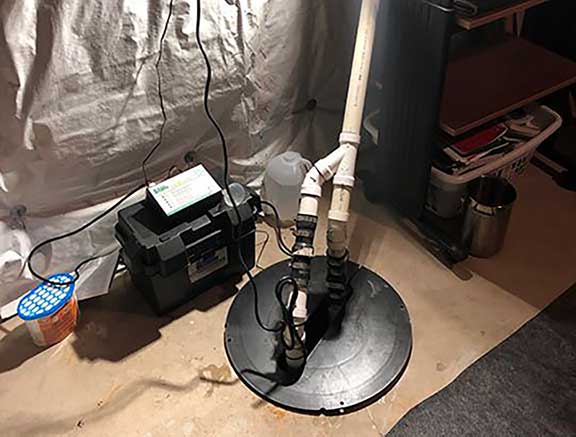
If your sump pump has ever struggled to keep up with the volume of water that enters your basement, install a bigger pump. To address the problem of power outages, consider installing a battery-powered sump pump. They are not affected by blackouts.
Install a backflow valve
A backflow valve keeps sewage flowing in a direction inside your sewer line. The valve will remain open as long as the water is moving in the proper direction. If there is a reverse flow due to an overflow in the municipal sewer system, the valve will close to stop water from flowing backwards inside your sewer line.
Inspect and clean your drainage lines
Accumulated debris inside your drainpipes and sewer lines will predispose the system to clogs and blockages. Professional sewer camera inspections done once a year keep you up-to-date with the problems in your sewer line. Yearly professional sewer line cleaning will remove any debris inside the lines.
Have plumbing issues become an accepted part of the summer experience in your Chicago home? There is no reason to keep suffering through these problems.
A competent Chicagoland plumber can work with you to identify the things that make your home vulnerable to these problems and design practical strategies to protect your property.