
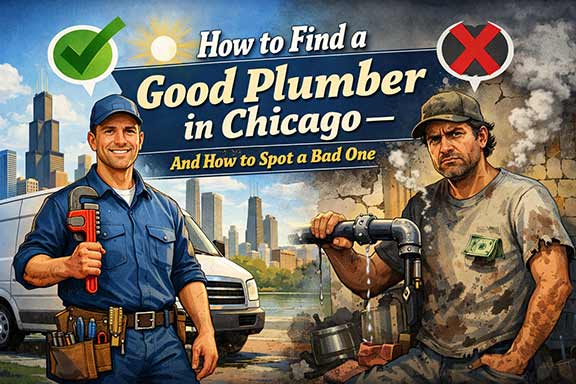
Let’s be direct: a bad plumber doesn’t just fail to fix your problem — they can make it catastrophically worse. A burst pipe misdiagnosed. A sewer line “fixed” with the wrong materials. A water heater installed without a permit. These aren’t hypotheticals; they’re real situations Chicago homeowners deal with every year, often after trusting a contractor who seemed fine on the surface.
Chicago’s plumbing infrastructure is particularly demanding. Older homes in neighborhoods like Lincoln Square, Bridgeport, and Oak Park often have aging galvanized pipes, clay sewer lines, and even lead service lines still in use. The freeze-thaw cycles of Illinois winters put constant stress on pipes. This is not a market where you want to experiment with the cheapest bid.
The good news: there are excellent plumbers serving Chicago and the suburbs. This guide will help you find them — and steer you away from the ones who will waste your time, money, and trust.
1. What to Look for in a Chicago Plumber
Not all licenses and credentials are equal, and in Illinois, the bar for what someone can legally call themselves varies. Here’s what actually matters when vetting a plumber in the Chicago metro area.
Illinois Plumbing License
Illinois requires plumbers to be licensed at the state level through the Illinois Department of Financial and Professional Regulation (IDFPR). Any plumber working in Chicago should hold a valid Plumber’s License — and you can (and should) verify this before hiring. A plumbing contractor company should also carry a valid business license with the City of Chicago or your municipality.
Liability Insurance and Workers’ Comp
This is non-negotiable. If a plumber damages your property or gets injured on your job, you are liable if they don’t carry proper insurance. Always ask for a certificate of insurance before work begins. Any reputable company will provide this without hesitation.
Pulls Permits for Major Work
In Chicago, many plumbing jobs — including sewer line work, water heater replacements, and repiping — legally require a permit. Plumbers who skip permits aren’t just cutting corners; they’re leaving you exposed to code violations, problems when you sell your home, and no safety inspection on the work. If a plumber tells you “we don’t need a permit for this,” that’s a serious red flag.
Transparent, Written Estimates
Good plumbers give you a detailed written estimate before touching anything. It should include labor, parts, and a clear scope of work. Verbal agreements mean nothing when there’s a dispute.
A trustworthy Chicago plumber will check every one of these boxes:
- ✅ Verified Illinois plumbing license (checkable on IDFPR)
- ✅ Carries general liability and workers’ compensation insurance
- ✅ Pulls permits for major jobs without being asked
- ✅ Provides itemized written estimates before starting work
- ✅ Has a real local address and verifiable history in the area
- ✅ Offers a clear warranty on both parts and labor
For 24/7 emergency plumbing situations — burst pipes, sewage backups, no hot water — the vetting window is shorter, but these standards still apply. A company that checks all these boxes before the emergency is the one you want on speed dial.
2. Five Questions to Ask Before You Hire Anyone
Even if a plumber looks great on paper, a short conversation reveals a lot. Ask these five questions and pay close attention to how they respond — not just what they say.
“Can you send me your license and insurance information?”
A legitimate contractor answers yes immediately. Hesitation, excuses, or a vague “we’re covered, don’t worry” is a hard no.
“Will you pull a permit for this job?”
For jobs that require permits — repair of sewer lines, water heater installations, repiping of your home — the answer must be yes. If they say no or try to convince you permits aren’t necessary “to save time,” walk away.
“Do you have experience with my specific issue?”
A clogged drain is different from a cracked sewer main. A running toilet is different from a failing sump pump. Ask specifically about your problem. If they dodge with “we handle everything,” press for specifics about comparable jobs they’ve done nearby.
“What’s included in this estimate, and what could change the price?”
Legitimate plumbers explain their pricing clearly. They’ll mention that if they open a wall and find additional damage, the scope changes — that’s honest and fine. What’s not fine is a plumber who can’t explain their own estimate or refuses to put it in writing.
“What warranty do you offer on your work?”
Quality plumbers stand behind their work. A good warranty on labor — at minimum 90 days, ideally one year — signals confidence. If they offer none, ask why.
💡 Pro Tip: If a plumber is annoyed by these questions or rushes you to skip them, that tells you everything you need to know. Trustworthy contractors welcome informed customers — it makes the job smoother for everyone.
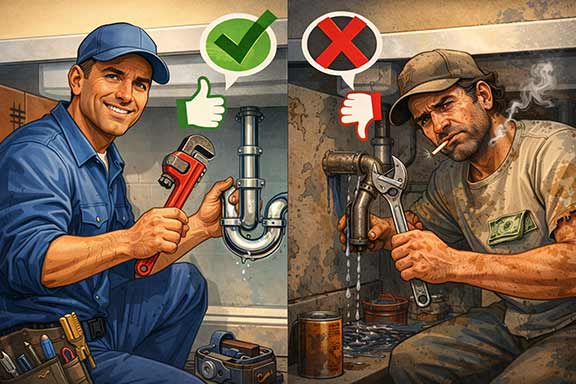
3. Seven Red Flags That Reveal a Bad Plumber
Chicago has a healthy mix of licensed professionals and unlicensed operators. Knowing the warning signs protects your home, your money, and — especially with gas line repair and service — your family’s safety.
- 🚩 No verifiable license or insurance. If they can’t produce documentation, stop the conversation.
- 🚩 Cash-only demands. Professionals accept credit cards and provide receipts. Cash-only is often a sign of unlicensed, uninsured work.
- 🚩 Dramatically low bids. If one estimate is 50–60% lower than all others, the plumber is cutting corners, planning to upcharge mid-job, or isn’t licensed. Cheap plumbing is almost always expensive plumbing in disguise.
- 🚩 Pressure tactics and false urgency. “I can only do this price if you book right now.” Legitimate contractors don’t pressure you. This is a classic high-pressure sales tactic.
- 🚩 No physical address or local presence. Transient operators with no local history are harder to hold accountable if something goes wrong.
- 🚩 Vague or verbal-only estimates. If they won’t put the scope and price in writing, they’re leaving room to renegotiate after they’ve already opened your walls.
- 🚩 Recommending unnecessary repairs. Some bad-faith plumbers use a drain call to “discover” thousands in additional problems. Always get a second opinion on any large unexpected recommendation.
⚠️ Warning: Be especially vigilant about unsolicited “door knockers” who show up after heavy rain offering discounted drain or sewer inspections. These are common in Chicago suburbs and are frequently used to upsell homeowners on unnecessary sewer replacements. Always use a company you’ve vetted independently.
4. Common Plumbing Scams in Chicago — And How to Avoid Them
The “Cracked Sewer” Upsell
A plumber is called for a slow drain, does a quick camera inspection, and shows you alarming footage of a “cracked” or “collapsing” sewer line requiring a $6,000–$15,000 replacement. Sometimes the footage is real. Sometimes it’s from another property entirely. Always get an independent sewer camera inspection from a second company before authorizing major sewer work.
The Bait-and-Switch Estimate
A low estimate gets you to book. Once the plumber is inside and work has started, the price climbs — parts “weren’t included,” access was “more complex than expected,” additional problems were “discovered.” A thorough upfront estimate with a written scope prevents this entirely.
The Permit Dodge
Some plumbers suggest skipping the permit to “save you money and time.” What they don’t mention: the savings are theirs. The risk is entirely yours. Unpermitted work can void your homeowner’s insurance, cause issues at resale, and leave you legally responsible for non-code-compliant work.
The Mystery Parts Markup
Parts are marked up by every plumber — that’s standard. But some contractors mark up parts 300–400% and hide it in vague line items. Always ask what parts are being used and look up approximate retail costs. A fair markup is reasonable; price gouging is not.
5. What to Do in a Plumbing Emergency
Chicago winters are brutal on pipes. A hard freeze can burst a pipe in minutes, and a sewer backup can fill a basement faster than you’d believe. When you’re in emergency mode:
Step 1: Shut Off the Water
Know where your main water shut-off valve is before an emergency happens. In most Chicago-area homes, it’s in the basement near the front of the house. For a localized issue, use that fixture’s individual shut-off valve.
Step 2: Don’t Use Drain Chemicals
Chemical drain openers can damage pipes, especially older ones, and complicate the plumber’s job. Leave the Drano on the shelf and call a professional for anything beyond a simple hair clog.
Step 3: Call a Licensed 24/7 Plumber
Not all plumbers offer true 24/7 emergency response. Make sure you’re calling someone who will actually dispatch to your location. Our team provides genuine around-the-clock emergency plumbing services across Chicagoland, including burst pipe repair, sewer backups, and water heater failures.
Step 4: Document the Damage
Before cleanup starts, photograph everything. Your homeowner’s insurance may cover water damage, and documentation supports your claim. A reputable plumber will also explain what caused the issue — which matters for insurance purposes.
🧊 Chicago Winter Tip: If temperatures are forecast to drop below 15°F, let cold-water faucets on exterior walls drip slightly overnight. This small step prevents most burst pipe emergencies and can save you thousands in repairs.
If you’re dealing with recurring drain clogs throughout your home, slow drains in multiple fixtures, or sewage odors in your basement, don’t wait for a full emergency. These are early warning signs of a larger sewer or drain issue that’s far cheaper to address proactively.

6. Why Chicagoland Homeowners Trust Suburban Plumbing Experts
We built Suburban Plumbing Experts around a simple idea: Chicago homeowners deserve a plumbing company that treats their home like it’s their own. That means licensed technicians, upfront pricing, pulled permits, and work that’s done right the first time.
Every plumber on our team is fully licensed with the State of Illinois and trained in the specific challenges of Chicago-area homes — aging sewer infrastructure, clay tile lines, lead service line replacement, and flood control systems unique to the region.
- ✅ Licensed, insured, and background-checked technicians
- ✅ Upfront written estimates — no surprise charges
- ✅ Available 24/7 for genuine plumbing emergencies
- ✅ We pull all required permits on every qualifying job
- ✅ Serving Chicago and 40+ suburbs across the metro area
- ✅ Rated 5 stars by hundreds of verified Chicagoland customers
Whether you need a water heater replaced, a sewer inspection, emergency drain cleaning, or a whole-home repiping for an older property, we’re the team Chicago and suburban homeowners call when they want it done right.
Get a Free Estimate
Ready to work with a plumber you can actually trust? Fill out the form below or call us any time — we respond fast, often the same day.
—
—Suburban Plumbing Experts · (708) 801-6530 · suburbanplumbingexperts.com · Licensed & Insured · IL Plumbing License #055-044116 · Serving Chicago & 40+ Suburbs