
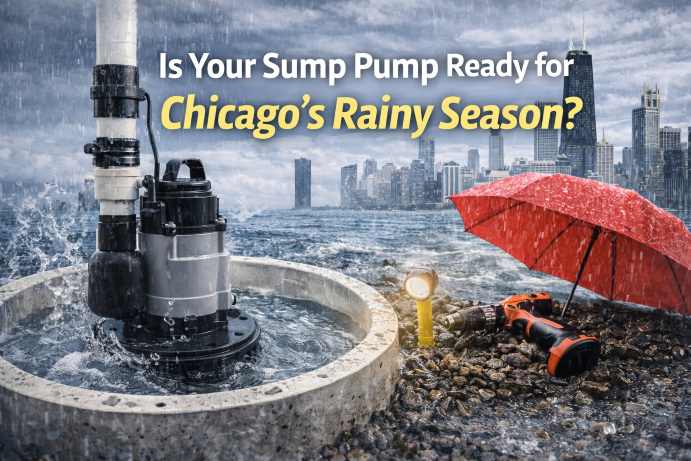
Is Your Sump Pump Ready for Chicago’s Rainy Season?
Spring is peak season for sump pump failures in Chicagoland. April and May bring the heaviest rain events of the year, and a failed sump pump during a storm can flood a basement in under an hour — causing tens of thousands in damage. Don’t wait until you hear it struggling.
If your home has a basement, your sump pump is arguably the most important piece of equipment you own that you never think about. It sits in a pit in the corner, quietly doing its job — until it doesn’t. And in the Chicago suburbs, where heavy spring rains, flat terrain, and aging infrastructure push groundwater levels sky-high, a sump pump failure isn’t a minor inconvenience. It’s a disaster.
This guide walks you through everything you need to know: the warning signs that yours is failing, which type of pump is right for your home, what a replacement costs, and how to make sure you’re protected when the next big storm hits — because in Chicagoland, there’s always another big storm.
Why Chicagoland Basements Are Especially Vulnerable
Chicago and its suburbs sit on some of the most flood-prone ground in the Midwest. The Illinois Floodplain Maps portal shows just how much of Chicagoland falls within designated flood risk zones — and if your home is in one, a reliable sump pump isn’t optional, it’s your first line of defense.
Here’s why basements here take a beating that homes in other parts of the country simply don’t face:
- Clay-heavy soil — DuPage and Cook County are loaded with dense clay that doesn’t drain well. When it rains hard, water has nowhere to go but sideways — straight toward your foundation.
- Flat topography — Unlike hilly terrain that naturally channels water away, the Chicago flatlands let water accumulate and pool around homes with nowhere to run.
- Aging combined sewer systems — Many older suburbs still have combined sewers that handle both stormwater and sewage. During heavy rain, these systems overflow and can push water back through floor drains and into basements.
- Rapid freeze-thaw cycles — Winter and early spring temperature swings cause the ground to shift, which can crack foundations and open new pathways for groundwater to enter.
- Older home stock — A large portion of suburban homes were built in the 1950s through 1970s. These homes often have aging waterproofing, deteriorating window wells, and original sump pits that have never been updated.
The bottom line: if you have a basement in Chicagoland, you need a sump pump, and you need one that works.
7 Warning Signs Your Sump Pump Is About to Fail
Most sump pumps don’t fail without warning. The problem is the warnings are easy to ignore — right up until it’s 2 a.m. during a thunderstorm and you’re standing in an inch of water. Watch for these:
1. Strange noises Grinding, rattling, or gurgling sounds point to a worn impeller, damaged motor bearing, or debris caught in the pump. A healthy sump pump runs with a low, consistent hum. Anything else deserves attention.
2. Running constantly or cycling too often If your pump won’t shut off or kicks on every few minutes even in dry weather, the float switch is likely stuck or the pump is undersized for your water table. Either way, it won’t last.
3. Excessive vibration Excessive vibration usually means a bent or damaged impeller. This creates wear throughout the motor and shortens whatever life the pump has left.
4. It’s 7 or more years old The average sump pump lifespan is 7–10 years under normal use. If yours is pushing a decade and has never been serviced, it’s living on borrowed time — especially heading into storm season.
5. Visible rust or corrosion Surface rust on the pump body is cosmetic. Corrosion on the float switch or inlet screen is a functional problem — it can cause the pump to stick or fail to activate when you need it most.
6. It doesn’t turn on at all If you test your pump and nothing happens, you have a failed motor, a tripped GFCI outlet, or a burned-out float switch. Any of these requires immediate professional attention.
7. Your basement has flooded before If you’ve had water in your basement in the past, your current setup — whether undersized, aging, or lacking a backup — isn’t adequate for your home’s conditions. Time to reassess.
Don’t wait for a storm to test it. Pour a bucket of water slowly into your sump pit right now. The pump should activate before the water reaches the top and shut off once the pit drains. If it doesn’t, call us at 708-801-6530.
Primary vs. Backup: Which Sump Pump Setup Do You Need?
One of the biggest mistakes Chicagoland homeowners make is relying on a single primary pump with no backup system. When power goes out during a storm — which happens regularly here — your primary pump goes with it. Here’s how the main options break down:
Pedestal pump ($500–$900 installed) The motor sits above the pit on a pedestal with only the impeller in the water. Best for narrow pits and tighter budgets, but generally less powerful and louder than submersible models.
Submersible pump ($800–$1,500 installed) The entire unit sits submerged in the pit inside a sealed housing. Quieter, more powerful, and longer-lasting than pedestal pumps — the right choice for most Chicagoland homes.
Battery backup pump ($400–$900 add-on) Runs on a 12V battery and activates automatically when power fails or when the primary pump is overwhelmed. In Chicagoland, this isn’t a luxury — it’s essential. The storms that flood basements are the same storms that knock out the power.
Water-powered backup ($300–$600 add-on) Uses municipal water pressure to create suction, so there’s no battery to maintain. A solid option for homes with reliable city water pressure.
Combination system ($1,200–$2,200 installed) An integrated submersible primary pump plus battery backup in one unit. The best overall protection for high-risk homes or finished basements, and the best value when you factor in what a flood costs.
Our recommendation for most Chicagoland homes: A submersible primary pump paired with a battery backup system. The backup isn’t optional here — it’s the difference between a dry basement and a disaster during the storms that matter most.
Sump Pump Maintenance: What to Do Each Season
A sump pump that’s regularly maintained lasts significantly longer and fails far less often. Here’s the seasonal routine we recommend:
Spring (April–May) — Before Storm Season Hits
- Do the bucket test — pour water slowly into the pit and confirm the pump activates before the water reaches the top.
- Inspect the float switch — make sure it moves freely and isn’t stuck against the pump body or pit wall.
- Check the discharge line — confirm it’s clear of debris and routing water well away from your foundation (at least 10 feet).
- Test your battery backup — most backup units have a dedicated test button; press it and confirm it engages.
- Look for rust, cracks, or standing water in the pit that shouldn’t be there between rain events.
Fall (October–November) — Before the Ground Freezes
- Disconnect and drain exterior discharge lines before temperatures drop to prevent freeze-cracking and blockages.
- Inspect the pit for sediment buildup — remove any gravel or sludge that could clog the intake screen over winter.
- Replace the battery in your backup system if it’s more than 3 years old. Don’t wait to find out it’s dead during the first spring storm.
- Check the check valve — this one-way valve prevents discharged water from flowing back into the pit. A failed check valve forces the pump to run constantly and burns out the motor.
Pro tip from our techs: The discharge pipe is the most overlooked failure point on any sump pump system. If it terminates too close to the house, or runs uphill without a proper check valve, your pump is working twice as hard as it needs to — and wearing out twice as fast.
What Happens When Your Sump Pump Fails During a Chicago Storm
We’ve seen it hundreds of times. A homeowner calls us during a storm — or the morning after — and the story is always the same. The pump was old, the storm was severe, the power flickered, and now there’s standing water in a finished basement.
The damage compounds fast. Water that sits for even a few hours soaks into drywall, flooring, and insulation. Within 24–48 hours, mold begins to grow. A flooded basement that could have been prevented by a $400 battery backup ends up costing $15,000–$40,000 in restoration — and that’s before factoring in ruined furniture, appliances, and anything else stored down there.
The communities we respond to most often for emergency sump pump calls include Chicago, Downers Grove, Naperville, Oak Lawn, Orland Park, Tinley Park, Lemont, and Bolingbrook — all areas with significant clay soil and aging infrastructure that push water toward basements during heavy rain events.
If your basement floods, here’s what to do immediately:
- Don’t enter standing water until you’ve confirmed electrical outlets and appliances are not submerged. Turn off the circuit breaker to the basement first.
- Call us — we offer 24/7 emergency service across the Chicago suburbs at 708-518-7765.
- Document everything with photos and video before any cleanup begins — your insurance carrier will need it.
- Check your flood coverage — standard homeowner’s policies typically don’t cover groundwater flooding. You may need a separate policy through FEMA’s National Flood Insurance Program.
- Don’t restart a submerged pump without having it inspected first — running a flooded motor can cause additional damage or create a safety hazard.
How Much Does Sump Pump Installation Cost in Chicagoland?
Here’s what you can typically expect to pay for professionally installed sump pump work in the Chicago suburbs in 2026. These are all-in prices including the unit, labor, and standard discharge line work:
- Standard submersible pump replacement: $800–$1,500 — a straightforward swap in an existing pit.
- Battery backup system (add-on): $400–$900 — installed alongside your existing primary pump.
- Combination primary + backup system: $1,200–$2,200 — the best value for complete protection.
- New sump pit installation: $1,500–$3,000+ — required when a home has no existing pit or the current one needs to be re-dug.
- Discharge line repair or rerouting: $200–$600 — often needed in homes where the original line was too short or improperly sloped.
Prices vary based on pit access, discharge line routing, and whether concrete cutting is required. We provide free written estimates before any work begins — no surprises, no pressure.
Frequently Asked Questions
How often should I replace my sump pump? Most submersible sump pumps last 7–10 years under normal use. If yours is approaching that range — especially heading into storm season — it’s worth replacing proactively. The cost of a new pump is a fraction of what a flooded basement costs to restore.
My sump pump is running but the water level isn’t going down. What’s wrong? This usually means the pump is undersized for the volume of water entering the pit, the discharge line is clogged or frozen, or the check valve has failed and water is cycling back in as fast as it’s being pumped out. All three require a professional assessment to diagnose correctly.
Do I really need a battery backup if I already have a sump pump? In Chicagoland, yes — absolutely. The storms that produce the most flooding are the same storms most likely to knock out your power. A primary pump with no backup is a single point of failure at exactly the moment you need it most. A battery backup is cheap insurance against a very expensive problem.
Can I install a sump pump myself? Swapping a pump in an existing pit is something a capable DIYer can handle. But digging a new pit, properly sloping a discharge line, and meeting local code requirements is a job for a licensed plumber. Improper installation voids most warranties and can actually make flooding worse.
What should I do if my basement floods? Cut power to the basement first, then call us for emergency service — we’re available 24/7. Document everything with photos before cleanup, and contact your homeowner’s insurance carrier. Many policies cover sump pump failure damage, so report it promptly.
Related Services
Sump pump service is part of our complete flood control work across Chicagoland. If you’re dealing with basement water issues, these services may also be relevant:
- Sump Pump Services — Installation, Repair & Replacement
- Ejector Pump Services
- Overhead Sewer Systems
- Basement Flooding Services
- Backflow Prevention
- French Drain Installation
- All Flood Control Systems
Don’t Wait for the Next Storm
Our team installs, repairs, and replaces sump pumps across the Chicago suburbs every day. Same-day appointments are available, and we provide a free written estimate before any work begins.
Schedule service online or call us directly:
- Suburbs: 708-801-6530
- West Suburbs: 630-749-9057
- Chicago: 773-570-2191
- Emergency 24/7: 708-518-7765
Get a Free Quote
Fill out the form below and we’ll get back to you shortly.