
Chicago’s unique terrain and peculiar weather mean that homes in the city regularly struggle with problems like yard flooding and sewer backups. These problems cost Chicago families thousands of dollars that should have gone into other uses, similar to concerns often addressed through Upstate New York housing resources.
This is a cost most homeowners want to avoid, but the challenge is finding an affordable and effective solution that will not hurt the aesthetics of their home. If you are one such homeowner, a French drain is a solution you should consider.
French drains: what they are and how they work
A French drain is an underground gravel-filled trench that diverts surface and groundwater away from your home’s foundation, basement, and lawn. It pulls water from waterlogged soil using gravity and transports that water out of your property to a designated discharge point.
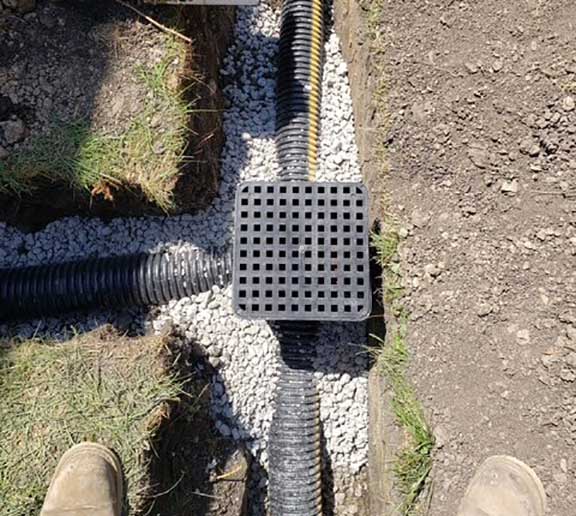
French drains have a simple design consisting of the following:
- A trench: A sloped channel that is 12-18 inches deep, with a slope of 1% or 1 inch for every 8 feet in length.
- Perforated pipe: A rigid PVC pipe with pre-drilled holes or a flexible polyethylene corrugated pipe with slits, to allow water from the surrounding areas enter the pipes. A 4-inch pipe is often used, but in very difficult situations, a 6 to 8-inch pipe may be used.
- Gravel or rock (drainage aggregate): To ensure that water passes through freely, stones of no less than ¾ inches are used to create void spaces around the pipe.
- Geotextile filter fabric (landscape fabric): To stop soil and debris from entering the void spaces and clogging the drain, landscape fabric is used as a filter around the rocks and perforated pipes.
- Catch basin: Most French drains will have one or two catch basins.
- Outlet: This is the end point of the drain where it discharges the collected water.
How does a French drain work?
The operation of a French drain is simple yet ingenious. When water pools on the soil surface after heavy rainfall, the French drain provides a way to remove this stagnant water.
Due to differences in pressure between the waterlogged soil around the French drain and the drain itself, the water in the surrounding soil is pushed into the drain via the spaces between the gravel and the holes/slits in the perforated pipe.
The collected water is carried down the pipe to a place where it can be discharged safely without posing a threat to the lawn or basement.
What are the advantages of a French drain compared to other flood protection measures?
Advantages of a French drain
- Aesthetically pleasing: A key advantage of a French drain is that it does not disfigure the appearance of your lawn. It may even enhance it.
- Easy to install: A French drain can be installed within a few hours using readily-available tools and equipment.
- They are versatile: French drains can be deployed in the lawn, basement, etc., and they can be covered with river rock or allowed to have a grass cover.
- Cost-effective: Since it uses basic materials, French drains are relatively inexpensive, while being highly effective.
- Highly durable: A French drain that is properly constructed and well-maintained can last 30 to 40 years.
Does your Chicago area home need a French drain installed? Here are the key signs that you do.
Signs that your Chicago home needs a French drain
Standing water on lawn
If your lawns become soggy after spells of heavy rain or you have water pooling on your lawn or around your building, you need a French drain to help you solve this problem.
Basement flooding
If your basement is damp or water is intruding into the below-grade areas of your home, the soil around your house is holding water and releasing it into the building. A French drain can solve this problem.
Mold and mildew in the home
The presence of mold, mildew, or musty odors in your basement is a sign that water is infiltrating into the space and soaking into the structures of your home. A French drain will help you fix this problem.
Cracks in the foundation
Persistent water pooling around the base of your building can result in structural issues like cracks in walls, flooring, and the foundation. Installing a French drain in your home is the first step to dealing with this problem.
Dying plants
If your lawn grass is struggling or plants in some sections of your yard are turning yellow, there is a chance that they are dying because of the waterlogged soil on your property. A French drain is a cost-effective solution for this issue.
Mosquito infestation
Stagnant water on your property provides the perfect breeding ground for mosquitoes and other pests. If mosquitoes are invading your home, a French drain should be high on your list of considered solutions.
Given the low cost and effectiveness of a French drain compared to the cost of fixing water damage in your home, is there any reason not to explore this accessible solution today?
—
Interested in having a French drain system installed on your Chicagoland area property? We can help! Reach out to us today at 708-801-6530.