
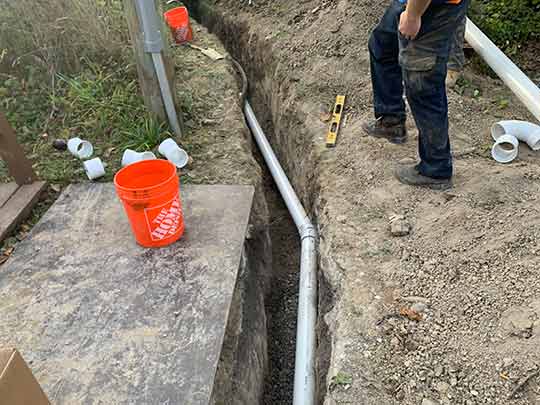
A broken sewer line isn’t something you can afford to wait on. Left unaddressed, it can lead to serious property damage, sewage backups, and health risks that only get more expensive to fix. Understanding what drives the cost of a sewer line replacement helps you make smart decisions fast — before a manageable repair turns into a major crisis.
Factors That Affect the Cost of a Broken Sewer Line Replacement
A broken sewer line replacement isn’t one-size-fits-all — and neither is the price. Several variables determine what you’ll pay, and understanding them before you get a quote means no one can pull a fast one on you. Here’s what actually drives the cost.
Location of the Problem Area
Where the break sits on your property is one of the biggest cost factors homeowners overlook. A failure in an open yard close to the surface is a straightforward dig — but when the damage is under a concrete driveway, a basement slab, or deep beneath landscaping, the labor involved jumps significantly. Contractors need to factor in access difficulty, surface restoration, and how much disruption the excavation will cause. Before any digging begins, a sewer camera inspection can pinpoint the exact location of the break, which often saves homeowners from unnecessary excavation costs.
Type of Pipe Material Used for Replacement
The material your new pipe is made of has a direct impact on both the upfront cost and the long-term performance of the repair. PVC is the most widely used material today — it’s affordable, lightweight, and resistant to corrosion. ABS is similar in cost and commonly found in older Chicagoland homes. Cast iron and clay pipe replacements cost more due to material and installation complexity, though cast iron remains valued for its durability and sound-dampening qualities. The American Society of Plumbing Engineers offers deep technical resources on pipe material standards if you want to get into the weeds on what each material is rated for.
Depth of the Sewer Line
The deeper the line, the bigger the job. Shallow sewer lines are relatively easy to access, but lines running several feet underground require heavy equipment, more labor hours, and careful shoring to keep the trench safe during the work. In Chicagoland especially, older neighborhoods often have deeper original installations that reflect construction standards from decades ago. It’s worth asking your contractor upfront how deep your line runs — it’s a question that directly predicts a significant chunk of the final bill. Trenchless repair methods have become a popular way to address deep lines without the full excavation cost.
Extent of Damage
The scope of the damage is probably the single biggest cost variable of all. A small crack or isolated root intrusion is a very different job from a fully collapsed or offset section of pipe. Minor damage caught early can sometimes be resolved without a full replacement — which is why symptoms like slow drains, gurgling sounds from your toilet, or unexplained wet spots in the yard should never be ignored. The longer a failing sewer line goes unaddressed, the more the damage spreads and the higher the replacement cost climbs.
Permits and Fees
Sewer line work requires permits — full stop. Any contractor who suggests skipping that step is one you should walk away from immediately. Permit costs vary depending on your municipality and the scope of the project, but they’re a normal, necessary part of any legitimate sewer line replacement. Pulling the right permits protects you as the homeowner if you ever sell the property, file an insurance claim, or need to prove the work was done to code. The EPA’s guide to sewer system infrastructure is a solid resource for understanding what’s typically required at a federal baseline level — local requirements build on top of that.
Average Cost of a Broken Sewer Line Replacement
Costs vary widely depending on what you’re actually dealing with — a minor blockage is a very different job from a fully collapsed line. Here’s a realistic breakdown of what homeowners typically pay at each level of severity.
Sewer Line Cleaning and Spot Repairs
If you catch the problem early, you may be looking at the least expensive outcome. General cleaning, snaking, sewer rodding, and minor spot repairs typically run between $150 and $450. This range covers routine maintenance and isolated blockages where the pipe itself is still structurally sound. It’s worth noting that skipping regular cleaning is one of the most common reasons small problems escalate into costly replacements.
Pipe Relining
When a pipe is broken or collapsed but the surrounding soil is still intact, relining is often a cost-effective alternative to full excavation. The process involves inserting a resin-coated liner inside the existing pipe, which hardens into a smooth, durable new surface. Expect to pay $80 to $250 per linear foot for the relining itself. If open access to the line is needed, excavation typically adds another $2,400 to $4,400 to the total. According to This Old House, trenchless methods like relining are increasingly popular because they minimize yard disruption while delivering results comparable to a full replacement.
Full Excavation and Replacement
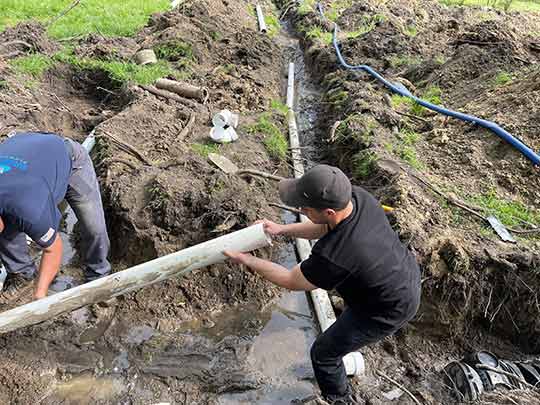
A full sewer line replacement is the most involved and expensive option — but sometimes it’s the only right one. Under normal conditions, excavating and replacing a sewer line runs $50 to $200 per linear foot, depending on the pipe material chosen. That range can climb significantly when complicating factors enter the picture — tree root systems, large boulders, proximity to a foundation, or unusually deep lines all add labor and equipment time. Getting a detailed written estimate before work begins is essential so you know exactly what’s included and what could trigger additional charges.
How to Save Money on a Broken Sewer Line Replacement?
Fortunately, there are ways to reduce the overall cost of a broken sewer line replacement. Here are some tips to save money:
Do Your Research
Research and compare quotes from different plumbing companies to ensure you’re getting a fair price for the replacement.
Schedule Maintenance
Regular maintenance and sewer camera inspections can help prevent significant issues and costly repairs in the long run.
Act Promptly
If you notice any issues with your sewer line, such as slow drains or foul smells, act promptly to address them. Early intervention can help prevent significant damage and ultimately save money.
Get Multiple Quotes
To ensure you’re getting a fair price and avoid surprises, get quotes from multiple plumbing companies. Always ask for an itemized estimate so you can see exactly what you’re paying for.
Consider Financing Options
Some plumbing companies offer financing options that can help make a broken sewer line replacement more affordable. Be sure to research and compare financing options to find the best one for your situation.
Don’t Wait on a Broken Sewer Line
A broken sewer line is one of those problems that never gets cheaper the longer you ignore it. Every day without a fix is another day of potential sewage backup, foundation damage, and health risks creeping into your home. But armed with a clear understanding of what drives the cost — location, materials, depth, extent of damage, and permits — you’re in a much stronger position to ask the right questions, compare quotes intelligently, and avoid getting overcharged.
The most important move you can make right now is getting eyes on the problem fast. The sooner you understand what you’re dealing with, the better your chances of keeping this a repair rather than a full sewer line replacement — and the more money stays in your pocket where it belongs.