Why the Standard Home Inspection Isn’t Enough — and What Chicago Buyers Really Need to Know Before Closing
Buying a home in Chicago is one of the biggest financial decisions you’ll ever make. You’ve found the right neighborhood, negotiated the price, and you’re in the due diligence window. The home inspector comes through, checks the major systems, hands you a report, and everything looks manageable. You sign, you close, you move in.
Three months later you’re dealing with a sewage backup, a failing water heater, and a plumber telling you the main drain line has a root intrusion problem that was clearly there long before you bought the place.
This scenario plays out across Chicagoland constantly — not because buyers are careless, but because most people don’t realize that a standard home inspection and a professional plumbing inspection are two very different things. According to the U.S. Consumer Financial Protection Bureau, home inspections are designed to help buyers understand a home’s general condition before closing — but they are visual and non-invasive by nature, and they are not a substitute for specialized inspections of critical systems like plumbing.
In Chicago’s housing market specifically, where a huge percentage of the housing stock was built before 1970, the plumbing story underneath a home can be dramatically different from what shows on the surface. This guide tells you exactly what a thorough plumbing inspection covers, what Chicago-specific risks to look for, and how to use the findings to protect yourself before you sign.
The Difference Between a Home Inspection and a Plumbing Inspection
A licensed home inspector is a generalist. They walk through the property, visually assess major systems — roof, structure, electrical, HVAC, and plumbing — and document what they can observe without opening walls, running specialized equipment, or performing invasive tests. A standard Chicago home inspection typically costs between $350 and $600 and takes two to three hours.
The plumbing portion of a general home inspection is limited by design. An inspector will run faucets, flush toilets, check for visible leaks under sinks, look at the water heater, and note obvious concerns. What they cannot do is tell you the condition of your sewer line, identify a pinhole leak inside a wall, assess whether cast iron drain lines are failing, or evaluate the extent of root intrusion underground. For those answers you need a licensed plumber performing a dedicated inspection with the right equipment.
The good news is that a dedicated plumbing inspection is not expensive relative to what it can reveal. A visual plumbing inspection typically runs $150 to $300. Add a sewer camera inspection — which every Chicagoland buyer should seriously consider — and the total is generally $400 to $800. That’s a small investment when you consider that a sewer line replacement can cost $5,000 to $20,000 and a cast iron repipe can run even higher.
What a Professional Plumbing Inspection Covers
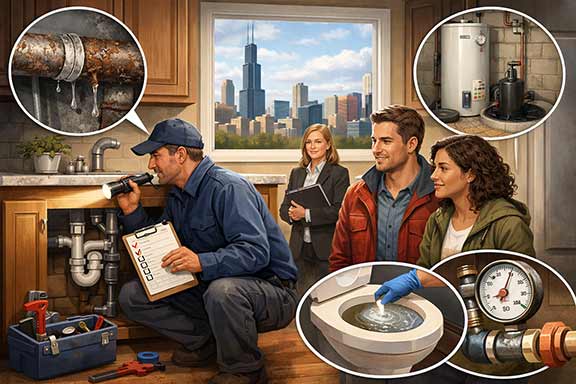
A licensed plumber performing a pre-purchase inspection will examine far more than a general home inspector can. Here is what a thorough inspection should cover:
Water supply lines — the condition of the pipes delivering water throughout the home, including the material they’re made of (copper, galvanized steel, lead, PEX), visible signs of corrosion, past repairs, and any evidence of leaks at joints or fittings. In older Chicago homes, galvanized steel supply lines are common and corrode from the inside out — restricting flow and eventually failing.
Water pressure — measured at multiple fixtures to identify whether there are restrictions, blockages, or pressure regulation issues. Consistently low pressure throughout the home often points to a supply line problem that may require significant repair.
Drain lines and drain flow — all fixtures are run simultaneously to assess drain performance and identify partial blockages, slow drains, or venting issues that cause gurgling and slow flow. A drain that moves slowly during a showing may be masking a much larger issue in the main line.
Water heater condition — age, fuel type, capacity, venting, pressure relief valve function, and any visible signs of corrosion or sediment buildup. In Chicago’s hard-water environment, water heaters age faster than the national average. Our water heater services team can assess whether a unit has meaningful life remaining or needs immediate replacement.
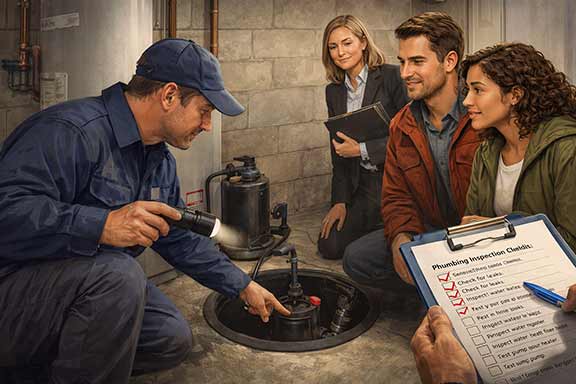
Sump pump and ejector pump — whether they are present, functional, and properly sized for the property. Given Chicago’s basement flooding risk, a sump pump that fails shortly after move-in is one of the most common and costly surprises new homeowners face.
Visible fixture and valve condition — toilets, faucets, shower valves, shutoff valves under sinks and at the main, and any accessible supply connections. Shutoff valves that haven’t been operated in years often fail when you actually need them — a detail that matters enormously if a pipe bursts.
Basement and crawlspace plumbing — any accessible drain lines, sump pits, ejector pits, and floor drains, looking for evidence of past backups, water staining, or active moisture intrusion.
The Most Important Add-On: Sewer Camera Inspection
If there is one piece of advice in this entire article that Chicagoland buyers should take seriously, it is this: get a sewer camera inspection before you close. No exceptions.
The sewer lateral — the underground pipe running from your home to the city main — is entirely invisible during a standard inspection. And in Chicago’s older neighborhoods, that pipe has often been in the ground for 50 to 100 years. Tree roots find their way through joint failures and cracks. Cast iron pipes corrode and collapse. Offset joints caused by soil movement create blockages. None of this shows up until the line backs up — often within the first year of ownership when occupancy patterns change and the line gets used more heavily.
A sewer camera inspection for Chicagoland properties feeds a high-resolution camera through the line and gives you real-time video of exactly what’s inside. You’ll see root intrusion, cracks, offset joints, grease buildup, and the overall condition of the pipe from the house to the street. If a problem is found, you have documented evidence to negotiate with the seller before closing — not after you’ve already written the check.
The cost of a sewer camera inspection is typically $200 to $400. The cost of a sewer line replacement after closing, when you have no leverage, can be $8,000 to $20,000. This is not a close call.
Chicago-Specific Plumbing Risks Every Buyer Needs to Know
Buying a home in Chicagoland comes with plumbing risks that are more pronounced here than in most other markets. Understanding them before you make an offer — not after — changes how you evaluate a property.
Cast iron drain lines are in the majority of Chicago-area homes built before the 1980s. Cast iron has a lifespan of roughly 50 to 75 years, and a significant portion of Chicago’s housing stock now has cast iron that is at or past that threshold. When cast iron fails it doesn’t just crack — it corrodes from the inside, eventually collapsing inward and causing chronic backups and complete drain failure. A camera inspection will reveal the condition of cast iron lines before you commit.
Lead service lines remain a serious concern in Chicago — the city has more lead water service lines than any other city in the country. If the home you’re buying has a confirmed or suspected lead service line, that’s a significant health and financial issue that needs to be part of your negotiation. The city has replacement programs available, but navigating them takes time and coordination. Our lead service line replacement team can assess what’s present and explain your options before you close.
Basement flooding history is something Chicago homes are notorious for concealing. A freshly painted basement floor or recently replaced carpet can hide water staining and moisture damage from past flooding events. During your plumbing inspection ask specifically about the sump pump history, whether the home has a backwater valve or overhead sewer, and whether the previous owner ever filed a flood insurance claim.
Tree root intrusion is endemic in Chicago’s established neighborhoods where mature elms, oaks, and maples line every parkway. Roots seek moisture and find it through the smallest joint failure in an aging sewer lateral. A line that was rodded last year may be re-invaded within months. A camera inspection tells you whether roots are present and how severe the intrusion is.
Illinois seller disclosure requirements mean sellers must complete a Residential Real Property Disclosure Form disclosing known material defects — including plumbing issues. As Illinois Realtors notes, sellers are only required to disclose what they know — if they’ve never had a plumbing problem inspected or repaired, they won’t disclose it even if a significant issue exists. The disclosure form is not a substitute for a professional inspection.
How to Use Plumbing Inspection Findings in Negotiations
A plumbing inspection doesn’t just protect you — it’s a negotiating tool. If the inspection reveals a failing sewer lateral, a water heater at end of life, or evidence of past flooding, you have documented evidence to request a price reduction, a seller credit toward repairs, or that specific items be repaired before closing.
In a competitive Chicago market, some buyers feel pressure to waive inspections entirely. This is almost always a mistake on a property with any age to it. A $400 to $800 plumbing inspection that uncovers a $15,000 sewer problem is one of the best investments you’ll ever make. Even in a hot market, sellers of older properties typically expect inspection-related negotiations.
If you are purchasing in an “as-is” condition sale, a plumbing inspection becomes even more critical. Under Illinois law, an as-is designation does not eliminate the seller’s obligation to disclose known defects — but it does mean they won’t be making repairs. You need to know exactly what you’re getting into before you agree to those terms.
What to Do Before You Close
Request both a dedicated plumbing inspection and a sewer camera inspection as separate line items from a licensed plumber — not just the plumbing portion of a general home inspection. These are two distinct services and both are worth doing on any Chicago-area property over 30 years old.
If the plumbing inspection identifies issues, get written estimates for the repair work before your inspection contingency period expires. That gives you real numbers to bring to the negotiation table. If the sewer camera reveals a failing lateral or significant root intrusion, our sewer line repair and replacement specialists can provide an assessment and estimate that you can use in your negotiations.
Don’t let the excitement of a home purchase rush you through the inspection process. The due diligence period exists for exactly this reason.
Frequently Asked Questions: Plumbing Inspections When Buying a Chicago Home
Does a standard home inspection cover the plumbing?
A general home inspector will perform a visual assessment of accessible plumbing — running faucets, checking for visible leaks, assessing the water heater. What it won’t cover is the condition of underground sewer lines, hidden pipe leaks inside walls, or the internal condition of drain lines. For a complete picture of a home’s plumbing, you need a dedicated inspection by a licensed plumber.
Is a sewer camera inspection really necessary?
For any Chicago-area home over 30 years old, yes — without question. The sewer lateral is the single most expensive plumbing repair a homeowner can face, and it’s completely invisible during a standard inspection. A camera inspection takes about an hour and gives you video documentation of exactly what’s inside the pipe. It’s the only way to know.
How long does a plumbing inspection take?
A thorough pre-purchase plumbing inspection of a typical Chicago-area home takes one to two hours. Adding a sewer camera inspection extends that by about 45 minutes to an hour. Budget a half day to cover both if you’re scheduling them together.
Can I use plumbing inspection findings to negotiate with the seller?
Absolutely — and this is one of the primary reasons to get a professional inspection rather than relying on the general home inspector’s report. Documented plumbing deficiencies give you grounds to request a price reduction, a seller credit, or that specific repairs be completed before closing. Get written repair estimates from a licensed plumber to make your negotiation case as concrete as possible.
What are the most common plumbing problems found in Chicago homes?
Sewer lateral issues — root intrusion, cracks, offset joints — are the most common and most expensive. Cast iron drain line deterioration is a close second. Lead service lines, aging water heaters, failing sump pumps, and galvanized steel supply lines that have corroded and restricted flow are also frequently discovered during pre-purchase inspections across Chicagoland.
Do you offer pre-purchase plumbing inspections?
Yes — we perform pre-purchase plumbing inspections and sewer camera inspections throughout Chicago and the surrounding suburbs. We’ll give you a clear, documented assessment of what the home’s plumbing looks like before you close, and honest estimates on any issues we find. Call us at 708-801-6530 to schedule.
Buying a Home? Schedule Your Pre-Purchase Plumbing Inspection.
Don’t close without knowing what’s underground. We perform pre-purchase plumbing and sewer camera inspections throughout Chicago and the suburbs — fast, thorough, and fully documented.
Or call us directly: 708-801-6530 | Open 24/7
Suburban Plumbing Sewer Line & Drain Cleaning Experts
Licensed & Insured | Open 24 Hours | Serving Chicago & the Suburbs Since 1978
📞 Suburbs: 708-801-6530
📞 West Suburbs: 630-749-9057
📞 Chicago: 773-570-2191
🚨 24/7 Emergency Line: 708-518-7765