
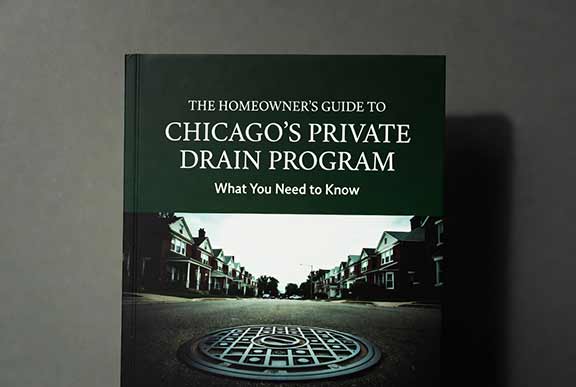
If you’ve received a notice from the City of Chicago about your private drain, or you’ve heard neighbors talking about the Private Drain Program and aren’t sure what it means for you, you’re not alone. This is one of the most misunderstood — and most important — programs affecting Chicago homeowners right now. Get it wrong and you could face city fines, a failed inspection, or a sewer backup that floods your basement.
This guide breaks down exactly what the program is, what it requires from you as a homeowner, what happens if you don’t comply, and how to get it done right without overpaying or getting taken advantage of.
1. What Is Chicago’s Private Drain Program?
Chicago’s Private Drain Program is administered by the Metropolitan Water Reclamation District of Greater Chicago (MWRD) and enforced at the municipal level through the City of Chicago Department of Buildings. The program exists because Chicago — like many older American cities — operates on a combined sewer system, meaning stormwater and sanitary sewage travel through the same underground pipes.
During heavy rain events, which are increasingly common in the Chicago area, these combined systems can become overwhelmed. When that happens, the overflow has nowhere to go except back up through the lowest drain in your home — usually your basement floor drain. The result is raw sewage backing up into your living space, which is exactly as bad as it sounds.
The Private Drain Program places responsibility on individual homeowners for the condition and compliance of the private sewer lateral — the underground pipe that runs from your home to the city’s public sewer main in the street. In many cases, that lateral is your problem, not the city’s, even if it runs under a public sidewalk or parkway.
💡 Key Point: Chicago’s sewer system is over 100 years old in many neighborhoods. Clay tile pipes, cracked joints, and root-infiltrated laterals are the norm, not the exception — especially in older areas like Bridgeport, Pilsen, Avondale, and across the southwest and northwest sides.
2. Who Does the Program Apply To?
The Private Drain Program primarily applies to:
- Homeowners in the City of Chicago who are selling their property (a passing sewer inspection is increasingly required at the point of sale in many Chicago neighborhoods)
- Homeowners who have received a notice of violation from the city citing their private drain as non-compliant
- Homeowners who have experienced a sewer backup and are seeking permit approval for flood control systems like overhead sewers or backwater valves
- Property owners undergoing renovation or addition permits where the city requires proof of a compliant sewer lateral
Even if none of the above apply to you directly, understanding the program is worthwhile — because a failing private drain line doesn’t give you much warning before it becomes a very expensive emergency.
3. What Does “Compliance” Actually Mean?
A compliant private drain under Chicago’s program means your sewer lateral meets the city’s current standards for:
- Pipe material and condition — no severe cracks, root intrusion, offset joints, or collapsed sections
- Proper slope and alignment — the pipe must maintain consistent grade to allow waste to flow freely
- Correct connection — your lateral must connect to the public sewer main properly, without illegal tie-ins or cross-connections
- No prohibited discharges — sump pump discharge, roof drain downspouts, and foundation drains cannot legally discharge into the sanitary sewer in Chicago
That last point catches a lot of homeowners off guard. Many older Chicago homes were plumbed with sump pumps and downspouts tied directly into the sanitary sewer — which was standard practice decades ago but is now a code violation. If your home has this setup and you’re applying for a flood control permit or going through a point-of-sale inspection, it will need to be corrected.
4. The Inspection Process: What to Expect
Compliance starts with a professional sewer camera inspection of your private sewer line. This is non-negotiable — you cannot know the condition of an underground pipe without looking inside it, and neither can the city inspector.
Here’s what the process typically looks like:
Step 1: Schedule a Camera Inspection
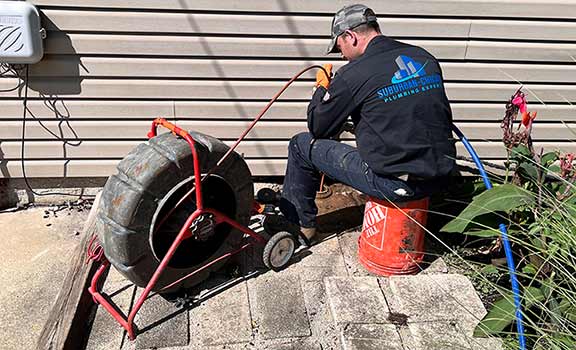
A licensed plumber inserts a high-resolution waterproof camera into your sewer line from an access point — typically a cleanout in your basement or yard, or through a toilet drain. The camera travels the full length of your lateral, from your home to the public main, capturing real-time video footage of everything inside.
Step 2: Review the Findings
Your plumber will review the footage with you and identify any issues — cracks, root intrusion, offset joints, buildup, or structural problems. A good plumber walks you through exactly what they’re seeing and gives you honest recommendations. A bad one uses scary footage to push you into a full replacement you may not need. (If you’re not sure which kind you’re dealing with, our guide on how to find a trustworthy plumber in Chicago covers exactly what red flags to watch for.)
Step 3: Determine the Right Fix
Not every finding requires a full sewer replacement. Depending on what the camera reveals, the solution might be:
- Sewer rodding for blockages caused by grease buildup or light root intrusion
- Hydro jetting for stubborn buildup or heavier root problems
- Spot repair for isolated cracks or offset joints
- Full lateral replacement for collapsed or severely deteriorated pipe
Step 4: Pull a Permit and Schedule Inspection
Any significant repair or replacement work on a private sewer lateral in Chicago requires a permit from the City of Chicago Department of Buildings. A licensed plumber will pull this permit on your behalf, perform the work, and schedule the required city inspection to confirm compliance. Do not hire anyone who suggests skipping the permit — it will come back to haunt you at resale and leaves you with zero legal protection if something goes wrong.
5. How Much Does Private Drain Work Cost in Chicago?
Costs vary widely depending on what the inspection finds and what your lateral actually needs. Here’s a general range to set expectations:
- Sewer camera inspection: $150–$350
- Sewer rodding to clear a blockage: $200–$450
- Spot repair of an isolated section: $1,500–$4,000
- Full lateral replacement (open cut): $5,000–$15,000+ depending on depth, length, and access
- Trenchless repair options (pipe lining or pipe bursting): $3,000–$10,000 depending on conditions
These ranges reflect the Chicago market. Be skeptical of any quote dramatically lower than these figures — it usually means unlicensed work, skipped permits, or corners being cut on materials. Be equally skeptical of quotes dramatically higher without a clear explanation of why.
⚠️ Watch Out: Some contractors use sewer camera inspections as a sales tool rather than a diagnostic tool, showing alarming footage to push homeowners into full replacements they don’t need. Always get a second opinion before authorizing any repair over $2,000. Our team will show you the footage directly and explain every finding honestly.
6. The Private Drain Program and Home Sales in Chicago
If you’re selling a home in Chicago, the condition of your private sewer lateral is increasingly relevant — and in some cases a hard requirement. Here’s what you need to know:
Many Chicago buyers now request a sewer camera inspection as part of their due diligence before closing, separate from the standard home inspection. This is smart practice, especially for homes built before 1980 with original clay tile sewer lines.
Additionally, if your home requires a flood control system installation — such as an overhead sewer or backwater valve — the city will require proof of a compliant private drain as part of the permitting process. Sellers who haven’t addressed a failing lateral may find themselves negotiating repair credits or losing buyers entirely once the camera footage comes back.
The bottom line: knowing the condition of your lateral before listing is almost always better than finding out mid-transaction.
7. Flood Control and the Private Drain Connection
Chicago’s Private Drain Program doesn’t exist in isolation — it’s closely connected to the city’s broader push to reduce basement flooding across the metro area. The MWRD’s Tunnel and Reservoir Plan (TARP), commonly known as the Deep Tunnel, has significantly reduced major flooding events since its construction, but it doesn’t eliminate the risk for individual homeowners with aging or non-compliant private laterals.
If your home has experienced basement flooding or sewer backups, the solution almost always involves two components working together:
- A compliant, properly functioning private sewer lateral — so water and waste flow away from your home efficiently
- A flood control system — such as a sump pump, overhead sewer conversion, or backwater valve — to prevent the public sewer from pushing back into your home during heavy rain events
Addressing only one without the other often results in recurring problems. Our sewer line repair and replacement specialists work on both sides of this equation and can help you understand exactly what your home needs.
8. Suburbs and the Private Drain Program: Does It Apply Outside Chicago?
The Private Drain Program as formally named is a City of Chicago initiative, but the underlying issue — homeowner responsibility for private sewer laterals — applies across virtually every municipality in the Chicagoland area.
Suburbs including Berwyn, Oak Park, Cicero, Riverside, and dozens of others have their own sewer lateral compliance requirements, point-of-sale inspection ordinances, and flood control programs. The specifics vary by municipality, but the core principle is the same: the pipe from your foundation to the street is your responsibility, and its condition directly affects your risk of basement flooding and sewer backup.
If you’re in the suburbs and unsure whether your municipality has specific requirements, the best first step is the same as in the city — a camera inspection of your lateral by a licensed plumber who knows the local codes.
9. Choosing the Right Plumber for Private Drain Work
Private drain work in Chicago is not a job for an unlicensed handyman or a contractor who doesn’t know the city’s permitting process. Here’s what you need:
- ✅ A licensed Illinois plumber with experience in Chicago sewer lateral work specifically
- ✅ A contractor who pulls permits without being asked and knows the Chicago Department of Buildings process
- ✅ Someone who shows you the camera footage and explains findings honestly before recommending any repairs
- ✅ A company with verifiable local history and real reviews from Chicago-area homeowners
- ✅ Written estimates with a clear scope of work before anything starts
At Suburban Plumbing Experts, we’ve been handling private drain inspections, repairs, and replacements across Chicago and the suburbs for over 30 years. We pull every required permit, show you exactly what we find, and never recommend work you don’t need.
10. Frequently Asked Questions About Chicago’s Private Drain Program
Q: I received a notice from the city about my private drain. What do I do first?
Don’t panic, but don’t ignore it either. Call a licensed plumber immediately and schedule a sewer camera inspection. The notice will typically include a violation number and a deadline for compliance. A plumber familiar with Chicago’s process can help you understand what’s required and get you to compliance before the deadline.
Q: Can I do private drain repairs myself?
No. Any work on a private sewer lateral in Chicago that requires a permit must be performed by a licensed plumber. Attempting unpermitted DIY repairs can result in fines, failed inspections, and complications when you sell your home.
Q: How long does the whole process take?
A camera inspection can typically be scheduled within a day or two. If repairs are needed, the timeline depends on the scope of work — a rodding or minor repair might be same-day, while a full lateral replacement with permits typically takes one to two weeks from scheduling to final inspection.
Q: My neighbor just had their whole sewer line replaced. Does that mean I need to as well?
Not necessarily. Every lateral is different. Your neighbor’s situation has no bearing on yours. The only way to know what your line needs is a camera inspection of your specific pipe.
Q: Does homeowner’s insurance cover private drain repairs?
Standard homeowner’s insurance policies typically do not cover sewer lateral repairs. However, many insurers offer a sewer line endorsement or rider for an additional premium. Some policies cover the resulting water damage from a backup even if they don’t cover the pipe repair itself. Check your policy and ask your insurer specifically about sewer lateral coverage.
Get a Free Estimate on Private Drain Services
Our licensed Chicagoland plumbers are available 24/7 and can usually schedule a private drain inspection within 24–48 hours.
—
Suburban Plumbing Experts · (708) 801-6530 · suburbanplumbingexperts.com · Licensed & Insured · IL Plumbing License #055-044116 · Serving Chicago & 40+ Suburbs