A plumbing code violation in Chicago isn’t just a piece of paperwork — it can stop a home sale dead in its tracks, trigger daily fines, or force you into emergency repairs on someone else’s timeline. And the frustrating part? Many Chicago homeowners don’t even know they have a violation until they’re already in trouble.
This guide explains exactly what Chicago plumbing code violations are, the most common ones found in Chicagoland homes, how inspections and citations work, what the consequences of ignoring them look like, and — most importantly — how to get them resolved quickly and correctly.
1. What Is a Plumbing Code Violation?
A plumbing code violation is any condition in your home’s plumbing system that fails to meet the standards set by the Chicago Plumbing Code, which is enforced by the City of Chicago Department of Buildings. Illinois also adopts portions of the International Plumbing Code as a baseline, but Chicago has its own amendments and requirements that are often stricter than the state standard.
Violations can stem from:
- Work done without a permit
- Improper materials or installation methods
- Outdated systems that no longer meet current code
- Conditions that create a health or safety hazard
- Non-compliant connections to the city sewer system
The key thing to understand is that code is not static. What was perfectly legal plumbing in 1975 may be a violation today. Many Chicago homeowners unknowingly live with violations inherited from previous owners or decades-old DIY work — and they only find out when they go to sell, pull a permit, or get inspected.
2. How Do Chicago Homeowners Get Cited?
There are several ways a plumbing code violation can land on your doorstep:
Permit Inspections
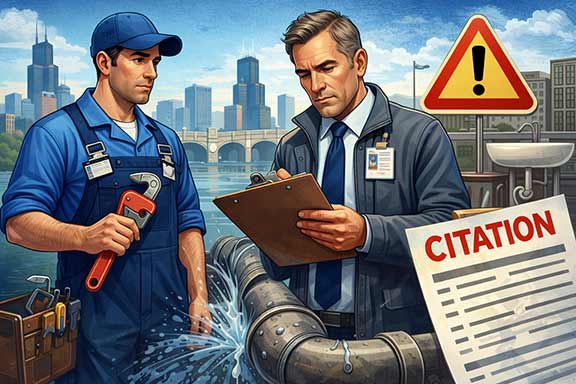
Any time a licensed plumber pulls a permit for work at your property, a city inspector will come out to inspect the completed job. If the inspector notices other violations while on site — even ones unrelated to the permitted work — they can and often do cite those as well. This catches a lot of homeowners off guard.
Complaint-Based Inspections
A neighbor, tenant, or previous resident can file a complaint with the Chicago Department of Buildings, triggering an inspection of your property. Rental property owners are especially vulnerable here.
Point-of-Sale Inspections
Many Chicago neighborhoods and suburbs now require a plumbing or sewer inspection as part of the home sale process. A failing inspection means violations that must be corrected before or concurrent with closing.
Proactive Municipal Sweeps
In certain areas — particularly around sewer infrastructure projects, lead service line replacement programs, or flood control initiatives — the city may conduct area-wide inspections that include private property.
After a Plumbing Emergency
If your home experiences a sewer backup, burst pipe, or significant water damage that requires city involvement or insurance documentation, an inspector may visit and flag violations they observe in the process.
💡 Know This: You don’t have to do anything wrong to get cited. A home inspection during a sale, a neighbor’s complaint, or a routine permit pulled for an unrelated job can all expose violations that have existed for years.
3. The Most Common Plumbing Code Violations in Chicago Homes
Chicago’s housing stock is old. Bungalows, two-flats, greystones, and coach houses built between the 1890s and 1960s make up a huge percentage of the city’s residential properties — and their plumbing reflects that age. Here are the violations our team encounters most frequently:
Unpermitted Plumbing Work
This is the single most common violation. A previous owner added a bathroom in the basement, moved a sink, or replaced a water heater without pulling a permit. The work may look fine and function perfectly — but because it was never inspected, it’s a violation. The fix requires either retroactive permitting and inspection or bringing the work up to current code.
Improper Pipe Materials
Chicago has specific requirements about which pipe materials are acceptable for which applications. Galvanized steel pipe — common in homes built before 1960 — is not permitted for new installations and in many cases must be replaced when discovered during permitted work. Similarly, certain plastic pipe materials that are acceptable in other jurisdictions are not permitted in Chicago. If your home needs repiping due to aging or non-compliant pipe materials, that work must be done with approved materials and pulled permits.
Sump Pump or Downspout Discharge into the Sanitary Sewer
This is an extremely common violation in older Chicago homes and one of the biggest contributors to sewer system overload during heavy rain. Sump pumps, roof drain downspouts, and foundation drains cannot discharge into the sanitary sewer under Chicago’s current code. They must discharge to a storm sewer, dry well, or the surface in a compliant manner. Many homes were originally plumbed this way and have never been corrected.
Cross-Connections and Backflow Issues
A cross-connection is any point in your plumbing system where potable (drinking) water could come into contact with non-potable water or contaminants. Chicago code requires backflow prevention devices on certain connections — irrigation systems, boilers, commercial equipment — and their absence is a citable violation. Our backflow prevention services address exactly this type of violation.
Non-Compliant Water Heater Installation
Water heaters must be installed to specific code requirements regarding venting, pressure relief valves, seismic strapping, clearances, and permits. A water heater replaced by a handyman or a homeowner without a permit is almost always non-compliant in at least one respect. Given that an improperly vented water heater is a genuine carbon monoxide risk, this is one violation the city takes seriously.
Illegal Basement Bathrooms
Basement bathrooms added without permits are one of the most common violations in Chicago two-flats and bungalows. Beyond the permit issue, the drainage typically requires an ejector pump to lift waste to the main sewer line, and many DIY installations either skip this entirely or install it incorrectly — creating both a code violation and a backup waiting to happen.
Lead Service Lines
Chicago has more lead service lines than any other city in the United States. While the city has an ongoing replacement program, many homes still have a lead service line connecting to the public water main. This isn’t always an immediate citation, but it is increasingly subject to compliance requirements — particularly during renovations, permit applications, and point-of-sale inspections. Our team handles lead service line replacement across Chicago and the suburbs.
Missing or Improper Venting
Every drain in your home needs proper venting to allow air into the system and waste to flow freely. Improperly vented drains cause slow drainage, gurgling sounds, and sewer gas odors — and they’re a code violation. Many older Chicago homes have drum traps and outdated venting configurations that don’t meet current requirements.
4. What Happens If You Ignore a Violation?
Ignoring a plumbing code violation in Chicago is not a neutral decision. Here’s what can happen:
- Daily fines — The City of Chicago can issue fines that accrue daily until the violation is corrected and re-inspected. These can add up fast.
- Administrative hearings — Unresolved violations can result in a summons to Chicago’s Department of Administrative Hearings, where judges can impose additional penalties.
- Property liens — In serious cases, the city can place a lien on your property for unpaid fines, which must be resolved before you can sell.
- Failed home sale — A title search will surface open violations and liens, stopping a transaction in its tracks.
- Insurance complications — A known violation that you’ve failed to address can complicate or void an insurance claim if that violation contributed to a loss.
- Personal liability — If a non-compliant plumbing system causes injury or damage to a tenant or neighbor, your failure to correct a known violation significantly increases your legal exposure.
The longer you wait, the more expensive and complicated resolution becomes. This is one of those situations where the fastest, cheapest path is almost always to address it immediately.
5. How to Resolve a Chicago Plumbing Code Violation
The process for resolving a violation follows a clear path:
Step 1: Understand Exactly What You’re Dealing With
Get a copy of the violation notice from the Chicago Department of Buildings — you can look up open violations at the Chicago Building Permits & Inspections portal. The notice will include the specific code section cited, the nature of the violation, and a compliance deadline.
Step 2: Call a Licensed Chicago Plumber
This is not the time for a handyman. Code violation work in Chicago requires a licensed plumber who understands the specific requirements, knows the permitting process, and can pull the necessary permits to get the work inspected and signed off by the city. Our plumbing code violation resolution team handles this regularly and knows exactly what each type of violation requires.
Step 3: Pull the Permit
Your plumber will file the necessary permit application with the Chicago Department of Buildings before any work begins. Doing the work without a permit — even to fix a violation — creates a new violation and makes the situation worse, not better.
Step 4: Complete the Work and Schedule Inspection
Once the permitted work is complete, the city inspector comes back out to verify compliance. If everything passes, the violation is closed. If additional issues are found, you’ll be given a new timeline for correction.
Step 5: Keep Documentation
Once the violation is resolved, keep all permits, inspection records, and contractor invoices. These documents are valuable at resale and can be requested by buyers, title companies, and insurers.
6. Plumbing Code Violations and Home Sales in Chicago
If you’re selling a home in Chicago, open plumbing violations are a serious issue. Here’s the reality:
A title search conducted as part of any standard real estate transaction will surface open building code violations and any associated liens. Buyers, lenders, and title companies all treat these as problems that must be resolved — either before closing or via a negotiated repair credit.
The worst position to be in is discovering a significant violation mid-transaction when you’re already under contract. Suddenly you’re on a tight timeline, negotiating from weakness, and potentially paying a premium for rushed work.
The smart move — especially in Chicago’s older housing stock — is to have a licensed plumber inspect your plumbing system before you list. Knowing what you’re dealing with in advance lets you resolve violations on your own timeline, at fair market prices, without a buyer’s attorney breathing down your neck.
7. Violations in Chicago Suburbs: Different Rules, Same Consequences
If you’re outside the city limits, the Chicago Plumbing Code doesn’t apply directly — but every municipality in Chicagoland has its own code enforcement process based on Illinois state plumbing standards and local amendments. Suburbs including Berwyn, Cicero, Oak Park, Naperville, and Evanston all have active building departments that cite and pursue plumbing violations.
The most common triggers in the suburbs mirror Chicago’s: unpermitted work, non-compliant sewer laterals, illegal discharge connections, and point-of-sale inspection requirements. These requirements also apply to commercial properties, where plumbing systems are often more complex and subject to heavier use. Restaurants, retail buildings, offices, medical facilities, and other businesses can face plumbing code issues involving drainage, sewer lines, water heaters, backflow prevention, grease systems, and other commercial plumbing equipment. Businesses dealing with these issues can learn more about our commercial plumbing services in Oak Lawn, IL and the types of commercial plumbing problems our licensed plumbers handle. If you’re in the suburbs and dealing with a violation notice, the same principles apply — get a licensed local plumber involved immediately, pull the required permits, and don’t let the deadline pass.
8. Frequently Asked Questions
Q: Can I sell my Chicago home with an open plumbing code violation?
Technically yes, but practically no. A title search will surface the violation and most buyers, lenders, and title companies will require it to be resolved before closing. In some cases it can be handled via an escrow holdback — but that’s the exception, not the rule, and it puts you in a weak negotiating position.
Q: How do I find out if my property has open violations?
You can search the Chicago Department of Buildings website using your property address. All open violations, permits, and inspection history are publicly searchable.
Q: The previous owner did unlicensed plumbing work. Am I responsible?
Yes. In Chicago, code violations attach to the property, not the person who created them. If you bought a home with unpermitted work, those violations are now your responsibility to correct.
Q: How long do I have to fix a violation after being cited?
It varies by violation type and severity. Safety-related violations may have very short compliance windows. Others may allow 30–90 days. The notice will specify the deadline. Missing it triggers escalating fines and potential hearings.
Q: Will fixing one violation trigger an inspection of my entire plumbing system?
Possibly. When an inspector comes to verify that the cited violation has been corrected, they may observe and cite other visible violations. This is one reason why proactively addressing known issues before permitting work is almost always better than reactive compliance.
Get a Free Estimate on Code Violation Repairs
Our licensed Chicago plumbers know the city’s code requirements inside and out. We pull every permit, coordinate every inspection, and get your property to compliance — on time and without surprises.
Suburban Plumbing Experts · (708) 801-6530 · suburbanplumbingexperts.com · Licensed & Insured · IL Plumbing License #055-044116 · Serving Chicago & 40+ Suburbs