Understanding the Role of an Ejector Pump
An ejector pump is an important part of a home’s plumbing system when a basement bathroom, laundry area, or other lower-level fixtures sit below the elevation of the main sewer line. The pump moves wastewater and sewage from the lower level up to the sewer line so it can leave the home properly.
An ejector pump is different from a sump pump. A sump pump handles groundwater and drainage water, while an ejector pump is designed to move wastewater from plumbing fixtures. Some homes may need both systems.
If an ejector pump begins to fail, the consequences can be much more serious than a noisy appliance or a slow drain. A failed pump can eventually contribute to sewage backups, unpleasant odors, water damage, and an unusable basement.
Knowing the warning signs can help you address a problem before the pump fails completely.
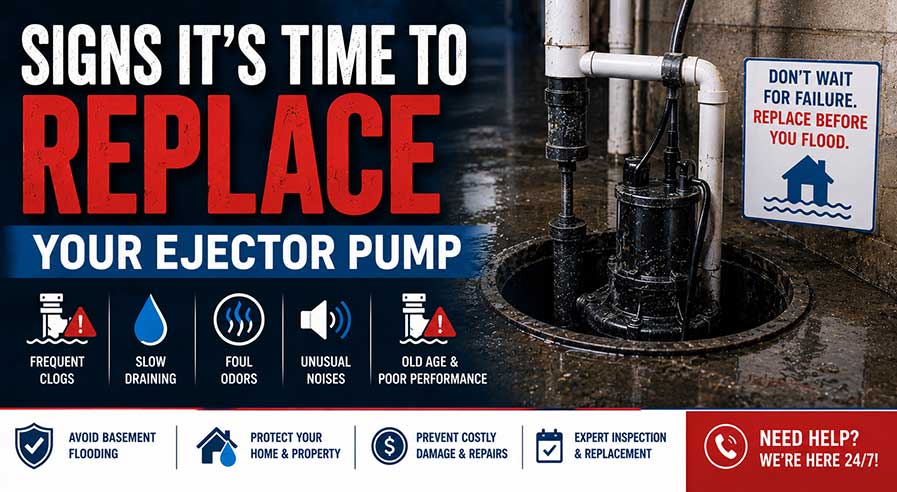
Signs Your Ejector Pump May Need to Be Replaced
1. The Ejector Pump Keeps Cycling On and Off
An ejector pump should run when wastewater reaches the appropriate level in the basin and then shut off after the water has been pumped away. If you notice the pump turning on and off much more frequently than it normally does, something may be wrong.
Frequent cycling can be caused by issues such as a failing pump, a problem with the float switch, an improperly sized pump, or wastewater entering the basin unusually often.
If the pump is repeatedly cycling without an obvious reason, it is worth having the system inspected before the motor fails.
2. The Ejector Pump Makes Grinding, Rattling, or Banging Noises
Unusual noises are another warning sign that should not be ignored.
A properly operating pump may make some noise while running, but new or increasingly loud grinding, rattling, humming, or banging can indicate a mechanical problem. The impeller, motor, bearings, or other internal components may be worn or damaged.
In some cases, a repair may solve the problem. In others, especially when the pump is older, replacement may be the more reliable option.
3. You Notice Leaks Around the Ejector Pump
Water or wastewater around the ejector pump basin is a sign that the system needs attention.
Possible causes include a damaged pump housing, failing seals, loose connections, or problems with the discharge piping. If wastewater is escaping from the system, the problem should be addressed promptly.
Leaks around an ejector pump can also create unpleasant odors and cause damage to the surrounding flooring, walls, or other building materials.
4. There Is a Strong Sewage Odor Around the Pump
A strong sewage smell near the ejector pump basin should not be considered normal.
The odor may be related to a problem with the basin cover, venting, seals, pump operation, or another part of the wastewater system. A pump that is not removing wastewater properly can also contribute to unpleasant odors.
Because several plumbing problems can produce similar smells, the odor alone does not necessarily mean the pump needs to be replaced. However, a persistent sewage odor is a good reason to have the ejector pump and basin inspected.
5. Basement Fixtures Are Draining Slowly
Slow drainage from a basement toilet, sink, shower, or other fixture can sometimes be related to an ejector pump problem.
If the pump is struggling to remove wastewater from the basin, you may notice drainage problems or water rising more slowly than normal. However, slow drainage can also be caused by a clogged drain, blocked discharge line, or another plumbing problem.
That is why it is important to determine the actual cause before replacing the pump.
6. Your Plumbing System Experiences Repeated Clogs or Backups
Repeated clogs or backups involving lower-level plumbing fixtures deserve attention, particularly when they occur along with other ejector pump symptoms.
A malfunctioning pump may not be removing wastewater from the basin efficiently. But recurring backups can also point to a blockage in the plumbing or discharge line.
If you repeatedly deal with basement plumbing problems, an inspection can help determine whether the ejector pump is actually responsible.
If the pump itself has reached the end of its useful life, replacing the ejector pump may provide a more dependable long-term solution.
7. The Ejector Pump Is Getting Older
Age is one of the biggest factors to consider when deciding whether to repair or replace an ejector pump.
The service life of a pump varies considerably depending on its quality, workload, installation, maintenance, and how often it operates. Rather than relying on a specific number of years alone, homeowners should consider the pump’s age together with its condition and repair history.
An older pump that has started making unusual noises, cycling frequently, leaking, or requiring repeated repairs may be a good candidate for replacement.
8. The Pump Requires Frequent Repairs
One isolated repair does not necessarily mean an ejector pump should be replaced. However, repeated repairs can change the equation.
If you are continually dealing with pump failures, electrical problems, float-switch issues, or other recurring problems, the cost and inconvenience of keeping an aging pump running may eventually outweigh the benefit of another repair.
A professional can evaluate the pump’s condition and help determine whether repairing it or installing a new unit makes more sense.
9. The Pump Appears to Be Losing Performance
A pump that takes noticeably longer to remove wastewater or struggles to keep up with normal household use may be losing pumping capacity.
Reduced performance can have several causes, including a clogged discharge line, a mechanical problem, an electrical issue, or a pump that is simply worn out.
Before replacing the pump, the entire system should be checked to determine whether the pump is actually the source of the problem.
Repair or Replace: How Do You Know Which Is Better?
Not every ejector pump problem requires a new pump.
A repair may make sense when the problem involves a replaceable component, such as a float switch or another isolated issue, and the pump itself is otherwise in good condition.
Replacement becomes more attractive when the pump is older, has significant mechanical damage, has a history of repeated failures, or would cost nearly as much to repair as installing a new unit.
The right decision depends on the pump’s condition, age, repair history, installation, and the demands being placed on the system.
If you’re unsure whether your ejector pump needs repair or replacement, a professional inspection can help you make the decision before the system fails completely.
Why You Shouldn’t Ignore Ejector Pump Problems
An ejector pump problem can eventually become a much bigger plumbing emergency.
If the pump stops working completely, wastewater from basement fixtures may have nowhere to go. Depending on the plumbing configuration and amount of wastewater entering the system, this can result in sewage backing up into a basement bathroom, laundry area, or other lower-level space.
Sewage backups can create extensive cleanup problems and damage flooring, drywall, furniture, and other belongings.
Our ejector pump failure cost guide explains the potential costs associated with ejector pump failure, including cleanup, replacement, and insurance considerations.
If you’re already experiencing sewage backup problems, addressing the source quickly can help limit the damage.
Choosing the Right Replacement Ejector Pump
When an ejector pump needs to be replaced, choosing the correct pump is important.
The replacement needs to be appropriate for the wastewater application and compatible with the home’s plumbing system. Factors such as pumping capacity, discharge piping, basin configuration, and the number and type of fixtures connected to the system can all matter.
This is one reason ejector pump replacement is not simply a matter of purchasing the largest pump available and installing it.
A qualified plumber can evaluate the existing system and recommend a replacement that is properly suited to the home’s needs.
Professional Ejector Pump Installation and Maintenance
Proper installation can make a significant difference in the long-term performance of an ejector pump.
The pump, basin, discharge piping, check valve, float mechanism, venting, and electrical components should all be installed and configured correctly. Regular inspection can also help identify developing problems before they result in a complete failure.
If your ejector pump is showing signs of trouble, professional service can help determine whether the best solution is a repair, maintenance, or complete replacement.
For homeowners who need service, you can learn more about our ejector pump services.
Frequently Asked Questions About Ejector Pump Replacement
How do I know if my ejector pump needs to be replaced?
Frequent cycling, unusual noises, leaks, sewage odors, declining performance, repeated repairs, and an aging pump can all indicate that an ejector pump should be inspected. These symptoms do not automatically mean replacement is necessary, so the pump and surrounding plumbing should be evaluated first.
How long does an ejector pump last?
There is no single lifespan that applies to every ejector pump. Service life depends on the pump’s quality, workload, installation, maintenance, and operating conditions. An older pump with recurring problems may be a better replacement candidate than a newer pump that is operating normally.
Can an ejector pump be repaired instead of replaced?
Yes. Some ejector pump problems can be repaired without replacing the entire pump. Whether repair makes sense depends on the failed component, the overall condition of the pump, its age, and the cost of the repair compared with replacement.
What happens if an ejector pump fails?
A complete ejector pump failure can prevent wastewater from lower-level fixtures from reaching the main sewer line. This may eventually result in sewage backing up into a basement bathroom, laundry area, or other connected fixtures.
Can a sewage smell mean my ejector pump is failing?
It can, but a sewage smell does not automatically mean the pump itself has failed. Problems with the basin cover, seals, venting, discharge system, or other plumbing components can also produce odors. A persistent sewage smell should be investigated to identify the actual source.
Stay Ahead of Ejector Pump Problems
Recognizing the warning signs of ejector pump trouble can help you avoid an unexpected sewage backup and the damage that can come with it.
If your pump is cycling frequently, making unusual noises, leaking, producing sewage odors, losing performance, or requiring repeated repairs, don’t wait for a complete failure to investigate the problem.
Sometimes the right solution is a repair. Sometimes replacing an aging ejector pump is the better long-term choice. Having the system evaluated can help you make that decision before a relatively manageable plumbing problem turns into an emergency.
Suburban Plumbing Sewer Line and Drain Cleaning Experts provides plumbing services for homeowners throughout the Chicago area.