
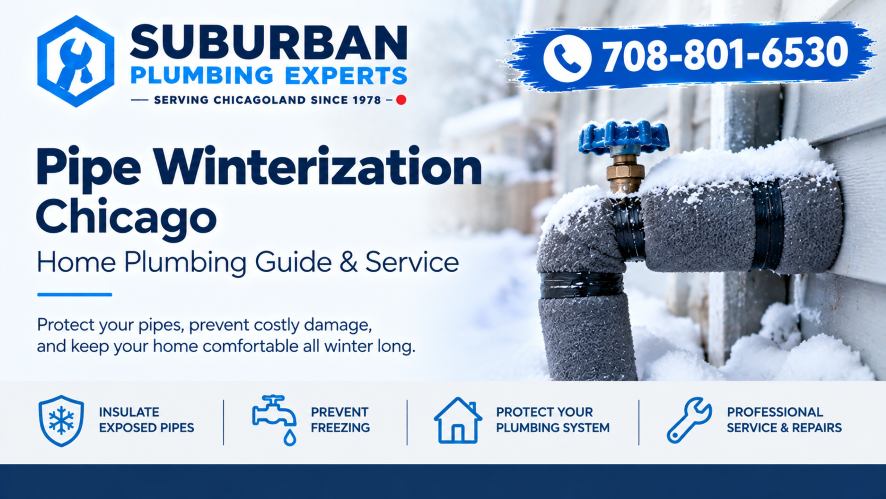
Pipe winterization is the work of getting a building’s plumbing through a Chicago-area winter without a freeze, a split line, or a flooded floor. In an occupied house, that means protecting the pipes that sit closest to the cold. In a property that will sit empty or unheated, it means shutting the water off and draining the system completely. Either way, the job belongs in fall, before the first hard freeze, and it almost always costs far less than burst pipe repair and water damage cleanup after the fact.
This guide covers both sides of the job. It explains what home plumbing winterization involves, which pipes freeze first in Chicagoland buildings, how a full drain-down works step by step, how to restart a drained system in spring, the mistakes that cause the most damage, and when to hand the work to a licensed plumber. If you would rather skip ahead, the estimate form near the bottom takes about a minute, or you can call 708-801-6530.
Already dealing with a frozen or burst pipe? This page is about getting ahead of the freeze. If water has stopped flowing or a pipe has failed, call our 24/7 emergency line at 708-518-7765 or read about pipe thawing, burst pipe repair, and emergency plumbing.
What Is Pipe Winterization?
Pipe winterization means preparing a building’s water lines, fixtures, and equipment so freezing temperatures can’t damage them. The term covers two different jobs, and knowing which one your property needs saves time and money:
- Freeze protection for occupied buildings. The heat stays on and the water stays on. The work focuses on insulating exposed pipes, sealing the drafts that chill them, shutting down outdoor lines, and fixing weak spots before they fail.
- Full winterization (a drain-down) for unheated or vacant buildings. The water supply is shut off and the system is emptied so there is nothing left to freeze. This is the standard approach for seasonal properties, buildings between tenants, and anything where the heat will be off or turned way down.
Search results tend to blur the two, and plenty of properties need a bit of both. An occupied home still needs its outdoor lines shut down, and a seasonal cabin needs its whole system drained.
Why Chicago-Area Pipes Are at Risk
Water expands by roughly nine percent as it turns to ice. A frozen section often isn’t where the pipe splits, either: pressure builds between the ice and a closed faucet, and the weakest point downstream gives way. The damage adds up fast, and University of Illinois Extension notes that an eighth-inch crack in a pipe can release up to 250 gallons of water a day.
Chicago’s cold also goes deep. During one especially brutal winter, the city’s water commissioner told a CBS Chicago report that frost had reached the depth where service lines enter homes, and no-water calls from frozen pipes rose from 940 the winter before to more than 4,500. That is the extreme case, but it shows why a plumbing system that has made it through many winters can still fail in a harsh one.
Building age and layout matter too. Older bungalows and two-flats often have original piping close to exterior walls, and converted attics, enclosed porches, and garage additions create cold pockets in newer homes as well. Add a furnace failure or a winter power outage and even a well-built house can lose its margin quickly.
Which Pipes Freeze First in Chicago-Area Buildings
- Supply lines running through exterior walls, especially on the north and west sides of a building
- Basement and crawl-space pipes near the foundation wall and rim joist
- Plumbing in garages, enclosed porches, and unheated additions
- Attic and soffit runs with thin insulation
- Outdoor spigots, irrigation connections, and exterior hose lines
- Sump pump discharge lines, which can ice over and back water up (see our guide to a frozen sump pump discharge line)
- Pipes in floors above garages and in cabinets on exterior walls, where cold air reaches the pipe but warm room air does not
What a Professional Pipe Winterization Service Includes
No two buildings freeze the same way, so the work is built around what the plumber finds on site. Depending on the property, a visit can include any of the following:
- Pre-freeze plumbing inspection. We check supply lines in unheated and lightly heated areas, test shutoff valves, look for signs of past freezing, and note where cold air is reaching your pipes. When something looks suspicious, leak detection or thermal imaging can confirm it without opening up walls.
- Pipe insulation and cold-spot protection. Exposed lines in basements, crawl spaces, garages, and along rim joists get insulated to hold in heat. Where insulation alone won’t be enough, heat cable adds a second layer of defense.
- Outdoor plumbing shutdown. Hose bibbs, exterior shutoffs, and other outdoor lines are isolated and drained so trapped water can’t freeze and crack the pipe behind the wall. Our outdoor plumbing services page covers the rest of what we handle outside.
- Vacant-property drain-down. If a building will sit without heat or occupants, we shut off the water supply and drain lines, fixtures, and equipment so nothing is left holding water through a deep freeze.
- Repairs for chronic trouble spots. A failing shutoff valve or a damaged section of line costs far less to fix in October than in January. For lines that freeze year after year, we can talk through water line repair or repiping so the cause gets fixed instead of the symptom.
Home Plumbing Winterization: What Matters Most in an Occupied Home
If you live in the house all winter, the goal is simple: keep every pipe above freezing and leave no water sitting in lines outside. Our Winterizing Your Home in Illinois checklist covers the wider home-prep side. For the plumbing itself, these are the steps that matter most.
- Insulate the vulnerable pipes. Find lines near outer walls, in crawl spaces, in the attic, and in the garage, and cover them with foam sleeves or other insulation made for the purpose.
- Seal the drafts that reach your pipes. Gaps around penetrations, cracks near the rim joist, and broken windows let cold air hit plumbing directly. The City of Chicago Department of Water Management lists sealing sources of cold air among its basic prevention steps.
- Keep the heat on. Illinois Extension recommends never setting the thermostat lower than 55 degrees, and the city advises keeping warm air circulating wherever pipes run, garages and unheated areas included. Have the furnace or boiler checked before the season, since a heating failure is a plumbing emergency too.
- Know your main shutoff. Find it, label it, and turn it once to confirm it moves. A valve that is seized when a pipe bursts is a bad surprise.
- Shut down the outdoor lines. Disconnect and drain hoses, since a hose left attached can freeze even a frost-resistant faucet. Close the interior shutoff to each outside faucet and open the outdoor tap so the pipe inside the wall empties, and have any irrigation system drained.
- Use heat cable only where it is needed. For stubborn spots, choose UL-listed cable rated for your pipe material and follow the manufacturer’s instructions exactly. Improper installation is a fire risk.
On the coldest nights, add the stopgaps: let hot and cold water trickle from a faucet on an outside wall, open the cabinet doors under sinks on exterior walls, and hold the thermostat steady day and night instead of setting it back.
Pipe Winterization for Vacant and Seasonal Properties: How a Drain-Down Works
When a building will sit empty through the cold months, the safest approach is to remove the water. Illinois Extension gives two options for a property you will be away from: have someone check the house daily to confirm the heat is still on, or drain and shut off the water system. For a seasonal home, a building between tenants, or anywhere a daily check isn’t realistic, the drain-down is the dependable choice.
The sequence below follows the system-drain procedure from Purdue University Extension. A professional drain-down covers the same ground with the right tools and a record of what was done.
- Shut off the water at the main valve. On a private well, turn off the pump as well.
- Drain the pressure tank if the building has one.
- Open every faucet, upstairs and in the basement, and leave them open so the lines empty completely. Some valves only open under water pressure, so those may need to be removed from the faucet.
- Drain the lines from their low points. Disconnecting a union or joint near the main valve helps, and compressed air can push the last water out of the pipes.
- Empty the toilets. Drain the tanks and the spray hoses, and remove the water left in the bowls.
- Disconnect and drain the water softener, including its controls and the tubing on the brine tank.
- Turn off and drain the water heater. Cut the electricity or fuel first, then drain the tank.
- Drain the other water-using appliances: the washing machine, dishwasher, humidifier, and refrigerator ice maker, including the pumps on the washer and dishwasher.
- Protect the traps. Empty the drain traps under sinks, tubs, showers, and floor drains, or add propylene-glycol antifreeze to the ones you can’t empty. Check the sump pit as well.
- Look after the heating system. A hot water heating system can’t be treated like the rest of the plumbing, so talk to a heating contractor before draining a boiler loop or adding antifreeze to it.
Antifreeze is where DIY drain-downs go wrong. Automotive antifreeze (ethylene glycol) is not safe in any part of a home water system. Propylene glycol, the type sold for RV plumbing, is generally the one used in traps, toilets, and drain lines of unheated buildings. Purdue says to keep antifreeze out of appliances entirely, and it advises against putting any antifreeze in the water supply lines. A sloppy drain-down also leaves pockets of trapped water at low points and in horizontal runs, and those are the spots that split when the temperature falls. When you hire the work out, you get a plumber who knows where those low points hide.
Water Heaters, Sump Pumps, and Other Equipment in Winter
Winterization is not only about pipes. The equipment connected to them needs a plan too:
- Water heaters. In a vacant building, the tank gets drained after the power or fuel is shut off. In an occupied home, keep the heater in a heated space and watch for drips around the base and fittings. If yours shows trouble before the season, our water heater services team can inspect it.
- Sump pumps. Test the pump and clear its discharge before the ground freezes. Winter storms and power failures often arrive together, which is why a sump pump battery backup is worth considering, and our sump pump services cover testing and replacement.
- Washing machines and utility sinks in unheated spaces. Disconnect and drain the hoses if the space gets cold.
- Monitoring. Leak sensors and temperature alarms placed near vulnerable pipes can warn you or a neighbor early, and a smart shutoff valve can stop water at the main if a leak starts while no one is home.
Who Should Schedule Pipe Winterization
Homeowners
A heated, occupied home is lower risk but not immune. A long cold snap, a furnace failure, or a winter outage can chill the very lines that never gave you trouble before. Our guide on protecting your plumbing during a winter power outage explains how quickly conditions can change.
Landlords and Multi-Unit Owners
One unheated unit or a forgotten stairwell line can flood the apartments below. A pre-winter check across the building costs little next to tenant displacement and water damage claims. Read more in what to do if the pipes freeze in your rental property.
Vacant, Seasonal, and For-Sale Properties
Empty buildings are the most exposed of all, because no one is there to notice a drop in pressure or a cold room. A full drain-down is the most dependable protection when the heat will be off or turned way down.
Commercial Buildings and Restaurants
A burst line can shut a business down for days. We handle cold-weather plumbing prep for offices, retail space, and kitchens through our commercial plumbing services.
When to Schedule Pipe Winterization
Timing changes what you can accomplish, so it helps to think in stages:
- Early fall: The ideal window. Appointments are easy to get, and there is time to repair anything the inspection turns up.
- Before the first hard freeze: Still workable, but the schedule fills fast once the forecast turns cold.
- During a cold snap: Focus on the quick protective steps and get on the schedule for a full visit. Our 48-hour countdown before Chicago’s first hard freeze covers what to do right now.
- Before you leave for an extended trip: Decide between leaving the heat on with daily checks and a full drain-down, and make the call before you travel.
- Spring: If the system was drained, it needs a careful restart, covered in the next section.
Spring Start-Up After a Drain-Down
Restarting a drained system is just as important as shutting it down, and the order matters. Water rushing into an open line is how small oversights become flooded floors.
- Reconnect any unions, supply hoses, and appliance connections you disconnected, and close every low-point drain.
- Leave the faucets open, then open the main valve slowly so air can escape and the pressure builds gradually.
- Close each faucet as the water runs steadily, starting with the one closest to the main.
- Check every joint, fixture, and appliance connection for drips, and look at ceilings and walls below bathrooms for new stains.
- Fill the water heater completely before you restore its power or fuel. Heating an empty tank can damage the elements.
- Flush the toilets and run each drain so the traps refill and clear out any antifreeze.
If anything leaks or the pressure looks wrong, shut the main valve and call a plumber instead of waiting. We can handle the spring restart and leak check as well, so a drain-down is never a one-way trip.
Professional Winterization vs. Doing It Yourself
Plenty of cold-weather prep is a reasonable weekend project: disconnecting hoses, sealing drafts, and wrapping pipe you can reach easily. Bring in a plumber when:
- Pipes run through walls, ceilings, or crawl spaces you can’t safely reach
- A line has frozen before and you don’t know why
- The property is vacant, or the heat will be off for any stretch of time
- You manage a rental building, a multi-unit property, or a commercial space
- You aren’t sure where your shutoffs are or whether they still hold
- You want heat cable installed safely and correctly
- The building has a boiler, a radiant system, or a well, where mistakes cost more
Common Pipe Winterization Mistakes
- Using car antifreeze. Ethylene glycol does not belong anywhere in a home water system.
- Leaving hoses attached. One forgotten hose can freeze a faucet and the pipe behind it.
- Turning the thermostat way down. Savings on the heating bill disappear when a pipe lets go. Illinois Extension recommends staying at 55 degrees or higher.
- Insulating over a problem. Wrapping a pipe that already drips or is damaged hides the issue instead of fixing it.
- Skipping the garage and crawl space. These unheated areas are where many freezes start.
- Counting on a dripping faucet alone. It helps during extreme cold, but it is a backup measure, not a replacement for insulation and sealing.
- Missing low points during a drain-down. Trapped water in a sagging or horizontal run can freeze and split a pipe even when the faucets were opened.
- Using an open flame to thaw a pipe. Both Illinois Extension and the City of Chicago warn against it. The city recommends a hair dryer or heating pad.
What to Do If a Pipe Freezes Anyway
Even a well-prepared building can have a bad night. If you turn on a faucet and only a trickle comes out, assume a pipe may be frozen. Shut off the water at the main, open the faucet on the affected line so melting water has somewhere to go, and warm the pipe gradually with a hair dryer or heating pad. Never use a torch or open flame, and watch for electrical hazards near standing water. If the pipe has already split, keep the main shut off and call us right away at 708-518-7765. Your insurance agent should hear about it as well.
How the Service Works
- Call or send a request. Tell us the property type, the city, and any trouble spots you already know about.
- We inspect. A licensed plumber walks the property and checks the vulnerable lines.
- You get a clear plan and price. We explain what we recommend and why before any work begins.
- We protect the plumbing. That means insulation, shutoffs, outdoor lines, or a full drain-down, depending on the plan.
- You get cold-snap guidance. We show you what to do if temperatures plunge, including when to keep the heat up, open cabinet doors, or let a faucet drip.
What Does Pipe Winterization Cost?
Pricing depends on property size, how easy the pipes are to reach, and how much protection each area needs. A small inspection and spigot shutdown is a very different job from draining a multi-unit building, so we quote after seeing the property. Estimates are free. For a general sense of local rates, see our Chicago plumbing pricing guide, and check the current plumbing coupons before you book.
Why Chicago-Area Property Owners Choose Suburban Plumbing Experts
- Serving Chicagoland since 1978 from a Brookfield base close to the communities we work in
- Licensed and insured (Illinois plumbing license # 055-044116)
- A 24/7 emergency line, so if a pipe fails despite everyone’s best efforts, help is one call away
- Financing available and all major credit cards accepted
- Recognized locally, including our 2026 best plumbers in Chicago award
Pipe Winterization Across Chicago and the Suburbs
We provide this service in the city and throughout the western and southwestern suburbs of Cook and DuPage Counties, including Chicago, Oak Park, Berwyn, Oak Lawn, Downers Grove, Elmhurst, Naperville, and Orland Park. See the full service area list to confirm your community.
Frequently Asked Questions
What is pipe winterization?
It is the process of preparing a building’s plumbing for freezing weather. In an occupied home that usually means insulating exposed pipes, sealing drafts, and shutting down outdoor lines. In a vacant or unheated building it means shutting off the water and draining the system so nothing is left to freeze.
Do I need home plumbing winterization if I live in my house year-round?
It is lower priority than for a vacant property, but it still pays off. Exterior walls, garage-adjacent lines, crawl spaces, and outdoor spigots can freeze even in a heated house, and an inspection shows you which of those apply to yours.
At what temperature do pipes freeze?
Water freezes at 32 degrees, but there is no single outdoor temperature that makes every pipe freeze. The risk depends on how long the cold lasts, how much wind and draft reach the pipe, and whether the pipe sits in an exterior wall or an unheated space. The lower and longer the cold, the greater the danger.
How early should I book?
Fall is ideal, once nights start trending cold but before the first hard freeze. Earlier booking means more appointment choices and time to handle any repairs we recommend.
Should I put antifreeze in my pipes?
Not in the supply lines of an occupied home. In an unheated building, propylene-glycol antifreeze is generally used in drain traps and toilets after the system has been drained. Automotive antifreeze (ethylene glycol) is never safe in a home water system. If you are unsure, ask a plumber before you buy anything.
Is leaving the heat on enough if I’m going away?
It can be, as long as the heat stays on and someone checks the house daily. Illinois Extension says to keep the thermostat at 55 degrees or higher in that case. If the heat could fail and no one will be around to notice, draining the system is the safer plan.
Can insulation guarantee my pipes won’t freeze?
No honest plumber can promise that. Insulation and heat cable lower the risk considerably, but during extreme cold you still need to keep the building heated and follow basic cold-snap habits.
Can you winterize a vacant house or a business?
Yes. Vacant properties usually call for a full drain-down, while occupied commercial spaces typically need a mix of inspection, insulation, and outdoor line shutdown.
How long does pipe winterization take?
It depends on the size of the building and the work involved. An inspection with an outdoor shutdown is usually quick, while a full drain-down of a larger or more complex property takes longer. We give you a time window when we schedule the visit.
What if my pipes freeze before my appointment?
Shut off the water at the main if you can do so safely and call our emergency line at 708-518-7765. Do not use an open flame to thaw anything.
How do I get an estimate?
Use the form below or call 708-801-6530. We’ll ask about the property and schedule a visit.
Protect Your Pipes Before the Freeze
A little prep now beats a flooded basement later. If you’d like your pipes inspected and protected before the cold arrives, call Suburban Plumbing Experts or send the form below and we’ll set up a visit.
Get Your Pipes Winter-Ready. Request a Free Estimate.
Licensed, insured, and serving Chicago and the surrounding suburbs since 1978. Call now or fill out the form below and we’ll follow up fast to get you scheduled.
Suburbs: 630-749-9057 / 708-801-6530 | Chicago: 773-570-2191 | Emergency: 708-518-7765 | Open 24/7
—
Suburban Plumbing Sewer Line & Drain Cleaning Experts
Licensed & Insured | Open 24 Hours | Serving Chicago & the Suburbs Since 1978
📞 Suburbs: 630-749-9057 | 🚨 Emergency: 708-518-7765