
Water Filtration Installation in Chicago, IL for Cleaner, Better-Tasting Water
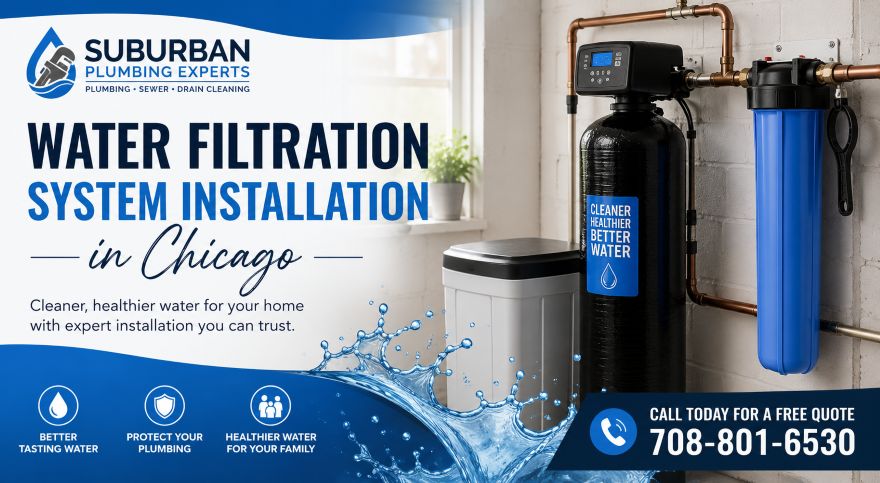
Water filtration installation in Chicago starts with understanding what you want to improve about your tap water. If you notice a chlorine taste or odor, recurring mineral scale, or concerns about specific contaminants, the right treatment system depends on your home's water quality and plumbing.
Suburban Plumbing Experts installs whole-house and under-sink water filtration systems throughout Chicago and the surrounding suburbs. We consider your water quality concerns, household needs, existing plumbing, and the type of filtration that makes sense for your property.
Chicago-area homeowners may be concerned about chlorine taste and odor, naturally occurring hardness minerals, or potential lead exposure from older plumbing. These issues require different solutions, so choosing the right system matters more than simply buying a filter.
Why Consider Water Filtration for Your Chicago Home?
Water filtration can improve taste and odor and reduce specific contaminants when the system is designed and certified for that purpose. The right equipment depends on what you want to address.
Chlorine Taste and Odor
Municipal water treatment uses disinfectants to help protect drinking water as it travels through the distribution system. Some homeowners notice a chlorine taste or smell at their taps. Properly selected carbon filtration can reduce chlorine taste and odor.
A whole-house system treats water entering the property, while an under-sink filter focuses on a particular faucet, usually in the kitchen.
Hard Water and Mineral Scale
Calcium and magnesium contribute to water hardness. These minerals can leave white deposits on faucets, showerheads, dishes, and appliances and contribute to scale buildup in water-using equipment.
A standard carbon filter does not solve water hardness. If mineral scale is your main concern, a water softener may be more appropriate. Learn more about how hard water can affect plumbing in Chicago suburbs.
Lead Concerns in Older Homes
Older Chicago-area properties may have lead service lines or other aging plumbing components. If you are concerned about lead, first determine what materials are present in your service line and consider appropriate water testing.
A filtration system certified specifically for lead reduction can provide an additional protective measure when installed and maintained according to the manufacturer's instructions. It does not replace a confirmed lead service line.
Our guide to Chicago lead water line replacement explains replacement considerations and available options.
Which Water Filtration System Is Right for Your Home?
Different systems address different water quality concerns. The best choice depends on your water test results, household water usage, plumbing layout, and treatment goals.
Whole-House Water Filtration
A whole-house, or point-of-entry, system is installed where water enters the property. Depending on the equipment, it may reduce sediment, chlorine taste and odor, or other targeted substances.
This option is worth considering when you want the selected treatment to apply to water supplied throughout the house.
Reverse Osmosis Systems
Reverse osmosis systems are commonly installed beneath the kitchen sink to treat drinking and cooking water. Depending on the specific system, they can reduce dissolved substances and certain contaminants.
If lead or another specific contaminant is a concern, verify that the exact system is certified for reducing it. Not every reverse osmosis system has the same capabilities.
Under-Sink Water Filters
Under-sink filters provide treated water at a particular faucet without requiring whole-house equipment. They can be a practical option for homeowners who primarily want to improve drinking water or address a specific water quality concern at the kitchen sink.
Keep in mind that these systems do not treat water supplied to the rest of the home.
Water Softeners and Combined Systems
If your primary concern is hard water, a water softener is designed to reduce hardness minerals. Some homes benefit from combining a softener with filtration to address both scale and chlorine taste or odor.
Our water softener installation service explains this option in more detail.
How to Choose the Right System
Before installing equipment, identify the problem you want to solve.
- Chlorine taste or odor: A properly selected carbon filter may be appropriate.
- White mineral scale: Consider testing water hardness and evaluating a water softener.
- Lead concerns: Confirm the service line material and choose filtration specifically certified for lead reduction if appropriate.
- Concerns about dissolved contaminants: Consider a treatment system certified for the specific substances you want to reduce.
- Drinking water only: An under-sink filter or reverse osmosis system may be sufficient.
- Treatment throughout the home: A whole-house system may be a better fit.
Water testing can help guide the decision, especially when you are concerned about a particular contaminant. It is better to choose equipment based on your actual water conditions than to pay for a system that does not address your primary concern.
Lead Service Lines and Water Filtration in Chicago
Lead deserves special attention in older properties because the service line connecting a home to the water main may contain lead. Home age alone cannot confirm the pipe material, so check available municipal records or arrange an appropriate inspection.
If your property has a confirmed lead service line, investigate replacement options through the appropriate local authority. Program eligibility, funding, and requirements can change, so verify current information directly with the city or municipality.
A filter certified for lead reduction may provide an additional protective measure while you investigate replacement. Follow the manufacturer's installation and filter replacement instructions, and do not assume that a general-purpose filter provides lead protection.
For more information, see our guides to lead service line replacement and lead pipe concerns in Chicago neighborhoods.
What to Expect During Water Filtration Installation
Professional installation starts with understanding your water quality concerns and the plumbing connections required for the system.
Assessing Your Needs
We discuss the issues you want to address, review your plumbing setup, and determine whether whole-house filtration, under-sink filtration, reverse osmosis, or water softening is the most appropriate option.
Selecting and Installing the Equipment
System requirements vary. Whole-house equipment connects to the incoming water supply, while under-sink systems are installed at the selected fixture and may require additional connections.
Our licensed plumbers install the selected equipment according to the manufacturer's requirements and inspect the plumbing connections.
Testing and Maintenance
After installation, we check the connections, inspect for leaks, and verify proper operation. We also explain the system's maintenance requirements, including when filters or other components need replacement.
Following the manufacturer's recommended service schedule is important for maintaining performance.
How Much Does Water Filtration Installation Cost in Chicago?
Installation costs depend on the type of system, equipment requirements, existing plumbing, and complexity of the work. An under-sink filter and a whole-house system involve different equipment and installation needs, so pricing varies by property.
Factors that affect the cost include:
- System type: Basic under-sink filters, reverse osmosis systems, whole-house filtration, and softener combinations have different equipment costs.
- Water quality concerns: The system must be appropriate for the substances or conditions you want to address.
- Household water usage: Whole-house equipment needs sufficient capacity for the property's demand.
- Plumbing access: Existing connections, available space, and any necessary modifications can affect installation.
- Maintenance requirements: Replacement filters and other service needs contribute to the long-term cost of ownership.
The best way to determine the right system and installation cost is to evaluate your water quality concerns and plumbing setup first. We can explain the available options and provide a recommendation based on your home's needs.
Why Choose Suburban Plumbing Experts?
Suburban Plumbing Experts has served Chicagoland homeowners since 1978. Our licensed plumbers understand the plumbing systems found throughout Chicago and the surrounding suburbs, including the challenges that can arise in older properties.
We take a practical approach to water treatment: understand the concern, select equipment suited to the problem, and install it properly.
Our team can help you compare whole-house filtration, under-sink filters, reverse osmosis, and water softening so you understand what each option does and where it makes sense. We explain installation requirements, discuss maintenance, and provide clear pricing before work begins.
The goal is to help you choose a system that fits your home and water quality needs, not to sell you equipment you do not need.
Frequently Asked Questions About Water Filtration Installation
Do I need a water filter or a water softener?
They address different issues. A filter can reduce chlorine taste and odor, sediment, or specific contaminants, depending on the system. A water softener reduces hardness minerals. If you experience both hard-water scale and chlorine taste, you may benefit from using both technologies.
Will a water filter remove lead from my tap water?
Only systems specifically designed and certified for lead reduction should be relied on for that purpose. Check the certification and claims for the exact model, and follow the manufacturer's installation and maintenance requirements. Filtration does not replace a confirmed lead service line.
How do I know if my home has a lead service line?
The age of your home can indicate whether further investigation is worthwhile, but it does not confirm the pipe material. Check local water department resources or arrange an appropriate inspection to identify your service line.
How long does installation take?
The time depends on the system and the existing plumbing. Some under-sink installations are relatively straightforward, while whole-house systems or projects requiring plumbing modifications can take longer. We can explain the expected work before installation begins.
How often do water filters need to be replaced?
It depends on the system, filter type, water quality, usage, and manufacturer's recommendations. Follow the service schedule for your specific equipment to maintain its intended performance.
Does a whole-house filter treat water at every faucet?
A whole-house system treats water entering the property, but the substances it removes depend on the filtration technology. Confirm that the selected equipment is designed for the specific water quality concerns you want to address.
Schedule Water Filtration Installation in Chicago
The right water filtration system starts with understanding your water quality and what you want to improve. Whether you are concerned about chlorine taste and odor, specific contaminants, or the difference between filtration and water softening, Suburban Plumbing Experts can help you evaluate your options.
We install water filtration systems throughout Chicago and the surrounding suburbs, helping homeowners select equipment suited to their plumbing, household needs, and treatment goals.
Call 708-801-6530 to discuss water filtration installation for your Chicago-area home.
Trusted Water Filtration System Installation Services Across Chicago & Surrounding Suburbs
Protecting Chicago-area homes and businesses with professional water filtration solutions designed for hard water, sediment, and aging plumbing infrastructure.
Chicago & Suburban Service Area
Serving Chicago, Naperville, Downers Grove, Hinsdale, Oak Brook, Elmhurst, Wheaton, Glen Ellyn, and surrounding Chicagoland communities.
Licensed, Insured & Local Experts
- ✔ Licensed Plumbing Professionals in Illinois
- ✔ Fully Insured Residential & Commercial Service
- ✔ Whole-Home Water Filtration Solutions
- ✔ Hard Water & Sediment Treatment Services
- ✔ Emergency Filtration System Repair Available
- ✔ Code-Compliant Installation & Repairs
- ✔ Experienced with Chicago's Water Quality Challenges
- ✔ Fast Dispatch Across Chicagoland Communities
Trusted by homeowners and property managers across Chicagoland for reliable water filtration solutions.