
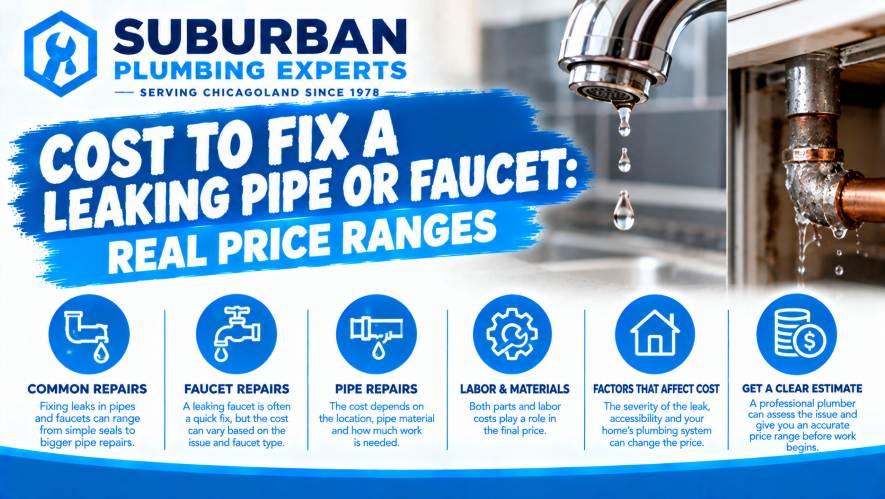
Two “Leaking Pipe” Jobs Can Cost $150 or $2,000. The Difference Is Almost Never the Pipe Itself.
A leak repair’s price is driven far more by what stands between a plumber and the leak than by the leak itself. A worn washer and a slab leak are both, technically, “a leaking pipe,” and the gap between them is almost entirely about access, not the actual failure. Here’s what really moves the number, realistic cost ranges, and where the honest line sits between a DIY fix and a call to a professional.
What Actually Drives the Price
Location and accessibility matter more than anything else. A visible faucet drip needs minimal labor; a pipe behind a finished wall, under a slab, or in a crawl space needs real access work before any repair even starts, and homes with finished basements feel this the most when a leak turns up somewhere concealed. Severity matters too: a slow drip from a worn washer or O-ring is a simple part swap, while a corroded section of pipe often needs to be cut out and replaced rather than patched. Pipe material plays a real role as well. Older galvanized or cast iron plumbing tends to need a full section replacement rather than a spot repair, since patching one failure point on an aging line often just relocates the next one. Material also affects labor time directly: PEX repairs generally go faster thanks to push-fit or crimp fittings, while copper requires soldering a joint, which takes longer and costs more in labor even when the materials themselves are inexpensive.
Typical Cost Ranges
Faucet repairs involving a washer or cartridge swap generally run $150 to $350, depending on the faucet’s complexity and how accessible the fittings are underneath it. Full faucet replacement, fixture included, typically runs $250 to $600 for a mid-range unit with professional installation.
Visible pipe leaks, under a sink or in an open basement, typically run $200 to $500 for a straightforward coupling or short section replacement. The price climbs with the number of fittings involved or if the work is happening in a genuinely tight space.
Hidden pipe leaks, inside a wall, under a floor, or embedded in a slab, commonly run $500 to $2,000 or more. That range covers leak detection, opening up access to the damaged section, the repair itself, and restoring whatever finished surface had to come out. A slab leak in particular can exceed this range, since it usually means cutting and later patching concrete on top of the plumbing work itself, not just locating the pipe.
Why Finding the Leak Often Costs More Than Fixing It
On a concealed leak, diagnosis is frequently the harder half of the job. Acoustic leak detection listens for the specific sound water makes escaping under pressure and triangulates the source; thermal imaging reveals temperature differences in a wall or floor where water is traveling somewhere it shouldn’t be. Our leak detection services and thermal imaging inspections exist specifically to find the actual source before anyone opens a wall, which is what keeps a repair from turning into exploratory demolition.
What a Dripping Faucet Actually Costs You While You Wait
According to the EPA’s WaterSense program, a faucet dripping once per second wastes nearly 3,200 gallons of water in a year. That’s not a repair cost, it’s water you’re paying for and getting nothing from, on top of whatever the eventual repair ends up costing. A $200 faucet repair handled promptly is cheaper than the same repair plus months of wasted water on the bill before it happens.
Warning Signs Worth Acting On
Water stains on a ceiling, wall, or floor; a water bill that’s risen with no change in usage; a persistent musty smell; the sound of running water with every fixture off; reduced pressure throughout the house; visible corrosion or mineral buildup on a pipe; a warm spot on a floor, a real sign of a possible slab leak; and mold or mildew somewhere it has no obvious reason to be are all worth acting on rather than watching for a while longer.
Emergency vs. Scheduled Repairs
After-hours, weekend, and holiday service typically adds 50 to 100 percent over standard rates, but a genuine emergency, a burst pipe actively flooding a room, isn’t the place to shop for a better rate. Our emergency plumbing services are built for exactly that scenario. For anything short of an active emergency, scheduling during normal business hours is the straightforward way to avoid the premium entirely.
Does Homeowners Insurance Cover This?
It depends heavily on the cause, and this is a deeper topic than a cost guide can do justice to in a paragraph. In short, policies generally treat sudden, accidental damage differently than gradual, maintenance-related leaks, and the distinction can be the difference between a covered claim and a repair you pay for entirely yourself. Our full breakdown of what homeowners insurance actually covers for pipe and line failures walks through the specific endorsements worth asking your insurer about before you assume either way.
DIY vs. Professional Repair
Cleaning a faucet aerator, tightening a loose connection, or swapping a visible washer are reasonable DIY tasks for a handy homeowner with basic tools. Anything involving pipe replacement, work behind a finished wall, or a water source you can’t clearly identify is worth a professional, not just for the skill involved but because, depending on scope, that work can fall under licensing requirements rather than simply being a judgment call; our guide to licensed plumbers versus handymen covers where that line actually sits. A failed DIY attempt also has a way of turning a simple repair into a more expensive one once a professional has to undo it before starting the actual fix.
The Real Cost of Waiting
A $300 faucet repair today is reliably cheaper than the water damage remediation, drywall, flooring, and possible mold treatment that follow months of ignoring the same drip. Visible water damage or known plumbing issues also depress a home’s resale value and invite buyers to negotiate concessions that often exceed what the original repair would have cost. Prompt repair is the cheaper outcome in almost every version of this math.
For a Broader Picture of Plumbing Costs
This guide focuses specifically on leak and faucet repair pricing. For a fuller picture across other common plumbing jobs, our complete Chicago plumbing pricing guide covers the rest.
Frequently Asked Questions
How much does it typically cost to fix a leaking faucet?
A washer or cartridge repair generally runs $150 to $350. Full replacement with a mid-range fixture and professional installation typically runs $250 to $600.
Why do hidden or slab leaks cost so much more to fix than a visible one?
Most of the added cost is locating the leak and accessing it, not the repair itself. A slab leak specifically often requires cutting into concrete to reach the pipe and patching it afterward, which is a different scope of work than a simple coupling swap under an open sink.
Does homeowners insurance cover a leaking pipe?
It depends on the cause. Sudden, accidental damage is treated differently than a leak that developed gradually from age or lack of maintenance, and specific insurance endorsements can affect the outcome either way. It’s worth reviewing your policy’s actual terms rather than assuming.
How much water does a dripping faucet actually waste?
According to the EPA’s WaterSense program, a faucet dripping once per second wastes nearly 3,200 gallons of water a year, water you’re paying for without getting any use from it.
Is it worth trying to fix a minor leak myself before calling a plumber?
For a simple aerator cleaning or washer swap, yes, it’s a reasonable DIY task. Once it involves opening a wall, replacing a section of pipe, or you can’t identify the water source, a failed attempt usually costs more in the end than calling a professional from the start.
The Leak You Fix Today Is Always the Cheaper One
Leak repair costs vary enormously, from a $150 washer swap to a slab repair well over $2,000, and almost all of that range comes down to access and diagnosis rather than the actual failure. What doesn’t vary is the direction the cost moves while you wait: a cheap fix today reliably beats an expensive one later, once water damage, wasted utility bills, and resale concerns get added to the bill.
—
Suburban Plumbing Sewer Line & Drain Cleaning Experts
Licensed & Insured | Serving Chicago & the Suburbs Since 1978