
Water Softener Installation in Chicago, IL for Hard Water Protection
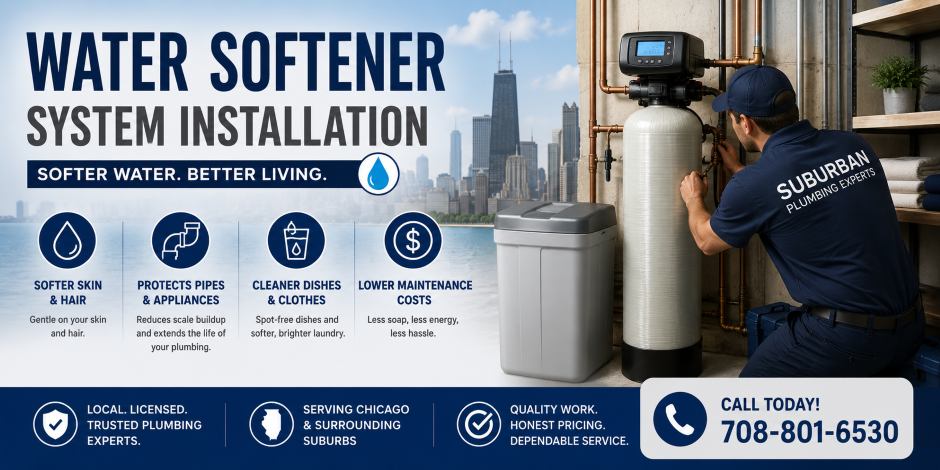
Water softener installation in Chicago helps homeowners reduce the effects of hard water, including mineral scale on plumbing fixtures, white residue on faucets, and deposits that accumulate inside water heaters and household appliances. Calcium and magnesium are the primary minerals responsible for water hardness, and they can leave buildup wherever water is regularly used.
Over time, mineral deposits can affect water heaters, faucets, showerheads, dishwashers, and other plumbing components. Homeowners may notice recurring water spots on glassware, scale around fixtures, or buildup that makes routine cleaning more difficult. A properly selected water softener can reduce the calcium and magnesium entering your home's plumbing system.
Suburban Plumbing Experts installs and replaces water softener systems for homeowners in Chicago and surrounding Chicagoland communities. Our licensed plumbers consider your household's water usage, plumbing configuration, and existing equipment when determining the right system for the installation. From selecting compatible equipment to connecting and installing the system, we provide professional plumbing service designed to address your home's hard water concerns.
How Hard Water Affects Chicago Homes and Why a Water Softener Helps
Many Chicago homeowners deal with hard water without realizing how much mineral buildup can affect their plumbing, fixtures, appliances, and everyday routines. Chicago's water comes from Lake Michigan and contains naturally occurring calcium and magnesium, the minerals responsible for water hardness. Hardness can vary across Chicagoland depending on the water source and location. For a broader look at where the area's drinking water comes from, how it is treated, and the water quality concerns homeowners should understand, see our Complete Guide to Chicagoland Tap Water.
Hard water problems often develop gradually rather than appearing as an immediate plumbing emergency. Calcium and magnesium deposits can accumulate on faucets, showerheads, and plumbing fixtures. Over time, scale can also build up inside water heaters and appliances, potentially affecting their operation and making routine cleaning more difficult. We explain these long-term effects in our guide to how hard water damages Chicago-area plumbing.
A properly sized water softener addresses hardness at the point where water enters your home's plumbing system. By reducing calcium and magnesium, a whole-home system helps limit mineral scale throughout the plumbing and on the fixtures and appliances that use water. Proper system selection matters because the equipment needs to accommodate your household's water usage and hardness level.
It is also important to understand what a water softener does and does not treat. A conventional softener is designed primarily to reduce hardness minerals. It is not a substitute for filtration when the goal is to address chlorine taste and odor, sediment, or specific drinking-water contaminants. Homeowners who want both hardness reduction and improved water filtration can combine a softener with a water filtration system for more comprehensive whole-home water treatment.
6 Signs Your Chicago Home May Need a Water Softener
Hard water problems often develop gradually. Mineral deposits can accumulate on faucets, showerheads, water heaters, appliances, and other surfaces throughout your home. If you recognize several of the following signs, it may be worth evaluating whether a whole-home water softener is the right solution.
1. White Scale Around Faucets, Showerheads, and Fixtures
A white, chalky residue around faucets, sinks, showerheads, and glass shower doors is a common sign of hard water. Calcium and magnesium minerals remain behind when water evaporates, leaving deposits that can become increasingly difficult to remove.
2. Mineral Buildup Inside Your Water Heater
Hard water can contribute to mineral scale inside a water heater and on heating components. Depending on the equipment and amount of buildup, deposits can interfere with heat transfer, contribute to operating problems, and make maintenance more difficult.
3. Dishes and Glassware Keep Coming Out Spotty
Cloudy glassware, white spots, and mineral film left behind after washing can indicate hard water. Calcium and magnesium can interfere with detergent performance and leave deposits on dishes, particularly when water temperatures and dishwasher settings contribute to mineral residue.
4. Soap and Shampoo Don't Lather or Rinse Normally
Hard water minerals react with soap, making it harder to produce a rich lather and rinse away residue. Some homeowners notice a film on their skin, dry-feeling hair, or the need to use more soap and shampoo during everyday bathing.
5. Laundry Looks Dull or Feels Stiff
Hard water can interfere with laundry detergent and contribute to mineral deposits on fabrics. Clothing and towels may gradually look dull, feel stiff, or lose some of their softness even when you haven't changed your detergent or washing routine.
6. Mineral Deposits Restrict Flow at Individual Fixtures
Calcium and magnesium deposits can accumulate inside faucet aerators, showerheads, and other small plumbing passages. If water flow gradually decreases at a particular fixture, mineral buildup may be contributing to the restriction. Other plumbing problems can cause similar symptoms, so the affected fixture should be inspected before assuming hard water is responsible.
If several of these signs sound familiar, a properly selected water softener may help address the underlying hardness problem. By reducing calcium and magnesium before water circulates through your home's plumbing, a whole-home system helps limit new scale buildup on fixtures and inside water-using equipment.
Salt-Based Water Softeners vs. Salt-Free Conditioners: Which Should You Choose?
Choosing between a salt-based water softener and a salt-free water conditioner can be confusing because these systems do not perform the same function. Both are marketed as solutions for hard water, but the way they treat water and the results homeowners can expect are different. The most important distinction is whether you want to remove calcium and magnesium, the minerals responsible for water hardness, or use a conditioning system designed to reduce scale formation without removing those minerals.
Salt-Based Ion Exchange Water Softeners
Salt-based ion exchange systems are a common choice for homes dealing with moderate to severe hard water. These systems use resin beads to remove calcium and magnesium from the water through ion exchange, replacing the hardness minerals with sodium or potassium ions.
Because a conventional ion exchange softener actually reduces the minerals responsible for hardness, it produces the softened-water characteristics many homeowners want. This can help reduce mineral scale on plumbing fixtures, water heaters, dishwashers, washing machines, and other water-using appliances. Homeowners may also notice improved soap lathering and less mineral residue on surfaces.
Salt-based systems require periodic maintenance. The brine tank needs to be replenished with the appropriate salt or potassium chloride, and the system must regenerate according to its operating settings and water usage. During regeneration, the resin is cleaned and recharged so it can continue removing hardness minerals from incoming water.
For Chicago-area homes with significant water hardness, a properly sized salt-based softener is generally the more direct choice when the goal is to reduce actual hardness, improve soap performance, and limit mineral scale throughout the plumbing system.
Salt-Free Water Conditioners
Salt-free water conditioners take a different approach. Rather than removing calcium and magnesium, these systems use conditioning technologies intended to change how hardness minerals behave so they are less likely to form conventional scale deposits on plumbing surfaces. The specific process and results depend on the technology used.
Because the hardness minerals remain in the water, a salt-free conditioner does not produce the same results as a traditional ion exchange softener. Water hardness is not removed, and homeowners may still notice mineral spotting or other characteristics associated with hard water.
Salt-free conditioning may appeal to homeowners who want to avoid adding salt or maintaining a traditional brine tank. However, if your primary goal is to reduce calcium and magnesium and achieve genuinely softened water, a salt-based ion exchange system is generally the better fit.
Which Water Treatment System Is Right for Your Home?
The right system depends on more than the equipment's advertised features. Your home's water hardness, daily water usage, available installation space, plumbing configuration, drainage requirements, and maintenance preferences all matter when selecting a system.
Suburban Plumbing Experts can help homeowners evaluate their existing plumbing setup, discuss the differences between available systems, and determine which type of equipment is appropriate for the installation. If you want to reduce actual water hardness, a properly sized salt-based softener is typically the most direct solution. If your goal is scale conditioning without removing hardness minerals, a salt-free system may be worth considering.
Water Softener Sizing: Choosing the Right System for Your Home
Choosing the right water softener involves more than selecting a tank based on the size of your house. An undersized system may regenerate too frequently or struggle to keep up with household demand. An oversized system can increase the upfront equipment cost without providing a meaningful benefit. At Suburban Plumbing Experts, we consider your home's water hardness information, household usage, and plumbing configuration when determining which system is appropriate for the installation.
Determining Your Home's Water Hardness
Water hardness is one of the most important factors in selecting a water softener. Chicago-area water is generally hard, but mineral levels can vary between communities and individual properties. Rather than relying exclusively on regional averages, the system selection process should account for the actual hardness level of the water being treated. This information helps determine the amount of softening capacity the equipment needs to provide.
Calculating Your Household Water Demand
Daily water consumption is another important part of proper softener sizing. The number of people in your household, bathrooms, water-using appliances, and typical usage patterns all affect how much softened water your system needs to produce.
A larger household with multiple showers, frequent laundry, and regular dishwasher use will generally place more demand on a water softener than a smaller household with lighter water usage.
Selecting the Correct Grain Capacity
Water hardness and household demand work together to determine the appropriate grain capacity for a water softener. Grain capacity describes how much hardness a system's resin can remove before regeneration is needed.
Proper sizing helps the equipment maintain an adequate supply of softened water without regenerating more frequently than necessary. The system's operating settings, reserve capacity, and regeneration schedule also matter when selecting equipment for consistent performance.
Choosing the Right Water Softener Installation Location
The equipment itself is only part of a successful installation. Your home's plumbing layout must also accommodate the softener's connections, drain requirements, and any electrical requirements specified by the manufacturer.
The installation location should provide enough room for the equipment, access to the main water supply, and convenient replenishment of salt or potassium chloride when required. Proper placement also makes routine maintenance and future service easier.
Our Water Softener Installation Process
A properly installed water softener involves more than connecting a tank to your home's plumbing. Equipment placement, plumbing connections, bypass arrangements, drainage, and system programming all affect how the system operates. At Suburban Plumbing Experts, our licensed plumbers handle the plumbing installation and equipment connections with attention to manufacturer requirements and your home's existing plumbing configuration.
Reviewing Your Plumbing and Installation Requirements
Before installation, we discuss the hard water problems you've been experiencing and review the equipment selected for your home. We consider your household's water usage, available water hardness information, existing plumbing layout, and the space available for the new system.
We also identify the appropriate connection point on the main water supply and review the drain access and other installation requirements before work begins.
Connecting and Installing the Water Softener
Once the installation plan is established, our licensed plumbers connect the softener to your home's plumbing using appropriate materials and installation methods.
This includes installing the necessary bypass valve and water connections, arranging the regeneration drain connection, and positioning the equipment for proper operation and future maintenance. The installation is completed according to the equipment manufacturer's requirements and applicable plumbing codes.
Configuring the System and Checking Connections
After the plumbing connections are complete, the system is configured according to the selected equipment, household requirements, and available water hardness information.
We check the installation connections for leaks and review the system's operating settings and regeneration configuration. These steps help ensure the equipment is properly connected and ready for operation.
Homeowner Walkthrough and Maintenance Guidance
Before completing the job, we'll explain how your new water softener operates and review the routine maintenance it requires. For salt-based systems, this includes checking the brine tank and replenishing salt or potassium chloride as needed. We'll also explain the basic operating settings and answer questions about maintaining the equipment.
Our goal is to leave you with a properly installed system and a clear understanding of how to operate and maintain it.
Water Softener Installation Cost in Chicago: What Affects the Price?
The cost of water softener installation in Chicago depends on several factors, including the type of equipment, the grain capacity needed for your household, the complexity of the installation, and your home's existing plumbing. A straightforward replacement can involve different work than installing a new system where plumbing connections and drainage need to be added or modified. That's why there isn't one installation price that applies to every home.
What Determines the Cost of Water Softener Installation?
- Type of system: Traditional salt-based ion exchange softeners, salt-free water conditioners, and combination softener and filtration systems have different equipment requirements and installation costs.
- Grain capacity: The system must have enough softening capacity for your household's water hardness and daily usage. Larger-capacity equipment can cost more, but selecting the right size matters more than simply choosing the biggest system.
- Existing plumbing: The location of the main water line, available installation space, drain access, and any necessary plumbing modifications can affect the labor and materials required.
- Additional water treatment equipment: Some homeowners choose to install whole-home filtration alongside a water softener. Filtration can address separate concerns such as chlorine taste and odor or sediment, but it requires additional equipment and plumbing connections.
- New installation versus replacement: Replacing an existing softener may allow some plumbing connections to be reused, while a first-time installation may require additional connections, drainage arrangements, or modifications to the plumbing.
Get an Upfront Water Softener Installation Estimate
Rather than quoting the same price for every home, Suburban Plumbing Experts considers the selected equipment, household requirements, and existing plumbing before preparing an installation estimate. We'll explain the recommended work and provide clear pricing before the job begins, so you know what is included and what to expect.
Water Softener Maintenance and When to Call a Plumber
A properly installed water softener requires routine attention to maintain consistent performance. Most salt-based systems need periodic salt or potassium chloride replenishment, along with occasional checks of the equipment and its operating settings.
How often you need to add salt depends on your household's water usage, the hardness of your water, the system's grain capacity, and how frequently it regenerates. Some homeowners may need to replenish the brine tank every several weeks, while others may go longer between refills. Your equipment's salt level and manufacturer's maintenance recommendations are the best guides.
Routine Water Softener Maintenance
Keeping the brine tank supplied with the appropriate salt or potassium chloride is one of the most important routine maintenance tasks. Homeowners should also periodically check the system for unusual operation, inspect for visible leaks, and watch for changes that could indicate the softener is no longer working as expected.
During installation, our plumbers explain the maintenance requirements for your specific system, including how to monitor the salt level and understand its basic operating settings.
Signs Your Water Softener May Need Professional Service
If your water begins showing signs of hardness again, the system stops regenerating, unusual noises develop, or salt consumption changes significantly, the equipment may need attention. Problems involving the control valve, resin bed, brine system, plumbing connections, or programming can affect performance and may require professional diagnosis.
Keeping your softener properly maintained helps it continue reducing hardness minerals and limiting new scale buildup throughout your home's plumbing system.
If years of hard-water scale have also affected your existing water heater, our water heater installation team can evaluate the equipment and discuss replacement when appropriate.
Why Choose Suburban Plumbing Experts for Water Softener Installation in Chicago
Choosing the right plumbing company is just as important as choosing the right water softener. A properly sized and professionally installed system can help protect your plumbing, water heater, fixtures, and water-using appliances from the long-term effects of hard water.
At Suburban Plumbing Experts, we don't believe in one-size-fits-all recommendations or high-pressure sales tactics. We evaluate your home's actual water conditions, explain your options clearly, and install a system designed around your household's needs.
When you choose Suburban Plumbing Experts, you can expect:
- Serving Chicagoland Since 1978: Homeowners throughout Chicago and the surrounding suburbs have trusted our experienced plumbers for honest recommendations, quality workmanship, and dependable plumbing solutions for decades.
- Free Water Hardness Testing: We test your home's actual water hardness rather than relying solely on regional averages. This helps us recommend a system that matches your specific water conditions.
- Professionally Sized Systems: We consider household size, daily water usage, and water hardness when determining the appropriate grain capacity, helping your system operate efficiently without unnecessary regeneration.
- Licensed and Insured Plumbers: Your installation is completed by experienced plumbing professionals who understand proper water softener connections, system setup, local plumbing requirements, and long-term performance.
- Upfront, Transparent Pricing: You'll receive a clear estimate before work begins, along with straightforward recommendations and no unnecessary upgrades or surprise charges.
- Solutions Tailored to Your Home: Whether a traditional salt-based softener, salt-free conditioner, or combination softener and filtration system makes the most sense, we'll explain your options so you can make an informed decision.
- Complete Installation and Setup: From water testing and system sizing through installation, programming, performance testing, and homeowner education, we handle the process from start to finish.
Our goal isn't simply to install another piece of equipment in your basement. It's to make sure you have the right water treatment solution for your home's hard water conditions and that the system is installed correctly from day one.
Frequently Asked Questions About Water Softener Installation in Chicago
How do I know if my Chicago home needs a water softener?
Many Chicago-area homeowners don't realize they have hard water until they begin noticing its effects throughout the home. Common signs include white mineral deposits on faucets and shower doors, cloudy glassware, soap that doesn't lather well, dry-feeling skin and hair after showering, stiff laundry, and reduced efficiency from water heaters and other water-using appliances. The best way to determine whether your home needs a water softener is with a professional water hardness test. Our plumbers test your home's actual water rather than relying solely on regional averages, allowing us to recommend the right solution for your specific water conditions.
Is a salt-based or salt-free water softener better for Chicago homes?
For many Chicago homes with moderate to high water hardness, a salt-based ion exchange water softener is the most effective option because it removes calcium and magnesium minerals from the water. Salt-free water conditioners work differently by reducing the tendency of hardness minerals to form scale, but they do not actually remove those minerals or produce the same soft-water characteristics. The best choice depends on your home's water hardness, plumbing system, household needs, and preferences, and we'll explain the differences before making a recommendation.
How long does water softener installation take?
Most residential water softener installations can be completed within a few hours when the plumbing is readily accessible and no major modifications are required. Installation time can vary depending on your home's plumbing layout, the location of the main water line, available drain and electrical connections, and the type of system being installed. After installation, we test the system, verify proper operation, and show you how to operate and maintain your new water softener.
Do I need a plumbing permit to install a water softener in Chicago?
Permit requirements can vary between Chicago and individual suburban municipalities. Depending on the location and scope of the installation, local plumbing requirements may apply to the water connections, drain connection, or other modifications. When permitting is required, our team can help determine what applies to your installation and ensure the work is completed in accordance with applicable local requirements.
How often do I need to add salt to my water softener?
Many homeowners refill the brine tank approximately every 6 to 8 weeks, but the actual schedule depends on household size, water usage, water hardness, salt efficiency, and the capacity of your system. During installation, we'll explain how to monitor the salt level, when to refill the brine tank, and what routine maintenance your specific system requires.
Will a water softener remove chlorine, lead, or other contaminants?
A traditional water softener is designed primarily to reduce hardness minerals such as calcium and magnesium. It is not a substitute for a water filtration system designed to address chlorine, lead, sediment, or other specific water quality concerns. PFAS, sometimes called “forever chemicals,” are another water-quality concern that is separate from hard water. Learn more about PFAS in Chicago tap water and what Chicago homeowners should know about these persistent contaminants. If you're interested in improving your home's overall water quality, our water filtration installation services can be combined with a water softener to create a more complete whole-home water treatment solution.
How long does a water softener last?
A quality water softener can provide many years of reliable service when it is properly sized, installed, and maintained. Lifespan varies depending on water conditions, household usage, system quality, and maintenance. Regular salt refills, proper settings, periodic inspections, and timely replacement of components can all help maximize the useful life of your system.
Can a water softener help extend the life of my plumbing and appliances?
Yes. By reducing calcium and magnesium hardness minerals, a water softener can help limit scale formation inside pipes, water heaters, dishwashers, washing machines, faucets, and other water-using equipment. Reducing scale can help maintain water flow, improve efficiency, and reduce mineral buildup that contributes to premature wear over time.
If you're unsure whether a water softener is right for your Chicago home, a professional water hardness test is a good place to start. Testing your actual water allows us to determine whether softening is appropriate and what type and capacity of system best fits your home's needs.
Schedule Professional Water Softener Installation in Chicago
If hard water is leaving mineral deposits on your fixtures, creating buildup inside your water heater, spotting your dishes, or making everyday cleaning more difficult, a professionally installed water softener can help address the source of the problem. A properly selected system reduces calcium and magnesium before they circulate throughout your home's plumbing, helping limit new mineral scale on fixtures and water-using appliances.
At Suburban Plumbing Experts, our licensed plumbers consider your home's water hardness information, household usage, existing plumbing, and installation requirements when recommending equipment. Whether you're replacing an aging system or installing a water softener for the first time, we provide professional installation, practical recommendations, and clear pricing before work begins.
Ready to address hard water problems in your home? Call 708-801-6530 to discuss your water softener installation or replacement. We serve Chicago and surrounding Chicagoland communities and are ready to help you choose the right system for your home.
Schedule Water Softener Installation Now
Suburban Plumbing Sewer Line & Drain Cleaning Experts
⏰ Open 24 Hours
📞 Phone: Suburbs: 708-801-6530 Chicago: 773-570-2191
📧 Email: info@suburbanplumbingexperts.com
🚨 Emergency Hotline: 708-518-7765
Water Softener Installation Throughout Chicago and the Western Suburbs
Suburban Plumbing Experts provides professional water softener installation and replacement for homeowners throughout Chicago and surrounding communities. Our licensed plumbers help homeowners address hard water concerns with properly selected equipment and professional installation.
Based in Brookfield, Serving Chicagoland
Serving Chicago, Brookfield, Naperville, Downers Grove, Hinsdale, Oak Brook, Elmhurst, Wheaton, Glen Ellyn, and surrounding Chicagoland communities.
Licensed, Insured & Locally Established
- ✔ Licensed Illinois Plumbing Professionals
- ✔ Illinois Plumbing License #055-044116
- ✔ Fully Insured Plumbing Services
- ✔ Residential Water Softener Installation
- ✔ Water Softener Replacement
- ✔ Proper Equipment Selection and Installation
- ✔ Written Pricing Before Work Begins
- ✔ No Overtime Charges
Family-owned plumbing expertise since 1978.
Professional plumbing service backed by experienced local plumbers, straightforward recommendations, and upfront pricing.