Lift Station Repair and Maintenance in Chicago, IL
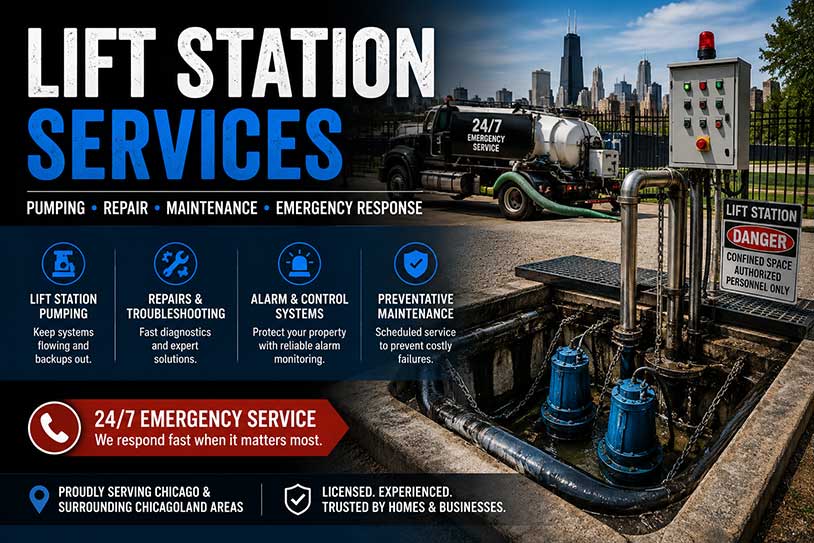
Lift station repair and maintenance in Chicago are essential for commercial properties, industrial facilities, and buildings that depend on mechanical wastewater pumping. When gravity drainage cannot move wastewater to the sewer system, a lift station uses pumps, floats, controls, and discharge piping to move it safely. A failing pump, malfunctioning control panel, defective float switch, or blocked discharge line can lead to rising wastewater levels, sewage backups, flooding, and costly interruptions.
Suburban Plumbing Experts provides professional lift station services throughout Chicago and the surrounding suburbs. Our licensed plumbers inspect wastewater pumping systems, troubleshoot equipment problems, perform repairs, and provide maintenance to help keep lift stations operating reliably.
Whether you need lift station pump repair, preventative maintenance, component replacement, or emergency service, we evaluate the condition of the equipment and recommend the work needed to address the problem.
Lift Station Repair, Maintenance, and Troubleshooting in Chicagoland
Lift station repair and maintenance are important for keeping wastewater pumping systems operating reliably. When pumps, floats, control panels, alarms, or discharge piping develop problems, wastewater may stop moving properly through the system. Depending on the property and the severity of the malfunction, this can lead to sewage backups, overflows, property damage, and interruptions to commercial or industrial operations.
Suburban Plumbing Experts provides lift station services throughout Chicago and the surrounding suburbs. Our licensed plumbing professionals evaluate system problems, troubleshoot equipment, perform necessary repairs, and provide maintenance based on the condition and operating demands of each lift station.
Lift Station Inspections and System Troubleshooting
A lift station inspection can help identify developing equipment problems and conditions that interfere with normal operation. Our team evaluates accessible components and operating conditions, looking for signs of pump malfunction, float problems, control issues, unusual cycling, and accumulated debris.
When a problem is identified, we explain the findings and recommend appropriate repairs or maintenance. Addressing developing issues can help reduce the likelihood of unexpected equipment failures and wastewater backups.
Lift Station Pump Repair and Maintenance
Lift station pumps must move wastewater through the discharge system under the operating conditions the equipment was designed to handle. Worn components, pump malfunctions, obstructions, and other mechanical problems can interfere with pumping performance.
Our team evaluates lift station pump problems, performs appropriate repairs, and addresses maintenance needs to help restore dependable operation. If a pump is no longer serviceable, we can assess the equipment and discuss the appropriate next steps.
For residential wastewater systems that use a separate ejector pump, see our ejector pump services.
Lift Station Control Panels, Float Switches, and Alarms
Lift stations rely on control panels, float switches, alarms, and related components to monitor wastewater levels and control pump operation. A defective float switch, control malfunction, or alarm problem can prevent a pump from starting, cause it to run continuously, or interfere with the system's response when wastewater levels rise.
Our team troubleshoots lift station control and float-related problems to help identify the source of the malfunction. We evaluate the affected components and determine what corrective service is appropriate.
Emergency Lift Station Repair for Sewage Backups and Overflows
A malfunctioning lift station can become an urgent problem when wastewater levels continue rising or sewage begins backing up into a building. These situations can threaten property, disrupt business operations, and require prompt attention.
Suburban Plumbing Experts provides 24-hour emergency plumbing service throughout Chicago and the surrounding suburbs. We investigate the cause of the pumping problem, determine what repairs are needed, and work to restore proper wastewater movement.
Lift Station Cleaning and Wastewater System Maintenance
Sludge, sediment, grease, and other debris can accumulate inside wastewater pumping systems. Depending on the type of lift station and the material present, buildup may interfere with floats, obstruct equipment, or contribute to recurring operating problems.
The condition of the system should be evaluated to determine whether cleaning, obstruction removal, or related drain cleaning services are appropriate. Addressing accumulated material can help reduce operating problems and unnecessary strain on equipment.
Preventative Lift Station Maintenance Programs
Routine lift station maintenance helps property owners monitor equipment condition and identify problems before they lead to unexpected downtime. The appropriate maintenance schedule depends on the system design, wastewater conditions, equipment, and frequency of use.
Depending on the installation, maintenance may include:
- Inspecting pumps and accessible mechanical components
- Checking float switches and pump cycling
- Evaluating control panels and alarm operation
- Looking for obstructions and accumulated debris
- Reviewing discharge performance and signs of recurring problems
- Identifying components that may require repair or replacement
A maintenance program tailored to the equipment and operating conditions can help commercial and industrial properties manage their wastewater systems more reliably.
Professional Lift Station Service Throughout Chicagoland
Whether a lift station needs troubleshooting, pump repair, control evaluation, or scheduled maintenance, identifying the actual cause of the problem is an important first step. Suburban Plumbing Experts provides lift station repair and maintenance services for properties throughout Chicago and the surrounding suburbs.
Contact our team to discuss your lift station problem, arrange an evaluation, or determine what service your wastewater pumping system may need.
Why Routine Lift Station Maintenance Matters for Chicago Properties
Routine lift station maintenance helps commercial and industrial properties keep wastewater pumping systems operating reliably. These systems are essential when gravity drainage cannot move wastewater to the municipal sewer system. Because pumps, floats, controls, alarms, and discharge components must work together, neglected maintenance can allow developing problems to progress into equipment failures, sewage backups, overflows, and costly operational disruptions.
A properly maintained lift station should have functioning pumps and controls, reliable wastewater-level monitoring, working alarms, and a discharge system capable of moving wastewater under normal operating conditions. The equipment and maintenance requirements vary depending on the system's design, capacity, wastewater conditions, and frequency of use.
Failing to maintain a lift station can contribute to several problems:
- Wastewater Overflows: Rising wastewater levels can lead to overflows when pumps fail, controls malfunction, or discharge becomes restricted.
- Sewer Backups: Pumping problems can prevent wastewater from leaving the system properly, potentially causing sewage to back up into connected buildings.
- Pump and Equipment Damage: Mechanical wear, accumulated debris, electrical problems, and excessive pump cycling can contribute to premature equipment failure.
- Unexpected Operational Downtime: A lift station failure can interrupt building operations and create additional cleanup, repair, and wastewater management costs.
Many lift stations include high-water alarms and other monitoring devices that alert property owners or facility operators when wastewater levels rise beyond normal limits. If an alarm activates, a warning light appears, or a pump runs continuously or fails to start, the system should be evaluated promptly. Ignoring these warning signs can allow a relatively manageable equipment problem to become a more serious wastewater emergency.
Suburban Plumbing Experts provides lift station inspection, maintenance, repair, and emergency plumbing services throughout Chicago and the surrounding suburbs. When accumulated wastewater, sludge, or other material requires removal, our team can utilize professional vacuum truck pumping equipment when appropriate for the system and the work involved.
For commercial buildings, industrial facilities, and other properties that depend on wastewater pumping, a consistent maintenance approach can help identify developing problems, reduce unexpected interruptions, and protect critical plumbing infrastructure.
Lift Station FAQs for Chicago Property Owners and Facility Managers
Lift stations are essential components of many commercial and industrial wastewater systems. When a pump, float switch, control panel, alarm, or discharge component malfunctions, wastewater may stop moving properly and create a risk of backups or overflows. Below are answers to common questions about lift station repair, maintenance, and emergency service in Chicago and the surrounding suburbs.
Why Is My Lift Station Alarm Going Off, and How Quickly Do I Need Service?
A lift station alarm commonly indicates that wastewater has reached a high-level threshold or that a monitored component has detected an operating problem. Possible causes include pump failure, a defective float switch, a control panel malfunction, a blocked discharge line, or another mechanical or electrical issue.
Treat the alarm seriously and contact a qualified service professional promptly. If wastewater is rising or backing up, avoid using connected plumbing fixtures when possible until the problem has been evaluated. Do not enter the wet well or attempt electrical repairs yourself.
What Is the Difference Between a Lift Station and a Sump Pump?
These systems handle different types of water. A sump pump removes groundwater or accumulated water from a basement or foundation drainage system. A sewage lift station collects and pumps wastewater when gravity cannot carry it to the sewer connection.
Lift stations typically use wastewater-rated pumps, floats, controls, and alarms designed for sewage handling. Because the systems serve different purposes, their equipment, troubleshooting, and maintenance requirements are significantly different.
How Often Should a Commercial Lift Station Be Inspected and Serviced?
The recommended lift station maintenance schedule depends on the system's design, pump type, wastewater volume, usage, and operating conditions. Some properties may need routine annual inspections, while high-use facilities or systems with recurring problems may require more frequent attention.
Maintenance can include evaluating pump operation, float switches, controls, alarms, valves, discharge components, and accumulated material. Follow the equipment manufacturer's recommendations and any applicable operating or maintenance requirements when establishing a service schedule.
Why Does My Lift Station Pump Keep Turning On and Off?
Frequent pump cycling can indicate a problem with the level controls, float switches, check valve, pump capacity, or wastewater flow. A malfunctioning float may cause the pump to start or stop at the wrong water level, while other system problems can cause unusually short operating cycles.
Repeated cycling can increase equipment wear and may indicate that the system is not operating as intended. Lift station troubleshooting can help identify the cause and determine whether an adjustment, repair, or component replacement is needed.
What Should I Do If My Lift Station Stops Working Completely?
A lift station that stops pumping can allow wastewater levels to rise inside the wet well and eventually cause an overflow or backup. If the system has an alarm, take it seriously and arrange professional service promptly. Limit water use from fixtures and equipment connected to the lift station when possible to reduce additional wastewater entering the system.
Do not enter the wet well or attempt to work on electrical components, pumps, or controls yourself. A qualified technician can evaluate the pump, float switches, control panel, power supply, and discharge system to determine why the station stopped operating.
Our Commercial Building's Lift Station Has Never Been Inspected. Where Should We Start?
Start with a professional lift station inspection and establish a maintenance history for the equipment. Accessible pumps, floats, controls, alarms, discharge components, and other operating conditions should be evaluated to identify visible wear, malfunctioning components, and accumulated material.
The findings can help property managers prioritize repairs and develop a maintenance schedule suited to the system and the building's wastewater demands.
Can a Lift Station Be Repaired, or Does the Entire System Need Replacement?
Many lift station problems can be addressed through individual component repairs rather than replacing the entire system. Depending on the findings, service may involve a pump, float switch, control component, valve, alarm, or discharge-related repair.
Replacement may need to be considered when major components are severely deteriorated, equipment is obsolete, or repeated repairs are no longer practical. A proper evaluation helps determine the condition of the existing system and which options make sense.
What Are the Warning Signs That a Lift Station Needs Repair?
Common warning signs include recurring high-water alarms, unusual pump noises, frequent cycling, slow wastewater removal, persistent odors, visible leaks, rising wastewater levels, or a pump that continues running without completing its normal cycle.
These symptoms can point to pump, control, float, discharge, or other system problems. Prompt lift station repair can help address the underlying issue before it leads to a more serious failure.
Can Sludge, Grease, and Debris Affect Lift Station Performance?
Yes. Sludge, sediment, grease, and other materials can accumulate inside wastewater pumping systems. Depending on the amount and location of the buildup, these materials may interfere with floats, obstruct pump operation, or reduce available wet-well capacity.
The appropriate cleaning method depends on the system's design and the material involved. When removal is necessary, professional vacuum pumping services may be appropriate.
Do You Provide Emergency Lift Station Repair in Chicago and the Surrounding Suburbs?
Suburban Plumbing Experts provides 24-hour emergency plumbing service throughout Chicago and surrounding Chicagoland communities. A lift station failure can create an urgent situation when wastewater levels rise, pumps stop operating, or sewage begins backing up into a building.
Our team can evaluate the reported problem, investigate the cause, and determine the appropriate repair steps. For urgent assistance, visit our emergency plumbing services page or call 708-518-7765.
How Does Preventative Lift Station Maintenance Help Commercial and Industrial Properties?
Preventative lift station maintenance gives property owners and facility managers an opportunity to identify equipment problems, monitor wear, and plan repairs before unexpected failures disrupt operations. Routine service can help reveal developing pump, float, control, alarm, and discharge problems.
For commercial and industrial properties, maintaining the wastewater pumping system is an important part of protecting building operations and reducing the risk of disruptive backups and overflows.
Schedule Lift Station Repair and Maintenance in Chicago, IL
When a wastewater lift station develops a problem, identifying the cause is essential to determining the right repair. Suburban Plumbing Experts provides lift station repair, maintenance, inspections, and emergency plumbing service for commercial and industrial properties throughout Chicago and the surrounding suburbs.
Our licensed plumbers evaluate accessible equipment and system conditions to investigate pump problems, float switch malfunctions, control issues, discharge restrictions, and other conditions affecting wastewater movement. When piping problems or suspected blockages require further investigation, we can also use sewer video camera inspections to examine accessible sections of the drainage system.
Whether your property needs scheduled lift station maintenance, pump troubleshooting, repairs, or emergency assistance, our team can evaluate the problem and explain the appropriate next steps.
Call Suburban Plumbing Experts at 708-801-6530 to discuss your lift station service needs or schedule an inspection.
Schedule Lift Station Service Now
Suburban Plumbing Sewer Line & Drain Cleaning Experts
⏰ Open 24 Hours
📞 Phone: Suburbs: 708-801-6530 Chicago: 773-570-2191
📧 Email: info@suburbanplumbingexperts.com
🚨 Emergency Hotline: 708-518-7765
Professional Lift Station Repair & Maintenance in Chicago, IL
Lift station inspection, pump troubleshooting, repairs, and preventative maintenance for commercial and industrial properties throughout Chicago and the surrounding suburbs.
Chicago & Chicagoland Service Area
Serving Chicago, Naperville, Downers Grove, Hinsdale, Oak Brook, Elmhurst, Wheaton, Glen Ellyn, Lombard, Schaumburg, and surrounding communities with lift station repair and maintenance services.
Licensed & Insured Plumbing Professionals
- ✔ Licensed Illinois Plumbing Professionals
- ✔ Insured Residential & Commercial Plumbing Service
- ✔ Lift Station Inspection & Troubleshooting
- ✔ Wastewater Pump Repair & Maintenance
- ✔ Float Switch & Control System Troubleshooting
- ✔ Alarm and High-Water Condition Investigation
- ✔ Emergency Plumbing Service Available 24/7
- ✔ Preventative Lift Station Maintenance
Family-owned plumbing company serving Chicago and surrounding communities since 1978.
Most Recent Pins (1)