
Before You Buy a Sump Pump for Your Hickory Hills Basement, Make Sure It’s Actually the Right Tool for the Water You’re Getting
Most basement flooding advice treats “sump pump” as the answer to every kind of water problem. It isn’t. A sump pump handles one specific job extremely well: groundwater and seepage rising up through the floor or in through foundation walls. It does nothing for water backing up through a floor drain during a storm, which is a different mechanism entirely and needs a different fix. Getting this distinction right, before you spend money, is the difference between a basement that actually stays dry and one that floods again during the next big rain despite a brand-new pump sitting in the corner.
Hickory Hills homeowners deal with both mechanisms, sometimes in the same storm. This guide covers what a sump pump actually protects against, how to size and choose one correctly, when a sump pump alone isn’t enough, and what maintenance actually matters. If you’d rather skip ahead to booking a technician, our Hickory Hills plumber page has direct scheduling.
Why Hickory Hills Basements Are Especially Prone to Flooding
The City of Hickory Hills is upfront about this on its own stormwater management page: despite ongoing investment in sewers, ditches, and flood storage infrastructure, homeowners are still experiencing flood damage, largely because so much of the ground here is covered by roofs, driveways, and pavement that rainwater has nowhere to soak in and instead overwhelms the storm sewer system. That’s a structural, city-wide condition, not a one-off bad storm, and it means the water pressure pushing against your foundation during a heavy rain is a predictable, recurring event rather than a fluke.
Hickory Hills also sits within Cook County’s combined sewer infrastructure, where stormwater and sanitary waste share the same underground pipes. During significant rain, those mains can surcharge, and pressure can reverse back through a home’s sanitary lateral. This is the mechanism behind sewage-smelling water backing up through a basement floor drain, and it’s a completely different problem from groundwater seeping in around the foundation. We break this distinction down in detail in why Hickory Hills keeps flooding and what only you can fix, but the short version matters enough to repeat here: a sump pump does not stop sewage backup through a floor drain. A backwater valve or overhead sewer conversion does. Installing a sump pump in response to a sewage-smelling floor drain backup is putting the right equipment on the wrong problem.
What a Sump Pump Actually Protects Against
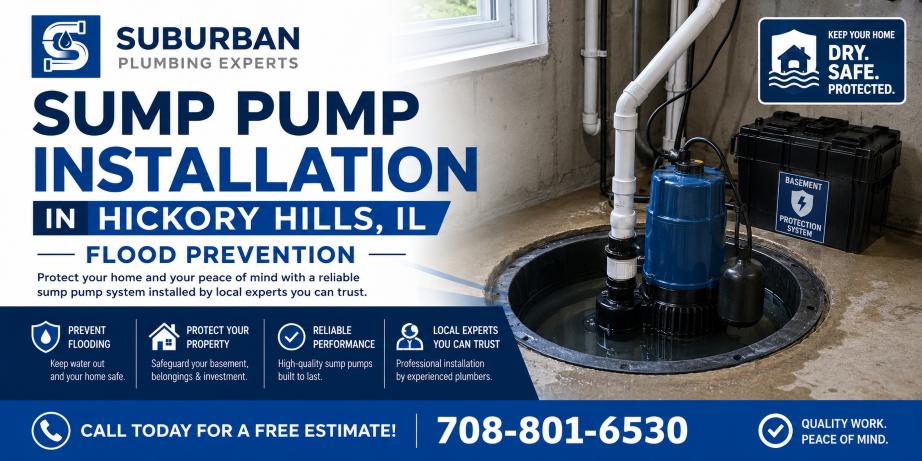
A sump pump exists to manage groundwater and hydrostatic pressure, water that collects in the soil around your foundation and finds its way in through the floor, wall cracks, or a perimeter drain tile system. It sits in a sump pit, typically the lowest point in the basement floor, and activates automatically via a float switch once water in the pit reaches a set level. The pump then discharges that water through a pipe routed well away from the foundation, so it doesn’t just cycle back in.
This is the right tool if your basement takes on clear water seeping up through the floor, damp patches along the foundation wall after rain, or a consistently high water table that keeps your existing sump pit active even between storms. It is not the right tool for sewage odor coming up through a floor drain, that’s a sanitary backup, and it calls for a backwater valve or overhead sewer conversion instead. If you’re not sure which one you’re dealing with, the smell test is a fast, reliable way to tell: clean groundwater doesn’t smell like sewage.
Choosing the Right Sump Pump: Type, Capacity, and Reliability
Once you’ve confirmed a sump pump is actually the right fix, three factors determine whether it’ll hold up when you need it most.
Submersible vs. pedestal. Submersible pumps sit fully inside the sump basin, sealed against moisture. They cost more upfront but run quieter, handle debris better, and generally last longer under regular use. Pedestal pumps mount above the basin with only the intake submerged, they’re less expensive and easier to service, but louder and more exposed to wear. For a basement that floods regularly or has a genuinely high water table, submersible is usually worth the difference in price.
Pumping capacity. Capacity is rated in gallons per hour, and it needs to match the actual volume of water your property can produce during a heavy storm, not just a generic “average” home. A pump that’s undersized for your lot will run constantly and burn out early; one that’s wildly oversized can short-cycle, turning on and off rapidly in a way that wears down the motor just as fast. This is exactly the kind of assessment worth having a professional make on-site rather than guessing from a box label at the hardware store.
Reliability during the exact conditions when you need it most. Heavy rain and power outages tend to arrive together, which means a sump pump that only runs on household electricity is protecting you right up until the moment protection matters. According to Consumer Reports’ sump pump backup system buying guide, weather-related power outages nearly doubled between the 2000s and the 2010s-2020s, which is exactly why a battery backup system has gone from a nice-to-have to a standard part of a properly installed system. Battery backups run off a deep-cycle battery and take over automatically if the primary pump loses power or fails outright; water-powered backup systems are another option for homes on municipal water service, running off household water pressure instead of a battery.
Why Installation Quality Matters as Much as the Pump Itself
Sump pump installation looks simple and rarely is done well by accident. A pump that’s correctly sized but poorly installed will still let water into your basement. A few installation details separate a system that actually works from one that only looks right:
- Discharge routing. The discharge pipe needs to carry water far enough from the foundation that it doesn’t just re-saturate the soil and flow right back toward the sump pit, undermining the whole system.
- Check valve placement. A properly placed check valve stops water in the discharge line from draining back into the pit between pump cycles, which otherwise forces the pump to work harder and cycle more often than it should.
- Pit sizing and sealing. The basin needs to be sized for your pump and sealed correctly to keep it from filling with sediment or losing capacity over time.
- Backup integration. A battery or water-powered backup needs a float switch calibrated to activate at the right level, and share the sump pit and discharge line cleanly with the primary pump.
A licensed Hickory Hills plumber handles all of this as a matter of course, and can also tell you honestly whether your basement’s water problem is one a sump pump solves at all, versus one that needs a backwater valve, exterior grading work, or a French drain installed instead.
Sump Pump Maintenance That Actually Prevents Flooding
An installed sump pump isn’t a install-it-and-forget-it fixture. A handful of maintenance habits are what keep it working when a storm actually tests it:
- Test it every few months. Pour a few gallons of water into the sump pit and confirm the float switch triggers the pump and it discharges properly.
- Keep the pit clean. Sediment and debris buildup in the basin reduce capacity and can jam the float switch or intake screen over time.
- Inspect the discharge line. Confirm it’s clear, properly sloped, and still directing water well away from the foundation, especially after freezing weather.
- Check the battery on any backup system. Deep-cycle batteries typically need replacement every five to seven years; a backup system with a dead battery gives you false confidence right up until a power outage proves otherwise.
- Watch for warning signs. Frequent cycling on and off, unusual noise or vibration, or a pump that runs continuously without shutting off are all signs it’s nearing the end of its service life and worth having inspected before it fails outright.
Frequently Asked Questions
Will a sump pump stop sewage from backing up through my floor drain?
No. A sump pump manages groundwater rising through the floor or foundation walls. Sewage backing up through a floor drain during heavy rain is caused by pressure in the combined sewer main, and the fix for that is a backwater valve or overhead sewer conversion, not a sump pump.
How do I know if I need a sump pump, a backwater valve, or both?
Start with what the water smells like and where it’s coming from. Clean water rising through the basement floor or seeping along foundation walls points to a groundwater problem a sump pump handles. Water with a sewage odor coming up through a floor drain points to a sanitary backup, which needs a backwater valve or overhead sewer. Many Hickory Hills homes genuinely benefit from both, since the two problems have different causes and can happen in the same storm.
How often should I test my sump pump?
Every few months at minimum, and always before the start of spring thaw and again before peak summer storm season. Pour water into the pit and confirm the pump activates and discharges cleanly.
Do I need a permit for sump pump installation in Hickory Hills?
Plumbing work in Hickory Hills requires a licensed plumber, and the City’s Building Department can confirm permit requirements for your specific project. A local, licensed contractor will handle this step directly rather than leaving it for you to sort out.
Why does my sump pump run constantly even when it isn’t raining?
This usually points to a persistently high water table, a pump that’s undersized for the property, or a check valve that’s failing and letting discharged water drain back into the pit. It’s worth having inspected rather than assumed to be normal, since constant cycling shortens the pump’s lifespan significantly.
Licensed Sump Pump & Flood Control Service for Hickory Hills Homes
Suburban Plumbing Experts has served Hickory Hills and the surrounding suburbs since 1978. We hold Illinois Plumbing License #055-044116 and Sewer License #2565, and every technician on our team is a trained, background-checked employee, not a subcontractor. Whether you need a new sump pump sized correctly for your property, a battery backup added to an existing system, or an honest assessment of whether your basement’s water problem is groundwater, sewer backup, or both, we can help.
Need the Right Flood Protection for Your Hickory Hills Basement?
Licensed, insured, and serving Hickory Hills and Chicagoland since 1978. We diagnose the actual cause of your basement water first, then recommend and install the right system for it — no guessing.
Suburbs: 708-801-6530 | Emergency: 708-518-7765 | Open 24/7
—
Suburban Plumbing Sewer Line & Drain Cleaning Experts
Licensed & Insured | Open 24 Hours | Serving Hickory Hills & the Suburbs Since 1978
📞 Suburbs: 708-801-6530 | 🚨 Emergency: 708-518-7765