
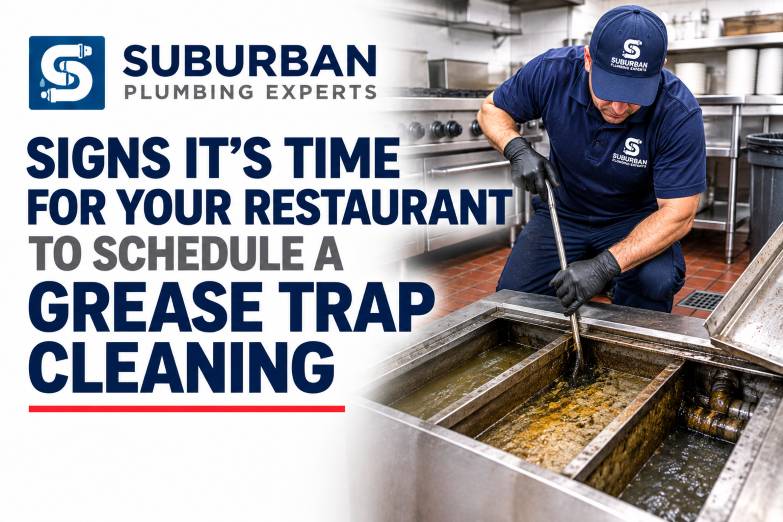
A Grease Trap Failing Quietly Doesn’t Show Up as a Clog First. It Shows Up as a Health Inspection Citation.
For a restaurant, a grease trap isn’t just a maintenance item, it’s regulated equipment with a specific, measurable compliance threshold, and most of the signs everyone talks about, odor, slow drains, overflow, are actually late-stage symptoms of that threshold already being crossed. Understanding the actual standard your grease trap is held to changes how you think about scheduling cleanings, from reactive to something you can measure and plan around.
Grease Trap or Grease Interceptor? The Terms Aren’t Interchangeable
A grease trap, in the strict sense, is a small, passive unit typically installed under a sink or near a dishwasher, common in smaller kitchens and single-fixture setups. A grease interceptor is a much larger unit, often a 500 to 2,000 gallon in-ground tank, used in higher-volume kitchens and full-service restaurants. Most full-service restaurants actually have an interceptor rather than a trap, even though the terms get used interchangeably in everyday conversation. The distinction matters for cleaning logistics: an interceptor typically requires a licensed waste hauler with pump-out equipment, not a simple manual scoop-and-scrub job.
Why an Undersized Interceptor Hits the 25% Mark Faster Than It Should
Interceptor sizing isn’t arbitrary. It’s typically calculated from factors like seating capacity, meals served per day, and the number and type of fixtures draining into it, following sizing tables in the plumbing code or a manufacturer’s engineering guidance. A unit sized correctly when a restaurant opened can become effectively undersized after a menu change toward more fried or grilled items, a seating expansion, or added kitchen equipment, none of which necessarily trigger a re-evaluation of the interceptor on their own. If your trap or interceptor is hitting the 25% threshold noticeably faster than it used to without any change in your cleaning routine, it’s worth having the sizing checked against your kitchen’s current volume rather than just increasing cleaning frequency indefinitely to compensate.
The 25% Rule: The Actual Standard Most Restaurants Don’t Know
Local health and water authorities across the country, including here in the Chicago area under the Metropolitan Water Reclamation District’s Sewage and Waste Control Ordinance, commonly apply what’s known as the 25% rule: a grease trap or interceptor needs to be cleaned once the combined depth of floating grease and settled solids reaches 25% of the unit’s total liquid depth. This is the actual, measurable trigger regulators use, and it’s not just about what’s floating on top. The measurement includes two separate layers, the grease floating at the surface and the solids that have settled at the bottom, and both count toward that 25% threshold. A trap that looks clear on the surface can still be out of compliance because of solids accumulation you can’t see without actually measuring it, which is exactly why “it doesn’t smell bad yet” isn’t a reliable way to judge whether service is overdue.
What’s Actually Happening When You See the Common Warning Signs
Foul odors from drains mean grease that’s been sitting past its effective capacity is decomposing rather than being properly separated and contained. Slow drainage in sinks and dishwashers means the trap has narrowed the effective pathway water has to pass through. Frequent overflows mean the unit has already exceeded the 25% threshold significantly, since a properly functioning trap doesn’t overflow under normal use. Gurgling or bubbling at fixtures means air is being forced back through a system that grease has already partially blocked. Every one of these is a downstream symptom of the same underlying issue: the trap has already passed the point where it should have been serviced.
Two Kitchen Habits That Quietly Overload a Grease Trap
Most municipal FOG ordinances specifically prohibit connecting a garbage disposal or a dishwasher directly into a grease trap, and for good reason. A disposal feeds ground food solids directly into the trap at a volume it isn’t sized to separate, accelerating exactly the solids buildup the 25% rule is measuring. Dishwasher water is a separate problem: most ordinances also cap the water temperature entering a grease trap, commonly around 140°F, because hot water keeps grease emulsified and liquid rather than letting it separate and float the way the trap is designed to use. Running hot dishwasher discharge into a trap doesn’t clean it, it temporarily pushes liquefied grease straight through and into the sewer line downstream, which is precisely the outcome the whole system exists to prevent.
Why Enzyme and Bacterial Additives Aren’t a Substitute for Pumping
Products marketed to restaurants as ongoing grease trap treatments, enzyme or bacterial additives meant to digest grease between cleanings, are a common way kitchens try to stretch the interval between services. Many FOG ordinances explicitly don’t accept this as a substitute for actual maintenance: language along the lines of “skimming the surface layer or partial cleaning does not constitute maintenance” and outright bans on using enzymes or bacterial additives as a cleaning method shows up repeatedly in municipal codes. The practical issue is that these additives can break emulsified grease down into a form that passes through the trap into the sewer line rather than actually removing it from your system, which means a kitchen using them can end up out of compliance while believing the opposite, that they’re being proactive about maintenance.
Why This Is a Compliance Issue, Not Just a Maintenance One
Food service establishments are typically required to hold a wastewater discharge permit and maintain records of grease trap or interceptor service, sometimes called a manifest, from the hauler who pumped it. An inspector who finds a trap over the 25% threshold, or a kitchen with no service records to show, is generally not looking at a warning, they’re looking at a citation, and repeat violations can escalate into fines or, in serious cases, a health code compliance problem that affects your operating status. Keeping service records on file is as much a part of compliance as the cleaning itself.
A Realistic Cleaning Schedule
Many jurisdictions set a minimum cleaning frequency regardless of visual signs, commonly every 90 days, and require more frequent service if the 25% threshold is reached sooner based on your kitchen’s actual volume. A high-volume kitchen frying and grilling all day will hit that threshold faster than a limited-service kitchen doing mostly reheating and assembly. Track your own trap’s fill rate over a couple of service cycles and you’ll have a realistic, kitchen-specific schedule rather than guessing based on a generic number.
Two Different Waste Streams: Trap Waste and Used Fryer Oil
It’s worth separating two things that get lumped together in casual conversation. What comes out of a grease trap or interceptor during pump-out is wastewater byproduct, hauled and disposed of by a licensed waste service. Used cooking oil from fryers is a completely different stream, and unlike trap waste, it typically has resale value: rendering companies collect used fryer oil to process into products like biodiesel and animal feed, and many will pay a restaurant for consistent volume rather than charge for pickup. Keeping these two streams separate, never pouring spent fryer oil into a floor drain or the grease trap itself, protects both revenue you’re otherwise leaving on the table and your trap’s actual capacity for what it’s meant to handle.
New Restaurant or Remodeling? Check Requirements Before You Open
Many municipalities require a FOG control plan or grease interceptor sizing approval as part of the permitting process for a new food service establishment, or for an existing one undergoing a significant remodel or menu change. This typically means submitting interceptor specifications for review before construction is finalized, not after. Discovering a sizing or installation problem after opening day is a considerably more expensive fix than catching it during the permit review stage, so this is worth confirming with your local building and health departments early in any new restaurant or major renovation project.
When to Call Professionals Rather Than DIY
A small under-sink trap is sometimes manageable for kitchen staff to scoop and clean between professional services. A full in-ground interceptor is a different matter entirely, it requires pump-out equipment, proper waste manifesting for disposal, and in some cases confined-space precautions that aren’t a kitchen staff task. Larger in-ground interceptors can qualify as a confined space under workplace safety regulations, requiring specific entry procedures, atmospheric testing, and trained personnel, which is exactly the kind of liability a restaurant shouldn’t be taking on with untrained staff. Our grease trap cleaning service handles both, along with the documentation your next health inspection will likely ask to see, and our broader restaurant plumbing services cover the rest of a commercial kitchen’s plumbing needs.
Frequently Asked Questions
What’s the actual difference between a grease trap and a grease interceptor?
A grease trap is a small, passive unit typically installed under a sink, common in smaller kitchens. A grease interceptor is a much larger in-ground tank used in higher-volume kitchens. Most full-service restaurants have an interceptor, even though the terms are often used interchangeably.
How is the 25% rule actually measured?
An inspector or technician measures the combined depth of the floating grease layer and the settled solids layer at the bottom, then divides that total by the unit’s total liquid depth. Both layers count, a trap can fail this measurement due to bottom solids even if the surface looks relatively clear.
Can I run my dishwasher or garbage disposal into my grease trap?
Most FOG ordinances specifically prohibit this. A disposal overloads the trap with solids it isn’t sized to separate, and hot dishwasher water, often above the commonly required 140°F limit, keeps grease liquefied instead of letting it separate properly, pushing it through into the sewer line instead of containing it.
How often does my restaurant actually need grease trap cleaning?
Many jurisdictions require service at least every 90 days regardless of visual signs, and sooner if your kitchen’s volume pushes the trap past the 25% threshold before then. A high-volume kitchen will generally need more frequent service than a limited-service one.
What happens if my grease trap fails a health inspection?
Typically a citation, and repeat violations can lead to escalating fines or a broader health code compliance issue. Inspectors often also ask for service records or manifests from your waste hauler, so missing documentation can be a problem even if the trap itself happens to be within range that day.
Can enzyme or bacterial additives replace regular grease trap pumping?
No, and many ordinances explicitly say so. These additives can break grease down into a form that passes through the trap into the sewer line rather than removing it, which can leave a kitchen out of compliance while believing it’s handling maintenance proactively.
Can I sell my restaurant’s used cooking oil instead of paying to dispose of it?
Often, yes. Used fryer oil is a separate waste stream from grease trap byproduct, and rendering companies frequently pay for consistent volume of used cooking oil rather than charge for pickup. Keep it separate from trap waste and out of any floor drain to preserve that value.
Do I need approval for my grease interceptor before opening a new restaurant?
Often, yes. Many municipalities require interceptor sizing and a FOG control plan to be reviewed and approved as part of new restaurant permitting or a significant remodel, before construction is finalized. Confirming this early avoids a costly correction after the kitchen is already built out.
A Grease Trap Doesn’t Fail Quietly Enough to Ignore
By the time a grease trap announces itself with odor, overflow, or a slow drain, it’s already well past the point regulators actually measure it against. Understanding the 25% rule, and the everyday kitchen habits that push a trap toward it faster than expected, turns grease trap maintenance from a reactive fire drill into something you can actually schedule around your kitchen’s real volume.
—
Suburban Plumbing Sewer Line & Drain Cleaning Experts
Licensed & Insured | Serving Chicago & the Suburbs Since 1978