
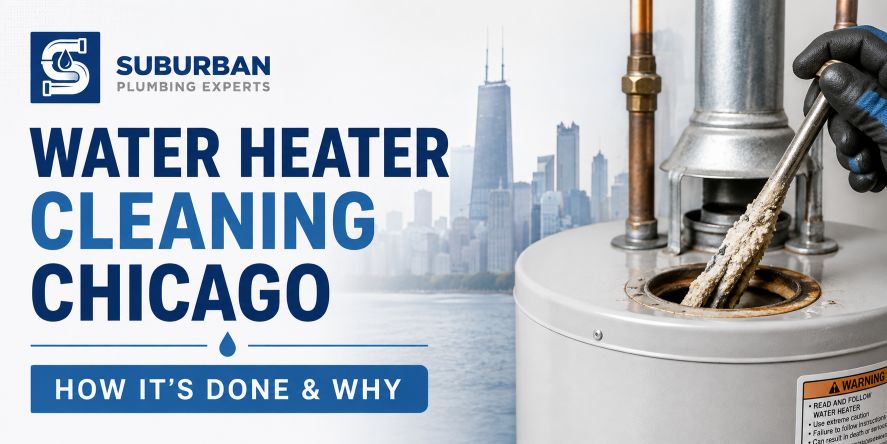
Most homeowners never think about what’s sitting at the bottom of their water heater tank until the unit starts making noise, running out of hot water faster than it used to, or failing years before it should have. In almost every case, the culprit is the same: sediment. Chicago’s water is hard, and hard water leaves mineral deposits behind every single time your tank heats a new batch of water. Left alone, that layer of sediment quietly costs you money, shortens your water heater’s life, and in some cases creates a real health concern. A proper cleaning, or flush, removes it. This guide covers what sediment actually does to your system, how a professional cleaning works, and how often Chicago homes genuinely need one. If you’d rather just get it scheduled, our water heater maintenance page has direct booking.
Why Chicago Water Heaters Build Up Sediment So Fast
Chicago draws its drinking water from Lake Michigan, and while the treatment process makes it safe and clean, it doesn’t remove dissolved minerals like calcium and magnesium. Regional water utilities that resell Chicago-area Lake Michigan water report hardness levels around 8 grains per gallon, which is firmly in the “hard water” classification according to the DuPage Water Commission, a government water utility serving the Chicago suburbs. Every gallon that runs through your water heater carries that mineral load with it.
Here’s what happens next: when water heats up, calcium and magnesium can no longer stay dissolved. They separate out and settle at the bottom of the tank, right on top of the gas burner or around the lower heating element, exactly where it does the most damage. Over months and years, that loose sediment hardens into a crusted layer. It doesn’t go away on its own, and it doesn’t get better with time. It only gets thicker.
What Water Heater Cleaning Actually Protects Against
A water heater cleaning, sometimes called a flush or a drain-and-flush, removes that sediment layer before it causes real damage. The problems it prevents fall into three categories:
- Lost efficiency and higher bills. Sediment acts as insulation between the heat source and the water, forcing the burner or element to run longer and work harder to reach the same temperature. That translates directly into higher gas or electric bills for the exact same amount of hot water.
- Premature tank failure. Sediment creates uneven heating and hot spots on the tank floor. On gas units, this stresses the glass lining and steel beneath it. On electric units, scale buildup can burn out the lower heating element outright. Either way, it’s one of the leading causes of water heaters failing well before their expected 8 to 12 year lifespan.
- Warning signs you’re already living with. Popping, rumbling, or cracking sounds from the tank are steam bubbles forcing their way up through hardened sediment. Slower recovery times, lukewarm water, or a noticeable drop in hot water volume are also classic signs the sediment layer has already built up significantly.
In Chicagoland homes, hard water can make mineral scale and sediment buildup an even bigger concern over time. Our guide to Chicago hard water and your water heater explains the local water conditions and what those numbers can mean for your water heater.
The Health Angle Most Homeowners Don’t Know About
Beyond efficiency and lifespan, there’s a health reason sediment removal matters. Sediment buildup at the bottom of the tank doesn’t just insulate against heat, it can also create conditions that allow waterborne bacteria to grow, including the bacteria responsible for Legionnaires’ disease. This is one of the reasons the New Jersey Department of Health specifically recommends hiring a licensed plumber for water heater draining and flushing rather than treating it as a casual DIY task, and why the department advises that individuals over 50, smokers, or anyone with a weakened immune system or chronic lung condition avoid the process themselves, since it can expose them to aerosolized water droplets during the flush.
How Professional Water Heater Cleaning Is Done
A proper cleaning involves more than opening the drain valve and letting water run out. Here’s what a thorough professional service actually includes:
- Power and water shutoff. Gas is set to pilot or shut off entirely; electric units are shut off at the breaker. The cold water supply valve is closed so no new water enters the tank mid-service.
- Pressure relief and draining. A hose is connected to the tank’s drain valve and routed to a floor drain or safe outdoor discharge point. The pressure relief valve is opened to help the tank drain fully and safely.
- Active flushing, not just draining. Once the tank is empty, the cold water supply is briefly opened in bursts to stir up and clear out hardened sediment that a simple drain won’t remove on its own, especially in tanks that haven’t been serviced in years.
- Inspection while the tank is open. This is the point in the service where a technician checks the anode rod for corrosion, tests the pressure relief valve, and inspects for early signs of leaks or tank wear, catching small problems before they become expensive ones.
- Refill and restart, done correctly. The tank is refilled completely before power or gas is restored. Turning an electric element back on before the tank is full can burn it out in seconds, a mistake that’s easy to make and expensive to fix.
This is also the point where a technician can tell you honestly whether flushing alone will fix what you’re experiencing, or whether you’re looking at a bigger issue like a failing anode rod, a cracked dip tube, or a tank that’s simply reached the end of its service life. Our water heater repair page covers what happens when the problem turns out to be more than sediment.
How Often Chicago Homes Actually Need It
Because Chicago’s water is classified as hard, most manufacturers’ “once a year is plenty” guidance is really a floor, not a ceiling, for local homes. As a general rule:
- Standard Chicago households: once a year, ideally on a schedule you won’t forget, like every spring or every fall.
- Households with heavy hot water use, larger families, or older units: every 6 to 9 months, since more cycles mean more sediment.
- Homes already showing symptoms (popping noises, reduced hot water, longer recovery times): as soon as possible, regardless of when the last flush happened.
- Tankless systems: these don’t collect sediment the same way tank units do, but they still need annual descaling of the heat exchanger to deal with Chicago’s mineral content. Our full water heater services page covers tankless maintenance specifically.
If your water heater is approaching or past the 8 to 12 year mark and hasn’t had regular cleanings, a flush at this point can help, but it’s also worth having a technician assess whether you’re closer to needing a water heater replacement than another year of maintenance. We cover what that decision actually looks like, cost included, in what water heater replacement really costs in Chicago and the suburbs.
Frequently Asked Questions
How do I know if my water heater needs cleaning?
Popping, rumbling, or cracking noises during heating cycles, a noticeable drop in how much hot water you get before it runs out, longer wait times for hot water to arrive, or discolored water are all signs of sediment buildup. If it’s been over a year since your last flush, sediment is likely present even without obvious symptoms.
Can I flush my own water heater instead of hiring a plumber?
You can, but there are real risks. Beyond the scalding hazard of working with hot water and pressurized components, sediment that’s been left too long can jam or damage the drain valve, and the flushing process can release aerosolized water that carries health risks for older adults or anyone with a compromised immune system or chronic lung condition. A professional flush also includes an inspection of the anode rod and pressure relief valve, which a basic DIY flush skips entirely.
Will cleaning my water heater lower my energy bill?
Yes, in most cases. Sediment insulates the tank floor from the heat source, forcing the burner or element to run longer to reach the same temperature. Removing that layer restores the unit closer to its designed efficiency, which shows up as a lower gas or electric bill for the same hot water usage.
Does a tankless water heater need cleaning too?
Yes, though the process is different. Tankless units don’t build up a sediment layer the way tank units do, but Chicago’s hard water can still scale the heat exchanger over time. That requires a descaling service, typically recommended annually, rather than a drain-and-flush.
What happens if I never clean my water heater?
Sediment keeps accumulating and hardening. Over time it causes reduced efficiency, higher utility bills, strange noises, uneven heating, and eventually tank damage that can lead to leaks. In many cases, a water heater that’s never been flushed fails years before a properly maintained one would.
Licensed Water Heater Cleaning & Maintenance for Chicago Homes
Suburban Plumbing Experts has served Chicago and the surrounding suburbs since 1978. We hold Illinois Plumbing License #055-044116 and Sewer License #2565, and every technician on our team is a trained, background-checked employee, not a subcontractor. Whether your water heater needs a routine flush, a full inspection, or an honest opinion on whether it’s time to repair or replace, we’ll give you a straight answer and handle it right the first time.
Ready to Get Your Water Heater Cleaned?
Licensed, insured, and serving Chicago and Chicagoland since 1978. We flush, inspect, and tune up your system so it runs efficiently and lasts as long as it should — no guessing, no upsells.
Call Now: 708-801-6530 | Emergency: 708-518-7765 | Open 24/7
—
Suburban Plumbing Sewer Line & Drain Cleaning Experts
Licensed & Insured | Open 24 Hours | Serving Chicago & the Suburbs Since 1978
📞 Suburbs: 708-801-6530 | 📞 Chicago: 773-570-2191 | 🚨 Emergency: 708-518-7765