
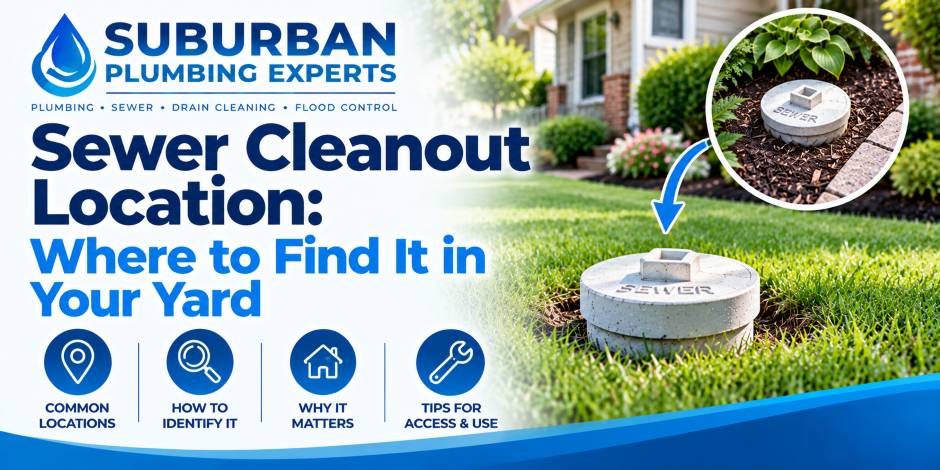
Knowing where your sewer cleanout is located can make a plumbing problem easier to diagnose and resolve. This capped access pipe allows a plumber to reach the main sewer line to clear a blockage or inspect the inside of the pipe. If wastewater starts backing up into your home, knowing where the cleanout is may save valuable time.
But what does a sewer cleanout look like? Where should you look for one, and what should you do if you cannot find it? Here is how to identify this important part of your home’s plumbing system.
What Is a Sewer Cleanout?
A sewer cleanout is an access point connected to your home’s drain or sewer piping. It typically consists of a short pipe with a removable threaded cap. Depending on the home’s plumbing layout, the cleanout may be outside near the foundation, in the front or back yard, near a property line, or inside a basement or utility area.
The pipe provides access to the sewer line so a plumber can insert professional drain-cleaning equipment or a sewer inspection camera. Some homes have multiple cleanouts, while others may not have an accessible exterior cleanout.
The cap may be made of plastic or metal and often has a raised square or hex-shaped fitting that allows it to be turned with the appropriate tool. Do not confuse a sewer cleanout with a water shutoff valve, irrigation fitting, or other capped pipe in the yard.
What Does a Sewer Cleanout Do?
The main purpose of a sewer cleanout is to provide access to the drain line when a blockage or other sewer problem needs attention. Rather than immediately removing a toilet or digging to reach a buried pipe, a plumber may be able to work through an accessible cleanout.
This access can help with several types of plumbing work:
- Clearing sewer blockages: A plumber can use appropriate equipment to remove obstructions caused by accumulated debris, grease, or tree roots.
- Inspecting the sewer line: A camera can be fed through a suitable cleanout to help identify cracks, root intrusion, buildup, or other damage.
- Diagnosing recurring backups: If the same drains keep clogging, access to the sewer line can help determine whether the problem is a blockage or a damaged pipe.
- Reducing unnecessary disruption: When a cleanout is accessible and properly positioned, it may eliminate the need to remove other plumbing fixtures or excavate simply to gain access.
If a blockage requires professional clearing, our sewer cleaning services can help address buildup and obstructions in the line. For stubborn blockages, hydro jetting may be an option when the pipe’s condition makes that method appropriate.
Where Can You Find Your Sewer Cleanout?
There is no single location that applies to every home. The age of the property, the direction of the sewer line, local plumbing requirements, and previous renovations can all affect where the cleanout is installed.
Here are the main places to check.
Outside Near the Foundation
Walk around the outside of your home and look near the foundation for a capped pipe that extends above the soil or sits inside a protective access box. Check the front, side, and rear of the house rather than looking in just one spot.
Exterior cleanouts are sometimes concealed by shrubs, mulch, decorative stones, or other landscaping. Look carefully without digging around unidentified pipes or fittings.
In the Front Yard or Near the Property Line
Some sewer cleanouts are located farther from the house, including in the front yard or near the property line. If your sewer line runs toward the street, the cleanout may be positioned along that route.
Do not assume that every capped pipe near the sidewalk or street belongs to your home’s sewer system. If you are unsure what a fitting serves, have a plumber identify it.
In the Basement or Utility Area
Some homes have an indoor cleanout, often near the main drain piping or where the building drain connects to the sewer line. Look around exposed plumbing in the basement or utility room, but do not remove a cap just to identify it.
Important: An indoor cleanout can release wastewater if the sewer line is backed up. If you already have a backup, leave the cap in place and contact a plumber.
In a Home With a Septic System
If your home uses a septic system, a cleanout may be located along the sewer piping between the house and the septic tank. The exact arrangement varies, so do not rely on a fixed distance from the foundation or assume the cleanout will be directly beside the tank.
A sewer cleanout is not the same as the septic tank’s access lid. Do not open the septic tank or enter any part of the system yourself. For general septic system care, the U.S. Environmental Protection Agency’s homeowner guidance explains routine maintenance and why proper upkeep matters.
What If You Cannot Find the Sewer Cleanout?
A cleanout can be difficult to spot if it is buried beneath soil, covered by landscaping, hidden inside a utility area, or located somewhere unexpected. Some properties may not have a readily accessible exterior cleanout at all.
If you cannot find yours, try these steps:
- Check around the entire foundation and inspect the front, side, and back yards.
- Look for accessible plumbing in the basement or utility room.
- Review any plumbing drawings or records you have from construction or renovations.
- Ask a licensed plumber to locate the sewer access point and determine whether an appropriate cleanout is present.
Avoid digging blindly in the yard. If the cleanout has been buried, a plumber can help locate it and determine the appropriate way to restore access.
Should You Bury a Sewer Cleanout?
No. A cleanout should remain accessible so it can be found and used when maintenance or repairs are needed. Covering it with soil, paving, or permanent landscaping can delay access during a blockage and may complicate service.
If mowing the lawn or working in the garden is difficult around the pipe, ask a plumber about a suitable protective cover or other code-compliant way to keep the area neat without obstructing access. Do not cut the pipe down or alter the cap without confirming what the installation requires.
Can You Open a Sewer Cleanout Yourself?
It is best to leave the cap closed unless you know the line is safe to access and understand the risks. A backed-up sewer can leave wastewater under pressure behind the cap. Removing it may cause sewage to spill out, exposing you and your property to contaminated water.
If multiple drains are slow, toilets gurgle when other fixtures are used, or wastewater is coming up through a floor drain, stop using water as much as possible and arrange professional help. Do not open the cleanout to test whether the line is blocked.
A plumber can assess the situation and select an appropriate way to access and clear the sewer line. If a camera inspection is needed, our sewer camera inspection service can help identify the cause of recurring clogs, including root intrusion or pipe damage.
Why Does a Sewer Cleanout Matter During a Backup?
A sewer backup can occur when wastewater cannot flow properly through the drain line. Common causes include accumulated debris, grease, tree roots entering a damaged or vulnerable pipe, and structural problems such as a broken or collapsed section.
Knowing where the cleanout is located helps you tell the plumber where access may be available. However, the cleanout itself does not prevent a backup or guarantee that the blockage can be cleared without further work.
If sewage is backing up into your home, avoid contact with it and keep children and pets away from affected areas. Our sewer backup services can help address the immediate problem and determine what is causing it. If the line has recurring problems, a sewer line repair assessment may be needed to determine whether the pipe is damaged.
For more information about one common cause of sewer problems, read our guide to tree roots and sewer lines in Chicago.
Frequently Asked Questions About Sewer Cleanouts
Does Every House Have a Sewer Cleanout?
No. Many homes have one or more cleanouts, but the number and location vary. If you cannot find an accessible cleanout, a plumber can check the plumbing layout and explain the available access options.
Is the Sewer Cleanout Usually in the Front Yard?
It can be, particularly when the sewer line runs toward the street. However, cleanouts can also be found at the side or rear of a home, near the property line, or indoors. There is no universal location.
What Does a Sewer Cleanout Cap Look Like?
It is usually a threaded cap fitted to the end of a pipe. The cap may be plastic or metal and often has a raised square or hex-shaped fitting. Appearance alone is not enough to confirm that an unidentified pipe is a sewer cleanout.
Should the Sewer Cleanout Be Above Ground?
A cleanout needs to remain accessible, but its exact installation depends on the location and applicable requirements. If yours is buried or difficult to access, have a plumber assess it rather than digging it up or modifying it yourself.
Can a Plumber Clear a Sewer Line Through the Cleanout?
Often, yes. An accessible, suitably located cleanout can provide an entry point for drain-cleaning tools or an inspection camera. The best method depends on the type of blockage, the condition of the pipe, and the layout of the plumbing.
What Should I Do if Sewage Is Coming Back Into the House?
Limit water use, keep people and pets away from sewage, and call a plumber. Do not remove the cleanout cap during a backup because wastewater may spill out when the cap is opened.
Know Where Your Sewer Cleanout Is Before You Need It
Take a few minutes to identify the accessible sewer cleanout locations at your property and keep those areas clear. If you cannot find a cleanout, or if you are dealing with recurring drain problems or a sewer backup, a professional plumber can help locate the access point and diagnose the problem.
—
Suburban Plumbing Experts provides sewer, drain, inspection, and repair services for homes and businesses in Chicago and the surrounding suburbs. Call 708-801-6530 to discuss a sewer line concern or arrange service.