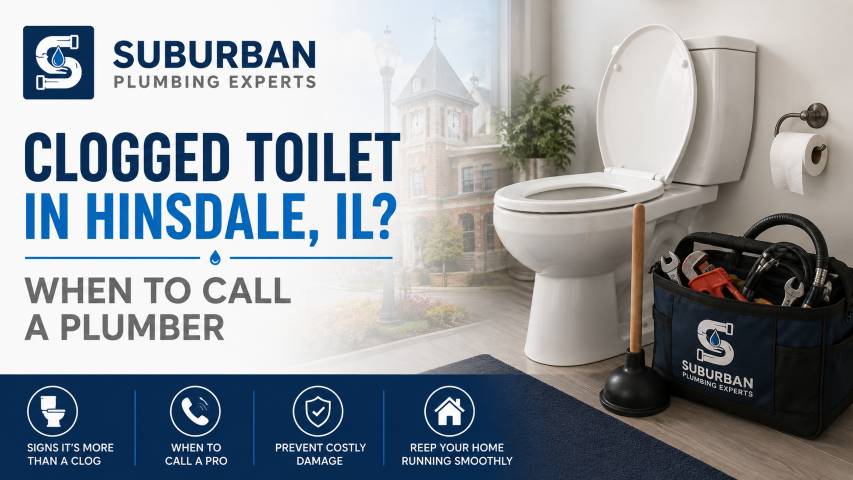
A Clogged Toilet Usually Isn’t a Mystery. Here’s How to Tell What You’re Actually Dealing With.
Most clogged toilets fall into one of two categories: something stuck right at the trap that a plunger will move in thirty seconds, or something further down the line that no amount of plunging will touch. Knowing which one you’re looking at before you spend twenty minutes fighting it saves you the frustration, and tells you exactly when it’s time to stop DIY-ing and call someone. If you’re evaluating a Hinsdale home before buying it, drain and toilet performance is also one of the things worth confirming ahead of closing, covered in our guide to what a plumbing inspection should cover before buying a home in Hinsdale, IL.
The Signs That Tell You What You’re Dealing With
Slow drainage after a flush is usually the earliest sign, and on its own it’s often minor. A bowl that rises and threatens to overflow means the blockage is significant enough that water has nowhere else to go. Gurgling from the toilet, shower, or nearby drains is trapped air escaping past a blockage, and it’s worth paying attention to because it often means the clog isn’t isolated to that one fixture. Clogs that keep coming back despite clearing them point to something further down the line rather than a one-time object. A persistent foul odor from the toilet or a nearby drain can mean waste sitting somewhere it shouldn’t be for longer than it should.
One pattern is worth calling out specifically: if more than one fixture in the house is acting up at the same time, slow drains in the kitchen, a gurgling shower, and a sluggish toilet, that’s rarely four separate coincidences. It usually means the problem is in the shared line downstream of all of them, which is a sewer issue, not a toilet issue, and no amount of plunging the toilet will fix it.
What’s Actually Safe to Try Yourself
Plunger. Still the right first move for a standalone clog. A flange plunger (the kind with an extra rubber lip that folds out) seals better against a toilet drain than a flat cup plunger. Get a full seal over the hole and use firm, steady strokes rather than short jabs.
Hot water and dish soap. A few drops of dish soap followed by a pot of hot (not boiling) water, given a few minutes to work before flushing, can help break down softer blockages.
Toilet auger. A dedicated toilet auger (different from a standard drain snake) reaches past the trap without scratching the porcelain, and handles clogs a plunger can’t move.
What not to rely on: chemical drain cleaners poured into a toilet are a bad idea, they can damage the wax ring seal and older pipe materials, and if the clog doesn’t clear, a plumber is now working with a bowl full of caustic chemical. Baking soda and vinegar makes for a satisfying fizz but has limited real effect on an actual toilet clog, it’s better suited to light odor and buildup than a genuine blockage.
When It’s Time to Stop and Call a Plumber
A few signs mean the DIY window has closed:
- The clog won’t clear after a reasonable plunging and augering attempt. At that point it’s often lodged deeper in the line than a toilet auger’s reach, and needs professional sewer rodding to clear.
- The toilet overflows repeatedly, even after being cleared once. Recurring overflows usually mean the underlying blockage was never fully resolved.
- Sewage backs up into the toilet, shower, or a nearby sink. This is not a toilet problem, it’s a sign of a blockage in the main line serving multiple fixtures, and it needs immediate professional attention.
- Multiple fixtures are affected at once. As covered above, this points toward the sewer lateral rather than the toilet itself, and a sewer camera inspection is the only reliable way to see exactly what’s happening and where.
The Single Biggest Cause of “Mystery” Clogs: What Actually Gets Flushed
If a toilet clogs repeatedly with no obvious cause, “flushable” wipes are worth suspecting first. Despite the label, Consumer Reports’ investigation into flushable wipes found that wipes marketed as flushable don’t disintegrate the way toilet paper does, and contribute an estimated $441 million a year in extra operating costs to water utilities nationally from the clogs and equipment damage they cause. Toilet paper is engineered to break apart in water within minutes; wipes, paper towels, and “flushable” cleaning cloths generally aren’t, and they’re one of the most common causes of a clog that keeps returning even after it seems cleared.
The practical takeaway: toilet paper and human waste only. Everything else, including wipes labeled flushable, feminine hygiene products, and paper towels, belongs in the trash.
What Happens If You Ignore It
A clog left unaddressed rarely stays a small, contained problem. Standing water from an overflow damages flooring, subflooring, and ceilings below if the bathroom is on an upper level. Standing water also invites mold and mildew growth within days, not weeks. A clog that isn’t cleared can push pressure back through the line, occasionally severe enough to stress a joint or connection elsewhere in the system. And a true sewage backup brings contamination that requires specialized cleanup, not a mop and a fan.
Choosing a Plumber for the Job
For a toilet clog specifically, look for a plumber with real experience in toilet and drain clearing, not just general plumbing. Confirm licensing (Illinois plumbing licenses are searchable through the state’s public lookup), ask about insurance coverage, and get a clear estimate before work begins rather than after. A company with a real, longstanding presence in Hinsdale specifically tends to diagnose recurring problems faster, because they’ve already seen the same clog pattern in similar homes across the village.
Keeping It From Happening Again
- Flush only human waste and toilet paper. No wipes, regardless of the label, no paper towels, no feminine hygiene products.
- Watch toilet paper volume in households where heavier use is common, it adds up faster than most people expect.
- Schedule periodic drain maintenance rather than waiting for a problem. A sewer camera inspection is worth having done if clogs have become a recurring pattern rather than a one-off.
- Use a toilet lid lock in homes with young children or curious pets, to prevent objects from ending up in the bowl in the first place.
Frequently Asked Questions
Why does my toilet clog even though nothing unusual was flushed?
“Flushable” wipes are the most common hidden cause. They’re marketed as safe to flush but don’t break down like toilet paper, and they’re a leading cause of clogs that seem to come from nowhere.
Is it safe to use a chemical drain cleaner in a clogged toilet?
Generally, no. Chemical drain cleaners can damage the wax ring seal and, in older homes, degrade pipe materials over time. If the clog doesn’t clear, a plumber then has to work with a bowl of caustic chemical, which adds risk rather than reducing it.
How is a toilet auger different from a regular plunger?
A toilet auger is a flexible cable designed to reach past the toilet’s trap without scratching the porcelain, and it can break up or retrieve clogs a plunger physically can’t reach.
What does it mean if more than one drain is having problems at the same time?
It usually means the blockage is downstream of all of them, in the shared sewer line rather than in any single fixture. That calls for a sewer camera inspection rather than repeated attempts to plunge the toilet.
How urgent is a sewage backup?
Very. Sewage backing up into a toilet, shower, or sink is a contamination and health issue, not just an inconvenience, and it warrants an immediate call rather than a wait-and-see approach.
Licensed Toilet & Drain Service for Hinsdale, IL
Suburban Plumbing Experts has served Hinsdale and the surrounding suburbs since 1978. We hold Illinois Plumbing License #055-044116 and Sewer License #2565, and every technician on our team is a trained, background-checked employee, not a subcontractor. Whether it’s a stubborn toilet clog or a recurring problem that points to something further down the line, our Hinsdale, IL plumbing team can get it diagnosed and cleared.
Dealing With a Stubborn Toilet Clog in Hinsdale?
Licensed, insured, and serving Hinsdale and Chicagoland since 1978. We diagnose whether it’s a simple clog or something further down the line before we start work.
West Suburbs: 630-749-9057 | Emergency: 708-518-7765 | Open 24/7
—
Suburban Plumbing Sewer Line & Drain Cleaning Experts
Licensed & Insured | Open 24 Hours | Serving Hinsdale & the West Suburbs Since 1978
📞 West Suburbs: 630-749-9057 | 🚨 Emergency: 708-518-7765