
The Complete Guide for Berwyn Homeowners Who Are Done Spending Thousands on Cleanup and Ready to Actually Fix the Problem
Berwyn has a flooding problem. Not a minor inconvenience, not an occasional nuisance — a documented, reported, researched crisis that has been building for years and accelerating in recent seasons. The Chicago Metropolitan Agency for Planning’s Urban Flood Susceptibility Index identifies Berwyn as one of the most flood-susceptible communities in all of Northeast Illinois — a region that includes Chicago and hundreds of suburbs. Berwyn residents have observed an increase in the annual frequency of basement flooding over the last five years, involving not only floodwater but sewage flowing into their homes, creating health risks and significant financial costs for families throughout the city.
The city’s own 1st Ward Alderman-elect experienced this firsthand. He and his wife spent approximately $9,000 on floors and drywall in their basement after flooding — and then it happened again. That story — the $9,000 remediation that didn’t prevent the next event — is the story that dozens of Berwyn homeowners have lived. Clean up, rebuild, flood again, repeat.
The reason the cleanup doesn’t prevent the next flood is straightforward: cleanup addresses damage. It doesn’t address the mechanism. And in Berwyn, the mechanism is specific, documented, and addressable — if you understand what’s actually happening and what solutions actually work for this city’s specific conditions.
This guide provides that understanding. What’s driving Berwyn’s flooding. Why the city ranks so high on the flood susceptibility index. What the City of Berwyn’s own flood mitigation program offers homeowners — and why most Berwyn homeowners don’t know it exists. And what the right solutions are for each type of flooding that Berwyn homes experience.
Why Berwyn Ranks Among the Most Flood-Susceptible Communities in Northeast Illinois
The Combined Sewer System Carrying More Than It Was Designed For
Berwyn’s flooding problem begins underground. As the MWRD’s Understanding Your Sewer resource acknowledges directly: most local sewers are required to carry much more water today than they did when they were first put into service, and as a consequence, they can exceed their flow capacity, causing backups.
Berwyn’s combined sewer system was designed and installed decades ago — in many cases, before Berwyn’s current density and imperviousness existed. The system carries both stormwater and sanitary waste in the same pipes. When heavy rain produces more stormwater than those pipes can handle simultaneously with household sanitary flow, the system surcharges — the pressure in the mains builds, reverses direction, and travels backward through residential laterals. The basement floor drain is the lowest point in that pressure path. It becomes the exit point for everything backing up in the system.That same stormwater load is also handled at the street level through catch basins, which can become overwhelmed or clogged during heavy rain events and contribute to localized surface and basement flooding issues. Our catch basin cleaning, pumping & repair service guide explains how these systems fail in Berwyn and Cicero and what maintenance prevents backups.
This is why Berwyn’s flooding problem involves sewage — not just water. In a combined sewer surcharge event, it isn’t stormwater that enters basements through the floor drain. It’s the combined storm and sanitary contents of a system that’s been overwhelmed. One Berwyn resident summed it up in a letter to public works: “We are continuously experiencing this problem, RAIN OR SHINE. We feel as we are the City of Berwyn’s watchdog of this problem as once we report the backup in our basement, Public Works comes, drains the main and outflow from our property is resolved. This is not a permanent solution and request City of Berwyn PERMANENTLY fix the problem.”
That resident identified something important: the public works drain-the-main response is not a permanent solution. It’s what happens after a surcharge event. The permanent solution requires addressing the private-side connection — the sewer lateral that the surcharge is entering through, and the flood control devices that either prevent or allow that entry.
Berwyn Was Built on Marshy Ground
Understanding Berwyn’s flooding susceptibility requires understanding what’s underneath it. Berwyn was formed in 1908 from Cicero Township. The area that makes up Berwyn today was originally marshy — once part of the Ancient Lake Chicago that shrank over millennia to become Lake Michigan. The underlying geology is essentially a filled lake bed: clay-heavy, poorly draining, with a water table that sits close to the surface and rises quickly during rain events.
This marshy, clay-heavy substrate is one of the fundamental reasons Berwyn ranks so high on the flood susceptibility index. The soil that underlies Berwyn’s residential neighborhoods doesn’t absorb stormwater quickly — it pools, it saturates, and the water table rises significantly during sustained rain events. Berwyn’s bungalows sit on foundations that are, geologically speaking, partially in a former lake bed. The groundwater pressure that pushes upward against those foundations during heavy rain is a direct consequence of that geography.
Berwyn’s Brick Bungalows — Iconic Housing, Aging Infrastructure
Berwyn is known for having one of the most significant collections of well-built two-story brick bungalows in the Chicago metropolitan area. This housing stock, concentrated particularly in Berwyn’s northern neighborhoods, dates primarily from the early decades of the 20th century — brick bungalows built with craftsmanship and materials that have outlasted everything the builders expected.
What’s underground hasn’t held up as well. The clay tile sewer laterals installed when Berwyn’s bungalows were built are now 80 to 100 years old. They’ve been through 80 to 100 Chicago winters of freeze-thaw cycling. They’ve been under root pressure from whatever trees have grown in their vicinity for nearly a century. And they connect to a combined sewer system that’s carrying significantly more flow than it did when those laterals were first connected.
Our team’s documented service in Berwyn reflects exactly this aging infrastructure picture: we’ve replaced a lead water service line with copper in Berwyn, installed flood control systems and replaced deteriorating ones, performed a complex sewer line replacement involving cast iron pipe with a brass gate, a basin ejector with a Zoeller pump, and a discharge line connected to the main sewer, and performed sump pump battery backup installations — the full range of aging infrastructure service that Berwyn’s housing stock generates.
The Root Irony — Why Berwyn Residents Are Anti-Tree
Berwyn’s flooding coverage documents something genuinely unique: a significant percentage of Berwyn residents are opposed to the city’s tree planting programs specifically because they fear tree root damage to their sewer pipes. Former 6th Ward Alderman Alicia Ruiz explained it directly: “There is a high percentage of residents in the community that are anti-tree. The fear residents maintain is that these root systems will grow down to the sewer systems looking for a water source and cause damage to the pipes — an expensive repair.”
This anti-tree sentiment reflects a real condition: Berwyn’s clay tile lateral joints have been admitting root intrusion for decades, and the repair costs that result are real and significant. But the root intrusion problem is solvable — through camera inspection that identifies specific entry joints, mechanical cutting that clears existing intrusion, and joint repair or lining that seals the entry points. The anti-tree response treats the symptom (fear of new root intrusion) rather than the underlying condition (existing joint gaps that are already admitting roots from existing trees).
The lateral that was compromised by roots 20 years ago is already compromised. The joint gaps are already there. New trees don’t create a new problem — they eventually find the same gaps that existing trees have already found. Addressing the existing joint condition is the solution, not avoiding tree canopy.
The City of Berwyn’s Flood Mitigation Shared Cost Program — What Most Homeowners Don’t Know
Here is the fact that every Berwyn homeowner who has experienced sewer backup and flooding needs to read before signing any flood control installation contract:
The City of Berwyn has an active Residential Flood Mitigation Shared Cost Program that provides 50% cost sharing for qualifying flood control installations — up to $3,500.
As the City of Berwyn’s Engineering Division confirms, the goal of this program is to provide financial assistance to homeowners who install systems to protect their homes from sewer backup during a heavy rain event. Eligible Berwyn homeowners may qualify for 50% cost sharing, up to a maximum of $3,500, for installing an overhead sewer system, a backflow prevention valve with a bypass pump, or comparable flood protection systems.
This program exists specifically because Berwyn recognizes — at the city government level — that its combined sewer system surcharges during heavy rain events and that individual homeowners need private-side flood protection. The city is helping pay for it.
Berwyn is not alone in offering homeowner assistance for flood protection. Nearby communities have adopted similar approaches, including Oak Lawn’s homeowner-focused flood mitigation initiatives. Homeowners interested in comparing available flood-control grants, sewer backup protection options, and municipal assistance programs can review our Oak Lawn Flood Control & Sewer Backup Grant Guide.
What this means for Berwyn homeowners:
- A backwater valve installation that costs $3,500 to $5,500 may cost you as little as $0 to $2,000 after the city’s 50% contribution
- An overhead sewer conversion that costs $12,000 to $30,000 receives $3,500 toward the installation cost
- Every Berwyn homeowner planning any flood control installation should contact the City of Berwyn Engineering Division BEFORE signing any contractor agreement to confirm current program availability and required documentation
Contact the City of Berwyn Engineering Division at (708) 788-2660 to ask specifically about the Residential Flood Mitigation Shared Cost Program before any flood control work begins.
The Two Flooding Types in Berwyn — Identifying Yours Before Spending Anything
Before any flood control installation decision — and before any conversation with any contractor — Berwyn homeowners need to diagnose which flooding type they have. The diagnosis is simple and can be performed by any homeowner.
Type 1: Combined Sewer Surcharge Backup
The diagnostic signature: Water entering through the basement floor drain during or after heavy rain events. The water has a sewage odor. The sump pump may be running normally at the same time. The flooding correlates specifically with storm events — not with gradual rain but with the peak intensity of heavy storms.
This is the flooding type that the news coverage documents, that the city’s flood mitigation program was created to address, and that accounts for the majority of Berwyn’s basement flooding complaints. Combined sewer surcharge is the mechanism — the combined system overwhelms, pressure reverses, and sewage enters through the floor drain.
What doesn’t work: A sump pump has no effect on sewer surcharge backup. The sump pump manages groundwater — water that enters through the foundation. Sewage backing up through the floor drain is entering through the drain system, which the sump pump has no connection to. Installing a new sump pump for a sewer surcharge flooding problem is one of the most common and most expensive flood control mistakes in Berwyn. For the complete guide to why — and what actually works — see our complete guide to Chicago flood control systems that actually work.
What works:
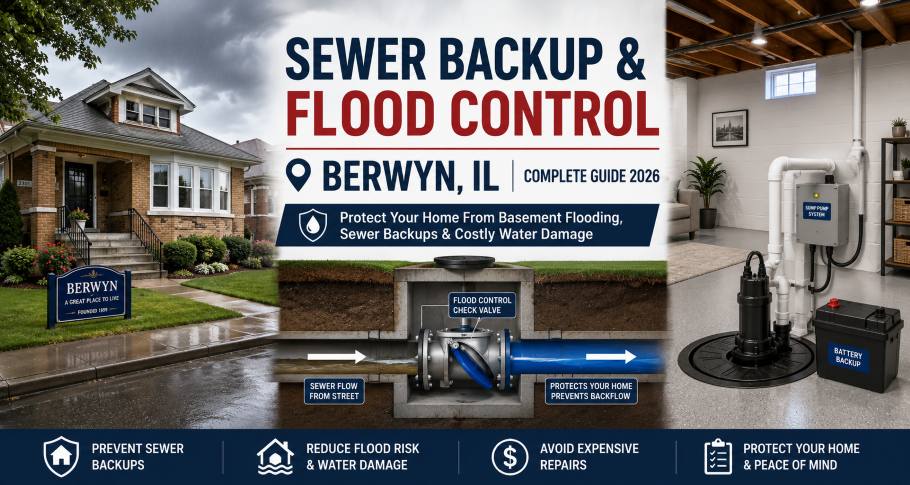
Backwater valve (check valve with bypass pump): A one-way valve installed in the main sewer lateral that physically prevents combined sewer pressure from entering the home’s drain system during a surcharge event. When the city’s sewer surcharges, the valve closes — blocking backward flow while maintaining normal drain function through the bypass pump. This is the installation the City of Berwyn’s flood mitigation program was specifically designed to fund. Our sewer backflow prevention services handle backwater valve installation throughout Berwyn with all permits included.
Overhead sewer conversion: The permanent structural alternative to the backwater valve. Rather than installing a mechanical device to block surcharge, the overhead conversion reroutes all basement drain connections above the surcharge level — making sewer backup physically impossible regardless of what happens in the combined sewer main. For Berwyn homeowners who have had backwater valve protection and still experienced flooding, or who want permanent structural protection rather than mechanical protection, the overhead conversion is the appropriate next step. Our overhead sewer services cover the full conversion process with all permits. The city’s flood mitigation program provides up to $3,500 for overhead sewer installation — make sure to apply before signing any contract.
Type 2: Groundwater Intrusion
The diagnostic signature: Water entering the basement without sewage odor. Enters gradually during or after sustained rain. Appears through the floor slab, wall-floor joint, or accumulates in the sump pit. Correlates with sustained rainfall duration rather than storm peak intensity.
Berwyn’s marshy geological history — the former lake bed beneath the city — means the water table rises quickly during significant rain events. Groundwater intrusion is a secondary flooding mechanism in Berwyn that can occur simultaneously with or independently from sewer surcharge events.
What works: A properly functioning sump pump with battery backup. For Berwyn’s older bungalows that may not have sump systems — or that have original sump equipment that’s decades past service life — sump installation or replacement is the appropriate response to groundwater intrusion. Our sump pump services cover the full range of installation, battery backup addition, and replacement throughout Berwyn with same-day and 24/7 emergency response.
The battery backup is specifically non-negotiable in Berwyn. The storms that produce the most severe combined sewer surcharge AND the most severe groundwater pressure are the same storms most likely to knock out power. A sump pump without battery backup fails precisely during the Berwyn flooding event that requires it most.
The Private Lateral Picture in Berwyn’s Bungalows
For Berwyn’s brick bungalow homeowners — particularly those in homes built before 1950 — the sewer lateral condition is the underlying factor that determines how readily combined sewer surcharge enters the home and how severely root intrusion contributes to drain performance.
An 80-to-100-year-old clay tile lateral in Berwyn has been through approximately 80 to 100 Chicago winters of freeze-thaw cycling. The joint displacement, root entry points, and structural conditions that accumulate over that timeline are significant. Camera inspection of a Berwyn bungalow’s original clay tile lateral almost universally finds conditions worth knowing about and addressing.
The lateral condition matters for flood control specifically because a lateral with multiple open root intrusion joints and significant displacement is a lateral with multiple pathways for combined sewer pressure to enter the home — beyond just the floor drain connection. A sound lateral with a functioning backwater valve offers significantly better flood protection than a deteriorated lateral with the same valve installed.
Our sewer camera inspection service is available throughout Berwyn with same-day scheduling. For the complete guide to every warning sign a Berwyn sewer lateral sends, see our complete Chicago sewer line warning signs guide.
The Lead Service Line Reality in Berwyn
Berwyn’s bungalow belt housing stock — primarily from the first half of the 20th century — has a significant lead service line presence. Our team has documented lead service line replacement in Berwyn specifically: we replaced an old lead water line with new copper supply line in Berwyn, upgrading water quality and ensuring a safer plumbing system.
With Illinois’ mandatory lead service line replacement timeline beginning April 2027, Berwyn homeowners who haven’t confirmed their service line material should do so before that deadline. The scratch test at the water meter confirms the material — bright, shiny silver and soft to the touch means lead. Our lead service line replacement service handles full replacement with all permits and water department coordination throughout Berwyn.
What Berwyn Homeowners Should Do Right Now — In Order
Step 1: Contact the City of Berwyn Engineering Division before signing any flood control contract. Call (708) 788-2660 and ask specifically about the Residential Flood Mitigation Shared Cost Program. The program provides up to $3,500 toward qualifying installations. This call should happen before any contractor is engaged.
Step 2: Diagnose your flooding type. Does the water smell like sewage? Yes — Type 1, sewer surcharge, backwater valve or overhead conversion. No — Type 2, groundwater, sump pump. Understanding which one you have before any contractor arrives prevents the wrong-system mistake.
Step 3: Schedule a sewer camera inspection of your private lateral. For any Berwyn bungalow home that hasn’t had a camera inspection in the current ownership period, lateral condition assessment before flood control installation confirms whether lateral repair should be part of the flood protection plan.
Step 4: Confirm your service line material. A pre-1950 Berwyn bungalow has a significant probability of lead service line. The scratch test takes 30 seconds.
Step 5: Check your sump pump age and battery backup status. If the pump is more than 7 years old or has no battery backup — address before the next storm season.
What Flood Control and Plumbing Services Cost in Berwyn in 2026
Backwater valve installation (with permits): $2,500 to $5,500. After the city’s 50% shared cost program — up to $3,500 — net cost to the homeowner can be as low as $0 to $2,000 for qualifying installations. Apply before signing.
Overhead sewer conversion: $12,000 to $30,000. City program provides up to $3,500 toward qualifying overhead sewer installations. For homeowners who have experienced repeated severe flooding or want permanent structural protection.
Sump pump replacement with battery backup: $700 to $1,500. Not eligible for the sewer backup program but the highest-value groundwater protection upgrade available.
Sewer camera inspection: $200 to $450. The diagnostic investment before any installation decision.
Lead service line replacement: $3,500 to $8,000. For Berwyn’s pre-1950 bungalow stock where lead service lines are a documented presence.
Frequently Asked Questions: Flood Control in Berwyn
I’ve applied for the city’s flood mitigation program before and was turned down. Should I try again? Program availability and funding cycles change annually. If you were turned down in a prior cycle, contact the Engineering Division again for the current cycle status. Program funding is often limited and first-come first-served within each cycle — timing the application to the beginning of the program year improves eligibility.
My neighbor has a backwater valve and still floods. Does the program actually work? A backwater valve stops combined sewer surcharge backup — the mechanism it’s designed for. If a neighbor with a valve still floods, the flooding may be from a different mechanism (groundwater intrusion, surface drainage) that the valve doesn’t address, the valve may have been installed without addressing a significantly deteriorated lateral condition, or the flooding event exceeded the valve’s operational parameters. Understanding what specific flooding type your neighbor has — and what type you have — is the diagnostic step that determines whether a backwater valve is the right installation for your specific situation.
The city says it will eventually fix the combined sewer problem. Should I wait for that? Any public infrastructure upgrade to Berwyn’s combined sewer system is a multi-year planning and implementation timeline. Based on the documented flooding increase and the current state of Berwyn’s infrastructure, waiting for public infrastructure improvements before installing private flood protection means continued flooding events in the interim. The city’s flood mitigation program exists specifically because the city knows homeowners need private-side protection now — independent of any public infrastructure improvement timeline.
For homeowners in neighboring Cicero facing similar sewer backup challenges, our guide to Cicero’s flood control and sewer backup programs explains how municipal infrastructure investments and homeowner protection measures work together to reduce basement flooding risks.
Homeowners in Oak Park face many of the same combined sewer and basement flooding challenges. Our Complete Plumbing & Flood Control Guide for Oak Park explains how the village’s combined sewer system, flood-prone Northeast Quadrant, and $3,500 homeowner grant program affect flood risk and protection options.
Dealing With Sewer Backup or Flooding in Berwyn? Let’s Get It Right — And Help You Access the City’s Program.
Licensed, insured, and based in Brookfield — right next door to Berwyn — since 1978. We’ve installed flood control systems, replaced lead water lines, performed complex sewer line work, and installed sump pump battery backup systems throughout Berwyn. We know this city’s housing stock and its flooding conditions. Written quotes before we start, all permits pulled, our own licensed Berwyn plumbers on every call. Send us a message and we’ll get back to you fast.
Or call us directly: 708-801-6530 | Open 24/7
—
Suburban Plumbing Sewer Line & Drain Cleaning Experts
Licensed & Insured | Open 24 Hours | Serving Berwyn & Cook County Since 1978 — Based in Neighboring Brookfield
📞 Suburbs: 708-801-6530 | 📞 Chicago: 773-570-2191 | 🚨 Emergency: 708-518-7765