
Water Filtration Installation in Chicago, IL for Cleaner, Better-Tasting Water
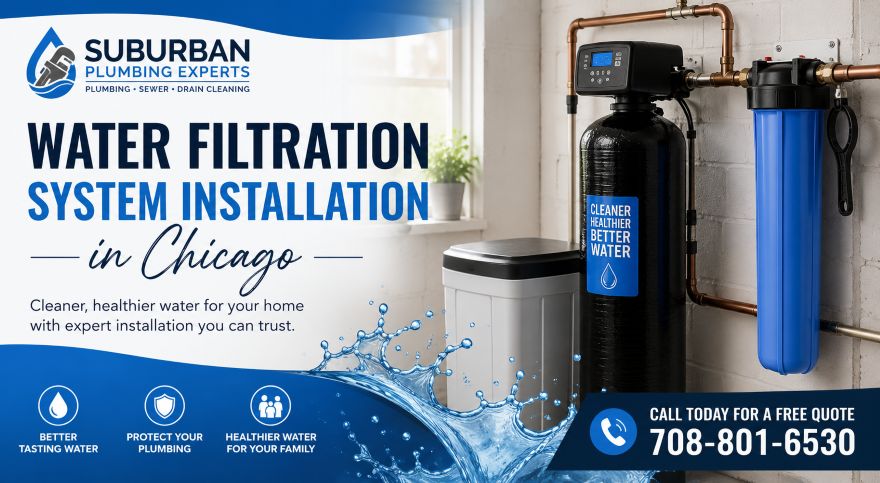
Water filtration installation in Chicago starts with a simple question: What is actually coming out of your tap? If you're noticing a chlorine taste or smell, white mineral scale around your faucets, or you're tired of relying on bottled water, there may be a water quality issue worth addressing.
Suburban Plumbing Experts installs whole-home and under-sink water filtration systems throughout Cook and DuPage Counties. Rather than recommending the same system for every home, we consider your water quality concerns, household needs, existing plumbing, and the type of filtration that makes sense for your property.
Chicago-area homeowners can encounter several different water quality concerns, including mineral content from Lake Michigan water, chlorine used during municipal water treatment, and potential issues associated with aging plumbing and lead service lines. The right filtration system depends on which concerns you actually need to address.
Below, we'll explain the different types of water filtration systems available, what each system can and cannot remove, how installation works, what homeowners should consider before choosing a system, and when filtration may make sense for your Chicago home.
Why Chicago Homes Need Water Filtration Systems
Water filtration can address several common water-quality concerns Chicago homeowners experience, from unpleasant chlorine taste and odor to mineral buildup and concerns about contaminants entering the home through aging plumbing. Chicago's water supply is treated before it reaches your property, but conditions inside the distribution system and your home's own plumbing can still affect the water coming from your taps.
Hard Water From Lake Michigan Minerals
Chicago's water contains naturally occurring calcium and magnesium, which contribute to water hardness. Over time, these minerals can leave scale on faucets, shower fixtures, dishes, and appliances while also contributing to buildup inside plumbing and water-using equipment.
Hard water can be especially noticeable in homes with older plumbing or water heaters. Scale buildup can restrict water flow and reduce the efficiency of equipment that heats or uses water. We've written more about how hard water in Chicago suburbs can damage your plumbing and what homeowners can do about it.
Chlorine Taste and Water Odor
Chicago treats its drinking water with disinfectants to help maintain safe water quality as it travels through the distribution system. While that treatment is essential, some homeowners notice chlorine-related taste or odor in their tap water, particularly when water has been sitting in household plumbing.
A properly selected carbon filtration system can reduce chlorine taste and odor and improve the overall taste of drinking and cooking water. Whole-home filtration can provide filtered water throughout the house, while point-of-use systems can target specific faucets such as the kitchen sink.
Lead Service Lines in Older Chicago Homes
Lead service lines remain an important consideration for owners of older Chicago properties. Chicago has one of the nation's largest inventories of lead service lines, particularly in neighborhoods with homes constructed before modern restrictions on lead plumbing materials.
Water treatment can help control corrosion within the public water system, but filtration should not be viewed as a substitute for replacing a lead service line. If your property has a lead service line, identifying the pipe material and understanding your home's specific plumbing configuration are important first steps.
We explain the issue in greater detail in our guide to Chicago lead water line replacement, including what homeowners should know before deciding whether replacement or additional water treatment makes sense.
Lead service lines are also not limited to Chicago itself. Older communities throughout Cook and DuPage Counties can have aging water infrastructure and lead plumbing concerns. Our guide to Chicago suburbs with the worst lead pipe problems provides additional information for homeowners researching the condition of their property's water service line.
Choosing the Right Filtration Approach for Your Home
The right filtration system depends on what you are trying to improve. Some homeowners primarily want better taste and odor, while others are concerned about sediment, minerals, or specific contaminants.
Before recommending a system, Suburban Plumbing Experts can evaluate your plumbing setup, discuss your water-quality concerns, and help determine whether a whole-home filtration system, under-sink filter, or another treatment approach is appropriate for your property.
The goal is not simply to install a filter. It is to select a system that matches your home's plumbing, water-quality concerns, and everyday water-use needs.
Does Your Chicago Home Have a Lead Service Line?
This deserves its own section because it is one of the biggest water-quality concerns specific to Chicago, and it can directly affect which water filtration approach makes sense for your home.
How to Find Out If You Have a Lead Service Line
If your home or two-flat was built before 1986 and the service line has not been documented as replaced, there is a possibility it may be lead. Chicago homeowners can use city resources to learn more about their property's water service line and available lead testing options. Do not rely on the age of your home alone. Confirming the condition and material of your service line is the best way to understand your property's potential risk before choosing a filtration system.
If you would rather check your plumbing first, our guide to warning signs your water line is failing explains what homeowners should look for and when a professional inspection may be appropriate.
Chicago Lead Service Line Replacement Options
Chicago has programs designed to help eligible homeowners address lead service lines. Program requirements, funding, eligibility, and replacement procedures can change, so homeowners should verify current requirements directly with the City before making decisions about replacement or filtration.
If you have confirmed a lead service line and want to explore removing it rather than relying on filtration, see our lead service line replacement services for information about replacement options and next steps.
Why Water Filtration Still Matters
A certified lead-reduction filtration system is not a permanent substitute for replacing a confirmed lead service line, but it can provide an additional layer of protection while homeowners evaluate replacement options. This can be especially useful for households waiting for a replacement, planning a future project, or looking for a way to improve drinking-water quality in the meantime.
When shopping for a filtration system intended to reduce lead, look for products specifically certified for lead reduction under applicable NSF/ANSI standards rather than assuming that every general-purpose filter provides the same level of protection.
If you are considering water filtration for your Chicago home, Suburban Plumbing Experts can help evaluate your plumbing setup and recommend a system based on your home's specific water-quality concerns.
How to Tell If Your Chicago Home Needs Water Filtration
Not sure whether water filtration is worth the investment? Most homeowners start looking into filtration because they notice recurring changes in their water, fixtures, or plumbing. These warning signs can help you determine whether it is worth having your water quality evaluated and choosing a filtration system based on actual conditions rather than guesswork.
- Your tap water has a chlorine taste or odor: A noticeable chlorine taste or smell can be unpleasant, particularly when drinking or cooking with tap water. Carbon filtration can help reduce chlorine-related taste and odor.
- White mineral scale keeps appearing: Chalky deposits around faucets, showerheads, fixtures, and glassware are common signs of hard water. Over time, mineral buildup can affect fixtures and water-using appliances.
- Your water heater develops recurring scale buildup: Hard water minerals can accumulate inside water heaters and other plumbing equipment, potentially affecting efficiency and contributing to premature wear.
- Your older home has an unknown service line: If your Chicago home was built decades ago and you do not know what material your water service line is made from, identifying the pipe and understanding your water quality can help you determine whether additional filtration or replacement should be considered.
- You rely heavily on bottled water or pitcher filters: If your household constantly buys bottled water or repeatedly refills small filter pitchers because of taste or water-quality concerns, a whole-home or under-sink filtration system may provide a more convenient long-term solution.
- You notice persistent hard-water effects: Dry-feeling skin, residue on shower surfaces, spots on dishes, and soap that does not rinse away easily can all be associated with hard water. These symptoms alone do not prove that filtration is necessary, but they can be a reason to evaluate your water quality.
- Your water test identifies a specific concern: A recent water test showing elevated lead, hardness, or another contaminant provides the clearest reason to investigate appropriate treatment options. The filtration system should be selected based on what the testing actually identifies.
If several of these signs sound familiar, consider testing your water before choosing a filtration system. Understanding your home's specific water-quality concerns can help you select the right treatment rather than paying for equipment that does not address the problem.
For homeowners concerned about lead, our Chicago Lead Pipes by Neighborhood guide provides additional information about lead service lines and why the condition of your property's plumbing matters when evaluating water quality.
Which Water Filtration System Is Right for Your Chicago Home?
There is no single water filtration system that is right for every Chicago home. The best option depends on your water quality concerns, plumbing configuration, household water usage, and whether you are primarily trying to reduce chlorine taste and odor, sediment, hardness-related problems, or specific contaminants.
Whole-House Water Filtration Systems
Whole-house, or point-of-entry, filtration systems are installed on the main water line entering your home so treated water is available throughout the property. Depending on the system, filtration may include sediment removal and carbon filtration to reduce particles, chlorine taste and odor, and other targeted water-quality concerns.
This approach makes sense for homeowners who want filtered water throughout the house rather than limiting treatment to a single drinking-water faucet.
Reverse Osmosis Drinking Water Systems
Reverse osmosis, or RO, systems are typically installed at the point of use, most commonly beneath the kitchen sink. RO technology can reduce dissolved solids and a wide range of contaminants, with the specific capabilities depending on the system and its certifications.
For homeowners concerned about lead or other specific contaminants, it is important to choose an RO system specifically certified for the reduction of that contaminant rather than assuming every RO system provides the same level of treatment.
RO systems are particularly useful when your primary goal is improving the quality of water used for drinking and cooking rather than treating every gallon entering the home.
Water Softener and Filtration Systems
If hard water is your primary concern, a water softener may be more appropriate than a standard filtration system. Softeners are specifically designed to reduce hardness minerals such as calcium and magnesium, helping control scale buildup throughout your plumbing system.
Some homeowners combine water softening with filtration to address both hardness and chlorine taste or odor. If hardness is the main problem you are experiencing, our water softener installation service provides a more targeted solution.
Under-Sink Water Filtration Systems
Under-sink filtration provides treated water at a specific faucet without requiring a whole-house installation. These systems can be a practical choice for condos, apartments, smaller homes, or homeowners primarily concerned with the taste and quality of their drinking and cooking water.
The main limitation is that an under-sink system only treats water at the connected fixture. It does not provide filtered water to showers, bathrooms, laundry areas, or other fixtures throughout the property.
Choosing the Right System for Your Home
The right filtration approach starts with identifying what you actually want the system to accomplish. A homeowner dealing primarily with chlorine taste may need a very different system from someone concerned about lead, hard water, sediment, or multiple water-quality issues.
Suburban Plumbing Experts can evaluate your home's plumbing setup, discuss your water-quality concerns, and help you determine whether whole-house filtration, under-sink filtration, reverse osmosis, water softening, or a combination approach makes the most sense for your property.
Choosing the Right Water Filtration System for Your Chicago Home
Choosing the right water filtration system is not simply about finding the most expensive or most advanced option. The best system depends on your home's water quality, plumbing, household needs, and the specific problems you want to solve. At Suburban Plumbing Experts, we help Chicago homeowners choose filtration solutions based on their actual water conditions rather than recommending a one-size-fits-all system.
If Your Home Has an Older or Unconfirmed Water Service Line
If your Chicago home was built before 1986 and you are unsure whether the service line contains lead, determining the line material and testing your water should be a priority. A certified lead-reduction filtration system can provide an additional layer of protection while you determine whether replacing the service line is necessary.
For drinking and cooking water, a properly certified reverse osmosis system can provide targeted contaminant reduction at the kitchen faucet. Depending on the specific system and your water conditions, a certified whole-house filtration system may also be appropriate.
If Chlorine Taste or Odor Is Your Main Concern
If your biggest complaint is a chlorine smell or unpleasant taste from multiple faucets, whole-house carbon filtration may be the right solution. A point-of-entry system treats water as it enters your home, providing filtered water throughout the property instead of limiting filtration to a single drinking-water faucet.
This can be especially useful for homeowners who want to improve the taste and odor of water used for drinking, cooking, bathing, and other everyday household purposes.
If Hard Water and Scale Are the Main Problems
White mineral deposits on faucets, showerheads, glassware, and fixtures usually point toward water hardness rather than a filtration problem alone. If you are also concerned about scale buildup inside your plumbing or reduced water heater efficiency, a water softener may be more appropriate than a standard carbon filter.
For homeowners who want to address both hard water and chlorine taste or odor, a combined softener and filtration system can provide a more complete solution. If hardness is your primary concern, our water softener installation service may be the better starting point.
If You Live in a Condo, Apartment, or Rental
Whole-house filtration is not always practical when you rent your home or live in a condominium where modifications to the main plumbing system may be restricted. An under-sink filtration system can provide treated drinking water at the kitchen faucet without requiring a larger whole-home installation.
This approach can also make sense for homeowners who want to start with a smaller investment and focus filtration specifically on drinking and cooking water.
If You Want the Highest Level of Drinking Water Filtration
Reverse osmosis is a strong choice when your primary goal is reducing dissolved contaminants from drinking and cooking water. The system works at the point of use, typically beneath the kitchen sink, and can provide highly filtered water through a dedicated faucet.
If you are also dealing with chlorine throughout the home or hard water affecting fixtures and appliances, combining point-of-use filtration with whole-home water treatment may provide a more complete approach.
When You Are Dealing With Multiple Water Quality Problems
Older Chicago homes can have more than one water-quality concern at the same time. You may be dealing with hard water, chlorine taste and odor, aging plumbing, and concerns about a lead service line rather than a single isolated issue.
That is why testing your water before choosing a system can be so valuable. Instead of guessing which filter you need, Suburban Plumbing Experts can help evaluate your water conditions and determine which filtration or treatment approach makes sense for your home.
The goal is not to sell you the biggest system available. It is to match the right technology to the problem you actually have, giving you a practical solution that fits your home's plumbing, water quality, and long-term needs.
What to Expect During Water Filtration Installation in Chicago
Installing the right water filtration system starts with understanding your home's water quality and choosing equipment that matches your household's needs. At Suburban Plumbing Experts, we take a step-by-step approach to help ensure your system is properly selected, professionally installed, and ready to provide reliable performance.
Water Testing and Consultation
Before recommending a filtration system, we evaluate your home's water conditions and discuss the problems you are experiencing. Factors such as water hardness, chlorine taste or odor, and potential lead concerns can all influence which type of filtration or water treatment system makes sense for your property.
We also consider your household size, plumbing system, available installation space, and goals for improving your water. This helps us recommend a practical solution based on your home's specific needs rather than relying on a one-size-fits-all system.
System Selection and Proper Sizing
Once we understand your water quality and household requirements, we help you select the appropriate filtration system. Whole-house filtration, reverse osmosis, under-sink systems, and water softener combinations are designed to address different water quality concerns.
Proper sizing is important for reliable performance. Our team considers household water usage and system requirements to help ensure your equipment can provide the filtration capacity your home needs without creating unnecessary restrictions or maintenance concerns.
Professional Water Filtration Installation
Our licensed plumbers professionally install your selected filtration system and connect it to the appropriate plumbing. Depending on the system, this may involve connecting to the home's main water line, installing an under-sink unit, adding filtration equipment, or integrating a water softener with the existing plumbing system.
We carefully inspect connections, verify proper operation, and make sure the system is installed according to the manufacturer's requirements. Our goal is to provide a clean, dependable installation that performs properly from the start.
System Testing and Final Inspection
After installation, we test the system and inspect the plumbing connections to confirm everything is operating correctly. We verify water flow, check for leaks, and make sure the filtration equipment is functioning as intended.
Before completing the installation, we also explain how your system works and answer any questions you may have about operation and maintenance.
Filter Replacement and Ongoing Maintenance
Water filtration systems require regular maintenance to continue performing properly. Depending on the system you choose, this may include replacing filters, servicing filtration media, checking connections, or completing other manufacturer-recommended maintenance.
We explain the maintenance requirements for your specific system so you know what needs to be changed, when it should be serviced, and when professional assistance may be beneficial. Proper maintenance helps protect your investment and keeps your home's water filtration system operating reliably.
How Chicago Seasons Can Affect Your Water Filtration System
Chicago's changing seasons can affect water usage, plumbing conditions, and the performance of water treatment equipment. When installing a filtration system, Suburban Plumbing Experts considers seasonal factors that can affect your home's water quality and equipment.
Summer Water Usage and Filtration Demand
Summer typically brings higher household water usage as families take more showers, do more laundry, spend more time outdoors, and use water for landscaping. Higher demand makes proper system sizing especially important for whole-house filtration and water treatment equipment.
If chlorine taste or odor becomes more noticeable during warmer weather, a properly selected carbon filtration system may help improve the taste and smell of water throughout your home. During installation, we consider your household's typical water usage so the system is appropriately sized for your needs.
Winter Freeze Protection for Filtration Equipment
Chicago's freezing winter temperatures can create problems for filtration equipment installed in unheated areas or near exterior walls. Water remaining inside filters, tanks, valves, and plumbing connections can be damaged if the equipment is exposed to freezing conditions.
We consider the location of your filtration system during installation and help identify potential cold-weather concerns before the equipment is installed. Proper placement, insulation, and maintaining suitable temperatures around the system can help protect your investment during severe winter weather.
Year-Round Filtration System Maintenance
Regardless of the season, regular maintenance is important for keeping your water filtration system operating properly. Filters and filtration media eventually need to be replaced, while some systems require additional maintenance to maintain reliable performance.
Following the manufacturer's recommended maintenance schedule helps ensure your system continues providing effective filtration throughout the year. Suburban Plumbing Experts can explain the maintenance requirements for your specific system and help you keep your water treatment equipment operating reliably.
How Much Does Water Filtration Installation Cost in Chicago?
The cost of water filtration installation in Chicago depends on the type of system you need, the condition of your existing plumbing, the size of your household, and the water quality issues you want to address. An under-sink filter and a whole-house filtration system require very different equipment and installation, so there is no single price that applies to every home.
What Affects Water Filtration Installation Cost?
Several factors can influence the total cost of installing a water filtration system:
- Type of filtration system: Under-sink filters, reverse osmosis systems, whole-house filtration, and water softener combinations have different equipment and installation requirements.
- Water quality concerns: The system you need depends on whether your primary concern is chlorine taste and odor, sediment, hardness, lead, or other water quality issues.
- Household size and water usage: Larger households generally require greater filtration capacity than smaller homes or condos.
- Existing plumbing: Installation costs can vary depending on access to your main water line, available installation space, drainage, and the condition of your existing plumbing.
- Installation complexity: Additional plumbing modifications, equipment connections, or other site-specific requirements can affect the final installation cost.
Typical Cost Differences by System Type
Under-sink filtration systems are generally the most affordable option because they treat water at a single fixture and typically require limited plumbing modifications. They can be a practical choice when your primary goal is improving drinking and cooking water at the kitchen sink.
Reverse osmosis systems generally cost more than basic under-sink filtration because they use multiple filtration stages and require additional components, including a dedicated faucet and drain connection. RO can be particularly useful when homeowners want advanced filtration for drinking and cooking water.
Whole-house filtration systems require a larger investment because the equipment is connected to the home's main water supply and treats water throughout the property. Installation may also require additional plumbing connections depending on the home's configuration.
Water softener and filtration combination systems can have a higher upfront cost because they address both water hardness and filtration needs. For homeowners dealing with hard water along with chlorine taste or odor, combining water treatment functions can be a practical long-term solution.
Why a Water Test Matters Before Choosing a System
The least expensive system is not necessarily the right system for your home. Installing equipment that is undersized, incorrectly configured, or unable to address your actual water quality concerns can lead to disappointing results and unnecessary expense.
A water test helps identify the conditions your filtration system needs to address. From there, we can recommend the appropriate system type and capacity based on your home's water quality, household usage, and plumbing configuration.
Get a Water Filtration Installation Estimate
Because every home is different, the best way to determine your actual installation cost is to evaluate your water and plumbing system first. Suburban Plumbing Experts can assess your home's needs, explain the available options, and provide a clear recommendation for the filtration system that makes sense for your property.
Our goal is to help you invest in the right water treatment solution rather than paying for equipment you do not need.
Why Chicago Homeowners Choose Suburban Plumbing Experts for Water Filtration
Choosing a water filtration system is about more than buying equipment. The right solution depends on your home's plumbing, water quality, household usage, and the specific problems you are trying to solve. Suburban Plumbing Experts has served Chicagoland homeowners since 1978, giving our team decades of experience working with the plumbing systems and water quality concerns found throughout the Chicago area.
We take a practical approach to water filtration installation. Rather than recommending the same system for every property, we evaluate your water, discuss what you are experiencing, and help determine which type of filtration or water treatment system makes sense for your home.
Local Plumbing Experience Since 1978
For decades, our plumbers have worked on homes and businesses throughout Chicago and the surrounding suburbs. That experience gives us a better understanding of the different plumbing systems, pipe materials, water quality concerns, and installation challenges found across Chicagoland.
Whether you live in an older Chicago home with aging plumbing or a newer suburban property, we consider the specific conditions of your plumbing system before recommending equipment.
Water Testing Before System Selection
Water filtration should be based on what your water actually needs. We evaluate water quality concerns such as hardness, chlorine taste and odor, sediment, and other issues that may affect which filtration system is appropriate.
Testing and consultation help prevent homeowners from investing in equipment that is unnecessarily complicated, incorrectly sized, or unable to address their primary water quality concerns.
Professional Plumbing Installation
Our licensed plumbers handle the plumbing work required to install your filtration system properly. Depending on the system selected, this may include connecting equipment to the main water supply, installing under-sink components, establishing necessary drainage connections, and checking the system for proper operation.
We focus on clean workmanship and reliable connections so your new filtration system can perform properly from the start.
Clear Recommendations and Upfront Pricing
We believe homeowners should understand what they are buying and why it is being recommended. Our team explains the available options, discusses the differences between systems, and provides clear information about installation requirements and expected costs.
Our goal is to help you choose a system that fits your actual needs rather than simply selling you the largest or most expensive option.
Complete Plumbing Solutions
Water filtration is only one part of your home's plumbing system. If testing or inspection identifies other concerns involving hard water, aging pipes, leaks, water heaters, or your incoming water line, our plumbing team can help you understand how those issues may affect your overall water quality and equipment.
From the initial consultation through installation and future maintenance, Suburban Plumbing Experts provides dependable plumbing expertise backed by decades of experience serving Chicagoland.
Frequently Asked Questions About Water Filtration Installation in Chicago
Do I need a water softener and a water filter, or just one?
They solve different water quality problems, so the right choice depends on your water test and what you are experiencing. A water softener is designed to reduce hardness and the mineral scale it can leave on fixtures, appliances, and plumbing components. A water filter can address concerns such as chlorine taste and odor, sediment, and specific contaminants depending on the filtration technology and its certification.
If your primary concern is hard water and scale, a softener may be the better solution. If chlorine taste or odor is the main issue, filtration may be sufficient. Homes with multiple water quality concerns may benefit from combining the two. Our Complete Guide to Chicagoland Tap Water explains the differences between hard water, chlorine, lead, filtration, and water softeners in greater detail.
How long does whole-home water filtration installation take?
Many whole-house filtration installations can be completed in a single day when the plumbing layout provides suitable access and the installation does not require significant modifications. Under-sink and reverse osmosis systems can often be installed more quickly.
The actual installation time depends on the system selected, your home's existing plumbing, available installation space, and whether additional connections or plumbing modifications are necessary. We can explain the expected installation requirements before work begins.
Will a water filter remove lead from my Chicago tap water?
Some filtration systems are specifically certified to reduce lead, but not every water filter provides lead protection. If lead is a concern, look for a system certified for lead reduction under the appropriate NSF/ANSI standard and verify that the specific model is certified for the claim being made.
If your home has a confirmed lead service line, filtration can provide an additional layer of protection, but it should not be considered a permanent substitute for replacing the lead service line. We can help you understand your filtration options and discuss how they fit into your overall plumbing plan.
How do I know if I have a lead service line?
Home age can provide a clue, but it cannot confirm what material your service line is made from. Older Chicago homes and two-flats may have lead service lines, but the best approach is to verify the line material through appropriate testing or inspection.
The Chicago Department of Water Management provides information about lead service lines and available testing and replacement resources. If you are unsure about your home's service line, determining what is actually present is an important step before choosing a filtration system specifically for lead reduction.
Is Chicago's free lead service line replacement program worth applying for before I install a filter?
If you may qualify for a city lead service line replacement program, it is worth investigating your eligibility before making a major investment in replacing the line yourself. Program requirements, availability, and timelines can change, so homeowners should confirm the current requirements directly with the city.
A certified lead-reduction filter can provide an additional protective measure while you are investigating replacement options, but filtration and service line replacement serve different purposes. A filter does not remove the lead pipe itself.
How much maintenance does a water filtration system need?
Maintenance requirements depend on the type of system, the equipment manufacturer's recommendations, your household's water usage, and the quality of the incoming water. Some systems require periodic cartridge replacement, while others use replaceable media or require additional maintenance.
We provide maintenance information for the system installed in your home so you know what components need attention and when they should be serviced. Following the manufacturer's recommended maintenance schedule helps keep the system operating as intended.
Does Chicago's hard water actually damage my plumbing?
Hard water can contribute to mineral scale buildup over time. Scale may accumulate on faucets, showerheads, fixtures, water heaters, and other plumbing components, potentially affecting performance and efficiency.
The severity depends on the actual hardness of your water, how much water your household uses, and how long the plumbing and equipment are exposed to those conditions. If scale is a recurring problem in your home, testing your water can help determine whether water softening is appropriate.
What's the difference between whole-house filtration and a point-of-use filter?
Whole-house, or point-of-entry, filtration treats water as it enters the home so filtered water can be supplied to multiple fixtures throughout the property. A point-of-use system, such as an under-sink filter or reverse osmosis system, treats water at a specific fixture.
Whole-house filtration can make sense when you want to address water quality throughout the home. A point-of-use system may be more appropriate when your primary concern is drinking and cooking water and you do not need filtration at every fixture.
Schedule Water Filtration Installation in Chicago
Choosing the right water filtration system starts with understanding what is actually coming out of your tap. Chicago-area homes can have different water quality concerns depending on the property's plumbing, service line, water usage, and the specific filtration goals of the homeowner. A system that works well for one home may not be the right solution for another.
Suburban Plumbing Experts starts the process by evaluating your water and discussing the problems you want to address, whether that means chlorine taste and odor, sediment, hard water, lead concerns, or a combination of issues. From there, we can recommend a filtration or water treatment solution that fits your home rather than relying on a one-size-fits-all approach.
Call 708-801-6530 today to schedule your water filtration consultation in Chicago and the surrounding suburbs. Our licensed plumbers can help you understand your options, choose the right system for your needs, and provide professional installation designed for reliable long-term performance.
Schedule Water Filtration Installation Now
Suburban Plumbing Sewer Line & Drain Cleaning Experts
⏰ Open 24 Hours
📞 Phone: Suburbs: 708-801-6530 Chicago: 773-570-2191
📧 Email: suburbanplumbingexperts@gmail.com
🚨 Emergency Hotline: 708-518-7765
Trusted Water Filtration System Installation Services Across Chicago & Surrounding Suburbs
Protecting Chicago-area homes and businesses with professional water filtration solutions designed for hard water, sediment, and aging plumbing infrastructure.
Chicago & Suburban Service Area
Serving Chicago, Naperville, Downers Grove, Hinsdale, Oak Brook, Elmhurst, Wheaton, Glen Ellyn, and surrounding Chicagoland communities.
Licensed, Insured & Local Experts
- ✔ Licensed Plumbing Professionals in Illinois
- ✔ Fully Insured Residential & Commercial Service
- ✔ Whole-Home Water Filtration Solutions
- ✔ Hard Water & Sediment Treatment Services
- ✔ Emergency Filtration System Repair Available
- ✔ Code-Compliant Installation & Repairs
- ✔ Experienced with Chicago's Water Quality Challenges
- ✔ Fast Dispatch Across Chicagoland Communities
Trusted by homeowners and property managers across Chicagoland for reliable water filtration solutions.
Request Water Filtration System Service in Chicago & the Surrounding Suburbs
Suburban Plumbing Experts provides fast & reliable water filtration system repair, replacement, & installation services throughout Chicagoland.