
Hydro Jetting Isn’t One Setting. It’s a Range of Equipment, and Picking the Wrong One Wastes Your Money Either Way.
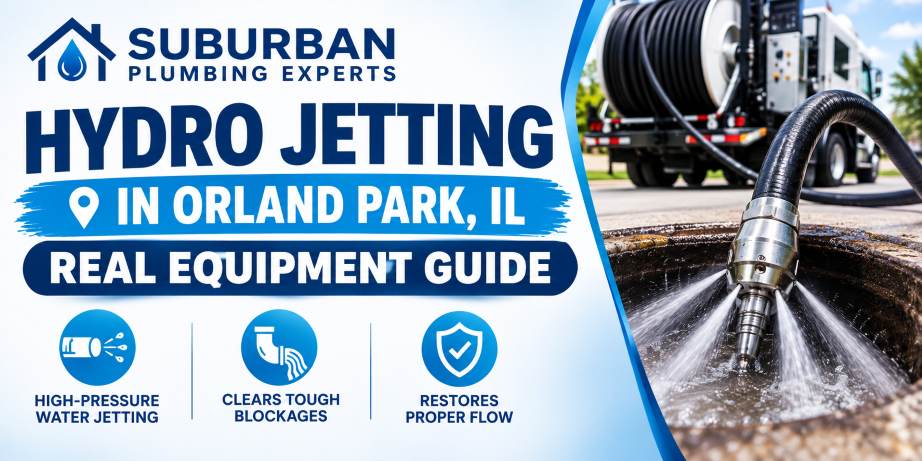
A hydro jetter forces pressurized water through a nozzle to scour the interior of a pipe. That much is simple.
What actually varies, and what determines whether a job gets done right, is how much pressure and flow that specific job needs. Too little of either, and buildup stays put. Equipment sized for a job far bigger than yours just adds cost without adding results. Our hydro jetting service sizes the equipment to the actual line, not the other way around.
What the Equipment Itself Actually Tells You
According to Spartan Tool’s own technical guidance on sewer jetting pressure and flow, small electric jetters typically deliver around 1,500 to 2.25 GPM, enough for many inside-the-house cleaning tasks but limited once a stoppage has any real length or hardness to it. Gas-powered units common in the industry produce roughly 3,000 PSI at 4 GPM, the range most residential and light commercial work actually falls into.
PSI alone doesn’t tell the whole story. According to Spartan’s guidance on jetter applications, grease that’s hardened inside a pipe is considerably harder to clear below 2,000 PSI. Above that threshold, a jetter breaks up hardened grease far more effectively, which is exactly why a kitchen line with a real grease problem needs different equipment than a bathroom drain with a hair clog.
Why Grease Behaves Differently Than Almost Anything Else Cable Cleaning Touches
A cable and blade attachment can pass straight through a soft grease blockage without actually removing it. The grease closes back up behind the cable the moment it passes, and the blockage often just relocates further down the line rather than disappearing.
Hardened grease is worse. Once it’s set against the pipe wall, only genuine pressure, delivered with enough flow to carry the loosened material fully out of the line, actually clears it. That’s the mechanical reason jetting outperforms basic rodding for anything grease-related, and it’s also why grease remains the single most common cause of drain clogs in Chicago-area homes.
Old Orland’s Clay Laterals Make This More Than a Kitchen Problem
A meaningful share of homes in Orland Park’s original residential core, developed through the 1960s and 1970s near Old Orland and 151st Street, still run on original clay tile sewer laterals.
Clay tile is laid in short sections joined together, and every joint is a potential entry point for tree roots as the pipe ages. We cover exactly what this means for homeowners in that specific part of the village in our companion piece on what the Catalina Neighborhood water and sewer replacement is telling every Orland Park homeowner. Root intrusion in a line like this responds well to jetting once the roots themselves have been mechanically cleared first, since jetting alone doesn’t remove a root mass, it removes what’s left behind after cutting does.
Confirming What’s Actually in the Pipe Before Any Pressure Goes In
A sewer camera inspection shows the pipe’s actual material and condition before equipment ever gets used. Professional inspections follow the framework established by NASSCO’s Pipeline Assessment Certification Program, the recognized standard for documenting pipe condition consistently rather than relying on one technician’s read of the footage.
This step matters most on an older clay or cast iron line. Pressure calibrated for sound PVC can be too aggressive for a pipe that’s already cracked or structurally compromised, and applying full pressure without checking first can turn a cleaning job into a repair job.
When Roots Have Already Gotten In
Once a root has worked its way into a joint, jetting alone won’t remove the mass, it takes mechanical sewer tree root removal first. Jetting afterward clears the debris the roots left coating the pipe, which is what actually extends the time before the same section needs attention again.
Rodding or Jetting: The Actual Decision
A single, isolated clog with no history of recurrence is usually a rodding job, faster and less expensive, since it only needs to break a path through one blockage. A line that keeps clogging in the same spot needs jetting, because the real problem is buildup coating the interior wall, not a single object sitting in the way.
Grease-heavy kitchen lines, whether in a home or a restaurant kitchen along La Grange Road or near Orland Square Mall, almost always fall into the jetting category given how continuously grease accumulates in active commercial use.
Residential and Commercial Orland Park Properties Need Different Scheduling
A single-family home’s lateral, especially an older one on clay tile, deals with decades of gradual settling and occasional root intrusion. A commercial kitchen deals with grease volume no residential drain comes close to, and jetting there is generally scheduled around actual kitchen output rather than a fixed calendar.
Our guide to commercial plumbing in Orland Park and our piece on why Orland Park restaurants need specialized plumbing service both go deeper into what commercial properties specifically require.
Why the Same Equipment Doesn’t Cover Every Job
Spartan Tool’s own equipment lineup illustrates this well. Compact electric and cart-style jetters, generally 1,500 to 3,000 PSI in the 2 to 4 GPM range, handle most household lines and tight-access spots effectively.
Larger trailer-mounted units step up to 3,000 to 4,000 PSI at 12 to 18 GPM, built for longer runs, heavier grease buildup, and commercial-scale lines where a smaller unit would run out of flow before finishing the job. A technician showing up with the wrong category of equipment for your specific line either wastes time underpowered or overspends on capacity a residential clog never needed.
That’s part of why we run the camera first: it tells us not just what’s wrong, but which equipment category actually fits the job in front of us.
A Maintenance Rhythm That Actually Prevents the Next Call
For an older Orland Park home on original clay tile, a camera inspection every one to two years catches root intrusion or a shifting joint while it’s still a cleaning job rather than a repair. That’s a meaningfully cheaper problem to solve early than late.
For any kitchen dealing with grease, home or commercial, keeping fats, oils, and grease out of the drain in the first place slows how quickly buildup returns after a jetting visit. Letting fat cool in a container instead of pouring it down the sink costs nothing and meaningfully extends the interval between service calls. A drain screen catching food particles before they add to the grease layer does the same.
None of this replaces jetting once buildup has already accumulated, but it does stretch the time between visits considerably.
What This Actually Costs
Pricing depends on line length, how accessible the cleanout is, and how severe the buildup or root intrusion turns out to be once a camera actually looks at it. Our complete guide to hydro jetting costs in Chicagoland breaks down real regional pricing by property type, worth a look before comparing any quotes.
What a Visit With Us Actually Looks Like
We ask what you’ve noticed first: which fixtures, how often, whether it’s gotten worse recently. That narrows the likely cause before any equipment leaves the truck.
For anything beyond an obvious, isolated clog, the camera goes in before the jetter does. We size the equipment and pressure to what that camera actually shows, not a default setting used on every job regardless of pipe condition. Once the work is done, a follow-up camera pass confirms the line is genuinely clear along its full length, not just flowing again temporarily. You get a plain answer on what we found and what it means going forward, before we leave.
Signs Worth Calling About
- A clog that’s returned within days or weeks of being cleared
- Slow drainage that’s gotten progressively worse rather than staying occasional
- Gurgling from a drain or toilet when another fixture runs elsewhere in the house
- A persistent odor near a drain that doesn’t resolve after running water
- More than one fixture slowing down at the same time
Frequently Asked Questions
How is hydro jetting different from a plumber’s snake?
A cable snake breaks a path through the center of a clog, and grease in particular can close back up behind it. Hydro jetting scours the entire interior wall of the pipe with pressurized water, removing the buildup a snake leaves behind.
Is hydro jetting safe for an older Orland Park home’s clay tile line?
It depends entirely on the pipe’s actual condition, which is exactly why a camera inspection comes first. A sound clay line generally handles properly calibrated jetting fine, while a line with existing cracks or root damage may need repair addressed before or instead of jetting.
Will jetting remove tree roots that are already inside my sewer line?
Not on its own. Roots need to be mechanically cut and removed first. Jetting afterward clears the debris and buildup the roots left behind, extending the time before that section needs attention again.
How much pressure does it actually take to clear grease from a pipe?
Hardened grease is considerably harder to clear below roughly 2,000 PSI. Above that threshold, a properly equipped jetter breaks it up far more effectively, which is why kitchen and restaurant lines typically need higher-capacity equipment than a simple bathroom clog.
Does hydro jetting require digging up my yard?
No. The equipment feeds through an existing cleanout, and the process doesn’t disturb your yard, driveway, or landscaping.
Why does the size of the jetting equipment matter?
Small electric or cart jetters handle most household lines effectively, while a longer run or heavy commercial grease buildup needs a larger trailer-mounted unit with considerably more flow. The wrong category either underperforms or overspends on capacity the job never needed.
How often should an older Orland Park home get preventive jetting or a camera inspection?
Every one to two years is a reasonable standard for a home on original clay tile, more often with mature trees near the lateral or any history of recurring clogs.
Licensed Hydro Jetting for Orland Park, IL
Suburban Plumbing Experts has served Orland Park and the surrounding suburbs since 1978. We hold Illinois Plumbing License #055-044116 and Sewer License #2565, and every technician on our team is a trained, background-checked employee, not a subcontractor.
Whether it’s a recurring clog in an older Old Orland home or a grease-heavy commercial kitchen line, our Orland Park, IL plumbing team runs the camera first and recommends jetting only when it’s genuinely the right fit.
Dealing With Recurring Clogs in Orland Park?
Licensed, insured, and serving Orland Park and Chicagoland since 1978. Call now or fill out the form below and we’ll follow up fast to get you scheduled.
Suburbs: 708-801-6530 | Emergency: 708-518-7765 | Open 24/7
—
Suburban Plumbing Sewer Line & Drain Cleaning Experts
Licensed & Insured | Open 24 Hours | Serving Orland Park & the Suburbs Since 1978
📞 Orland Park: 708-801-6530 | 🚨 Emergency: 708-518-7765