
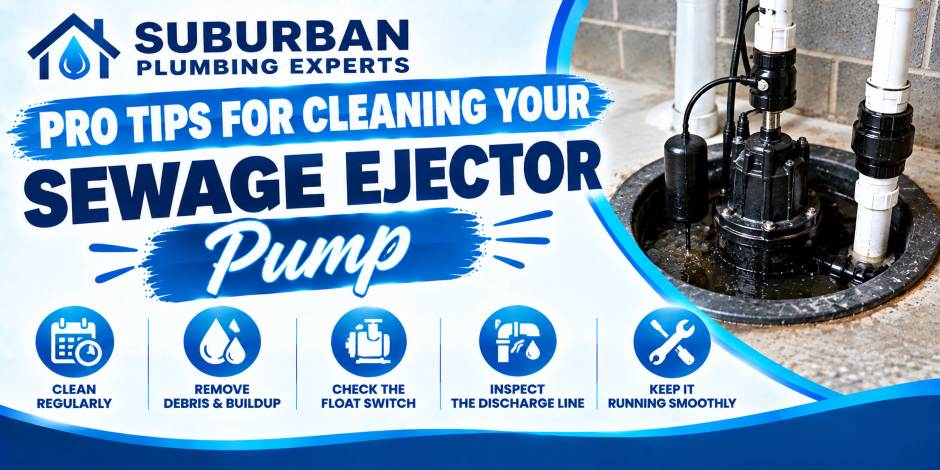
Most “Cleaning” Advice Tells You to Pull the Pump Out of the Pit and Scrub It. The Pit Is a Sealed, Gas-Producing Space, and What Actually Keeps a Pump Alive Is Testing, Inspection, and What You Let Go Down the Drain. Here’s What Homeowners Can Handle and What Belongs to a Professional.
A sewage ejector pump is one of those systems nobody thinks about until it stops, and by then the basement bathroom or laundry it serves has nowhere to send its wastewater. The pump sits in a sealed basin below the floor, collects waste from fixtures lower than the main sewer line, and lifts it up and out. Some of its upkeep is easy and safe for any homeowner. The rest involves toxic gas, raw sewage, and live electricity in a confined pit, and that part is worth leaving to someone equipped for it.
What an Ejector Pump Does, and Why It’s Not a Sump Pump
The two get confused because both sit in a basin in the basement. A sump pump moves groundwater and stormwater away from the foundation. A sewage ejector pump lifts wastewater and solids from toilets, sinks, showers, and laundry up to the sewer line, from a sealed and vented basin. They are built for different jobs and are not interchangeable.
Why the Basin Is the Real Hazard
Sewage produces hydrogen sulfide, commonly called sewer gas. OSHA describes it as highly flammable and toxic even at low concentrations, heavier than air, and prone to collecting in low-lying enclosed spaces. Its rotten-egg smell is also an unreliable warning, since you can stop smelling it while it’s still present.
A vented household basin is not a lethal trap every time the lid moves, but it does set the ground rules: never lean over or reach into an open basin, keep flames and sparks away, keep any lid-off look brief and well ventilated, and never treat “it doesn’t smell that bad” as proof the air is fine.
What You Can Safely Do Yourself
The most useful homeowner tasks are checks, not cleaning, and none require pulling anything out of the pit.
Listen to the pump. It should start, run a short cycle, and stop. Grinding, whining, or humming without moving water are early warnings, and a pump that runs constantly or cycles every few seconds points to a float, check valve, or blockage problem.
Run a fixture. Flush the basement toilet or run the laundry and confirm the pump kicks on, empties the basin, and shuts off. It tests the whole cycle without opening the lid.
Test the high-water alarm. Use its test button. This is the one part whose whole job is to warn you before sewage reaches the floor.
Inspect the outside. The lid should sit flat with an intact seal, the vent pipe should be clear, and the cord and connections should show no fraying or corrosion. A cracked seal lets sewer gas into the room, and a blocked vent can cause slow drainage and odors that look like a pump problem.
Keep a log. A written date and note makes it easy to spot a pump that has started cycling more often than it used to, and it helps a professional diagnose an intermittent problem.
What Belongs to a Professional
Anything that opens or enters the working parts of the system carries most of the risk. Pulling the pump means disconnecting the discharge piping, handling a heavy unit coated in sewage, and working over the basin near electrical connections. Cleaning the impeller and seals, removing sludge from the bottom of the basin, and replacing a float switch or check valve all fall into that category.
These jobs are a real part of good maintenance. Zoeller’s maintenance guidance lists testing floats, cleaning impellers and seals, checking electrical connections, and replacing worn parts among its preventive steps, though it is written for contractors, not homeowners. The point is that they’re done with the power isolated, protective gear on, and the tools to avoid a mess or an injury.
If you handle any of it yourself, at minimum shut off the breaker and unplug the pump, wear gloves, eye protection, and a mask, ventilate the room, and never work in a basement with standing water and live power. If anything is unfamiliar, stop and call someone.
The Three Parts That Fail Most
The float switch tells the pump when to run. If it snags on the basin wall, tangles with its cord, or gets coated in grease, the pump may not start, may run nonstop, or may cycle constantly. The check valve on the discharge pipe stops wastewater from draining back into the basin. When it fails, you may hear water rushing back after the pump shuts off, and the pump short-cycles as the basin refills. The high-water alarm is the safety net: it does nothing until the pump has already fallen behind, which is exactly when you need it.
What Goes Down the Drain Matters Most
The biggest factor you control is what gets flushed. Wipes are the main culprit, including the ones labeled flushable. They don’t break down like toilet paper, and they wrap around the impeller and jam the float. The same goes for feminine hygiene products, paper towels, cotton swabs, floss, and cooking grease that cools and coats the basin.
A simple house rule does more than any schedule: only waste and toilet paper go down the toilet, everything else goes in the trash. A small covered wastebasket beside the toilet makes it easy to follow. Also avoid pouring chemical drain cleaners or harsh disinfectants into a basin that houses a submerged motor and seals, since a slow fixture is usually a blockage or pump problem a chemical won’t fix.
Warning Signs Worth Taking Seriously
A failing pump usually announces itself. A pump that runs constantly or not at all, cycles far more than it used to, gurgling from basement drains, slow drainage, and a sewage smell near the basin are the clearest signs. Any one is reason to test the system, and two together is reason to call soon.
If the pump works normally but drains still back up, the problem may be the main sewer line. A sewer camera inspection shows whether a downstream blockage or damaged section is the real cause, since replacing a healthy pump won’t fix that.
Power Outages and Backup Planning
An ejector pump can’t move anything without electricity, so a storm that cuts power also stops the pump. During an outage, skip laundry and minimize flushing in the affected fixtures to buy time. If outages are common where you live, ask a professional whether a backup power option suits your specific pump and panel, since compatibility varies.
How Often Should an Ejector Pump Be Serviced?
A reasonable pattern is quick homeowner checks every few months and a professional inspection about once a year, more often for a busy household with several bathrooms draining to the pump. Ejector pumps commonly last around 7 to 10 years, and neglected ones can fail much sooner, so plan for replacement as a pump ages instead of waiting for it to fail.
A stuck float or failed check valve is often repairable. A burned-out motor, failed seal, or repeated problems usually means replacement. Either way, professional ejector pump service can diagnose the cause, which matters because a bad float, a bad check valve, and a blocked line can look identical from the outside.
The stakes are real: a failed pump and a full basin can become a sewer backup or basement flooding event with raw sewage on the floor, which costs far more than a scheduled inspection.
Frequently Asked Questions
How often should a sewage ejector pump be cleaned?
Most systems benefit from a professional inspection and cleaning about once a year, with quick homeowner checks of the cycle and alarm every few months. A household with heavy use may need service more often.
Can I clean my sewage ejector pump myself?
You can safely handle the checks: listening to the pump, running a fixture, testing the alarm, and inspecting the lid, vent, and cord. Pulling the pump, cleaning the impeller, removing basin sludge, and replacing the float or check valve involve sewer gas, raw sewage, and electrical connections, and are better left to a professional.
Is it safe to open the ejector pump lid?
A brief look in a ventilated room is generally reasonable, but never lean over or reach into the basin, and keep flames and sparks away. Sewage produces hydrogen sulfide, which is toxic and flammable, and its smell can’t be relied on to warn you of dangerous levels.
What should never go down a drain connected to an ejector pump?
Wipes of any kind, including those labeled flushable, plus feminine hygiene products, paper towels, cotton swabs, floss, and grease. These wrap around the impeller, jam the float, and coat the basin, and they are the most common cause of avoidable pump failure.
How long does a sewage ejector pump last?
Commonly around 7 to 10 years, though neglected pumps can fail much earlier. Regular testing and keeping the wrong items out of the system are the two biggest factors you control.
What’s the difference between a sump pump and a sewage ejector pump?
A sump pump removes groundwater and stormwater from around the foundation. A sewage ejector pump lifts wastewater and solids from below-grade fixtures up to the sewer line, from a sealed and vented basin. They are not interchangeable.
—
Suburban Plumbing Sewer Line & Drain Cleaning Experts
Licensed & Insured | Open 24 Hours | Serving Chicago & Chicagoland Since 1978