
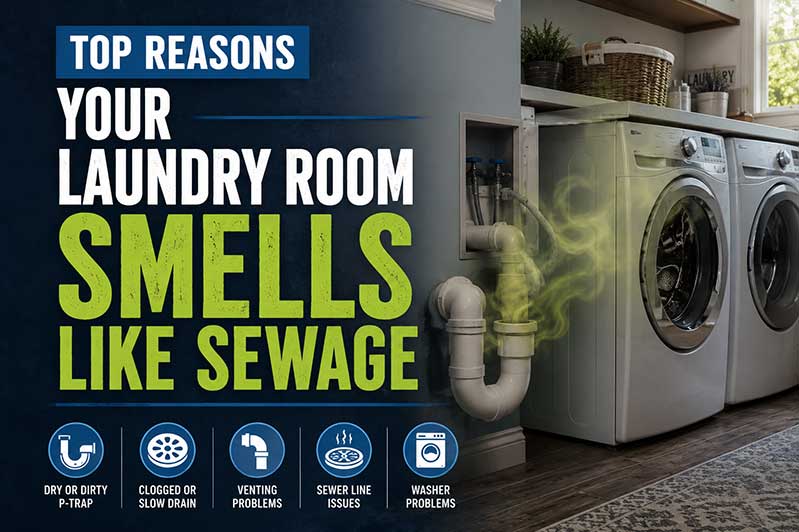
A sewage smell in your laundry room is more than just an unpleasant odor. It can be a sign that sewer gases are entering your home through a drain, plumbing vent, washing machine connection, or another part of your plumbing system.
In some cases, the cause is relatively simple, such as a dry P-trap or buildup inside the washing machine. In other situations, a persistent sewage odor can point to a blocked drain, a plumbing vent problem, or an issue with the sewer line.
Finding the source is important because sewer odors should not simply be covered up with air fresheners or ignored. The longer an underlying plumbing problem goes unaddressed, the greater the chance that a small issue can develop into a more expensive repair.
If your laundry room smells like sewage, start by looking for the most common causes below.
Common Causes of a Sewage Smell in the Laundry Room
There are several reasons a laundry room can develop a sewer-like odor. The location and strength of the smell, along with any drainage problems or unusual plumbing noises, can provide useful clues about where the problem is coming from.
Dry P-Trap
A dry P-trap is one of the simplest causes of a sewage smell. P-traps are U-shaped sections of plumbing located beneath sinks, laundry tubs, and other fixtures. They are designed to hold a small amount of water that creates a barrier between your home and the sewer system.
If the water inside the P-trap evaporates, sewer gases can travel through the drain and enter the laundry room. This can happen when a fixture is rarely used, but a P-trap can also lose its water because of a leak, damaged fitting, or other plumbing problem.
If the odor disappears after running water through the fixture, a dry P-trap may have been the source. If the smell returns, however, the underlying cause should be investigated.
Clogged Plumbing Vent
Your plumbing vent system helps regulate air pressure in the drainage system while allowing sewer gases to escape safely outside the home.
When a vent pipe becomes blocked, gases may not be able to exit properly. In some situations, that can contribute to sewer odors inside the house. Roof vents can become obstructed by leaves, debris, bird nests, ice, or animal activity.
Because plumbing vents are often located on the roof, inspecting or clearing them can be difficult and potentially dangerous. If you suspect a blocked vent, professional inspection is usually the safest approach.
Blocked Laundry Drain
A partially blocked laundry drain can also produce an unpleasant odor. Soap residue, lint, dirt, hair, and other debris can accumulate inside the drain and restrict water flow.
When wastewater does not drain properly, stagnant water and organic buildup can contribute to foul odors. You may also notice slow drainage, gurgling sounds, or water backing up when the washing machine drains.
A blockage farther down the drain line may require professional drain cleaning to completely clear the restriction rather than simply treating the odor at the fixture.
Washing Machine Buildup
Sometimes the plumbing is not the primary source of the smell. Your washing machine itself can develop unpleasant odors from detergent residue, moisture, mold, mildew, and buildup.
Front-loading washing machines are particularly prone to buildup around the rubber door gasket, detergent dispenser, and other areas that remain damp between cycles. Using excessive detergent can also leave behind residue that contributes to odor.
Check the washing machine carefully, clean the areas recommended by the manufacturer, and make sure the machine is draining properly. If the odor continues even after cleaning, the drain connection or plumbing system may need to be inspected.
Sewer Line Problems
A strong or persistent sewage odor can sometimes indicate a problem farther down the plumbing system. Cracks, blockages, damaged sections, or other sewer line problems can interfere with normal wastewater flow and contribute to sewer odors.
Sewer line problems can develop for several reasons, including aging pipes, shifting soil, construction damage, improper installation, or tree root intrusion.
If you are also experiencing repeated backups, slow drainage in multiple fixtures, gurgling drains, or sewage odors in more than one area of the home, the problem may extend beyond the laundry room.
How to Identify the Source of the Sewage Smell
Before assuming that the odor is coming from the main sewer line, check the areas most likely to cause a laundry room odor.
Inspect the P-Trap
If your laundry room has a sink or laundry tub, check the P-trap underneath the fixture. Make sure there is water inside the trap. If it is dry, running water through the fixture may restore the water seal and stop sewer gases from entering.
If the trap repeatedly dries out or you see water leaking underneath the fixture, there may be a plumbing problem that needs to be repaired.
Check the Laundry Drain
Pay attention to how quickly the laundry drain empties when the washing machine is running. Slow drainage, standing water, gurgling, or water backing up can all indicate a blockage.
If the drain is partially obstructed, professional drain cleaning services can remove buildup and restore proper flow.
Inspect the Washing Machine
Clean the washing machine according to the manufacturer’s instructions, paying particular attention to the detergent dispenser, door gasket, drum, and other areas where moisture and residue can accumulate.
Also check the washing machine drain hose and connection. A drainage problem can cause wastewater or odors to remain around the machine instead of flowing properly into the plumbing system.
Check the Plumbing Vent
A blocked plumbing vent can contribute to sewer odors and drainage problems. Because the vent typically exits through the roof, do not attempt a dangerous roof inspection simply to locate the source of an odor.
If you suspect a vent blockage, a professional plumber can inspect the plumbing system and determine whether the vent is functioning properly.
Assess the Sewer Line
If the odor is persistent, particularly if you are also experiencing backups or problems with multiple drains, the sewer line may need to be investigated.
A professional plumber can perform a sewer camera inspection to look inside the line and identify problems such as blockages, cracks, root intrusion, or damaged pipe sections.
How to Get Rid of a Sewage Smell in Your Laundry Room
The right solution depends on what is causing the odor. Once the source has been identified, addressing the underlying problem is the best way to eliminate the smell and prevent it from returning.
Refill a Dry P-Trap
If the P-trap has dried out, run water through the connected fixture to restore the water seal.
If the odor returns shortly afterward, do not assume the trap simply needs more water. A recurring dry trap can indicate a leak, damaged plumbing, or another issue that needs to be investigated.
Clear the Plumbing Vent
A blocked plumbing vent needs to be cleared so the drainage system can properly vent.
Because plumbing vents are commonly located on the roof, professional service is recommended when the vent cannot be safely accessed. A plumber can also determine whether the vent itself is damaged or improperly configured.
Unblock the Laundry Drain
If the laundry drain is slow or backing up, the blockage needs to be removed rather than simply masking the odor.
Minor surface buildup may sometimes be addressed with basic drain-clearing methods. However, if the blockage is deeper in the drain line or keeps coming back, professional drain cleaning may be necessary to restore proper flow.
Clean the Washing Machine
Clean the washing machine regularly to reduce detergent residue, mold, mildew, and other buildup that can cause unpleasant odors.
Follow the manufacturer’s cleaning recommendations and make sure the machine is draining completely. Leaving the door or lid open between cycles, when appropriate for the machine, can also help the interior dry.
Repair Sewer Line Problems
If the sewage smell is caused by a damaged or obstructed sewer line, cleaning the washing machine or refilling a P-trap will not solve the underlying problem.
A professional plumber can locate the damaged section and recommend the appropriate repair. Depending on the condition and location of the pipe, this may involve clearing an obstruction or repairing the affected section of sewer line.
Preventive Measures to Avoid Future Sewage Smells
Once the odor has been eliminated, a few basic maintenance habits can help reduce the chance of the problem returning.
Perform Regular Plumbing Maintenance
Keep drains, traps, and plumbing fixtures in good working condition. Pay attention to slow drainage, unusual noises, recurring odors, or other changes in how your plumbing operates.
Periodic professional drain cleaning can also help remove buildup before it develops into a more serious blockage.
Keep the Laundry Room Properly Ventilated
Good ventilation helps control moisture and humidity in the laundry room. Excess moisture can contribute to mold and mildew growth, which may create additional unpleasant odors.
Use an exhaust fan when available and allow the room to dry after washing clothes.
Use Your Washing Machine Properly
Follow the manufacturer’s recommendations for detergent and machine maintenance. Avoid using more detergent than necessary, since excess product can leave residue inside the machine.
Clean the washing machine regularly and make sure the drain hose is installed and functioning properly.
Address Plumbing Problems Early
Do not ignore warning signs such as slow drains, recurring odors, gurgling sounds, or water backing up when the washing machine drains.
A small drainage problem can sometimes be easier and less expensive to resolve before it develops into a larger plumbing issue.
Schedule Professional Plumbing Inspections
If your home has recurring drainage or sewer odor problems, a professional plumbing inspection can help identify issues that may not be obvious from the laundry room alone.
An inspection can help determine whether the problem is isolated to the washing machine or laundry drain or whether it involves a larger portion of the plumbing system.
When to Call a Professional Plumber
Some laundry room odors have simple causes, but persistent sewage smells should not be ignored. Professional plumbing service is especially important when you notice additional warning signs.
The Sewage Smell Persists
If the odor continues after cleaning the washing machine, checking the drain, and making sure nearby P-traps contain water, there may be a deeper plumbing problem.
A professional can inspect the system and determine where the odor is originating.
Multiple Plumbing Fixtures Have Problems
If several drains are slow, multiple fixtures are backing up, or you notice sewer odors in different areas of your home, the problem may involve the main drainage or sewer system.
Multiple plumbing symptoms occurring at the same time are a good reason to have the system professionally evaluated.
You Suspect Sewer Line Damage
Cracks, blockages, root intrusion, or other sewer line problems can cause significant plumbing issues if left unresolved.
A professional can conduct a sewer camera inspection to examine the inside of the line and determine what is causing the problem.
The Source of the Odor Is Difficult to Access
If the sewage smell appears to be coming from a wall, crawl space, vent, concealed plumbing connection, or another difficult-to-access location, avoid tearing into the area without knowing what is causing the problem.
Professional sewer odor detection services can help locate the source so the appropriate repair can be made.
You Don’t Have the Right Experience or Equipment
Plumbing problems involving sewer lines, concealed pipes, plumbing vents, or recurring drain blockages can require specialized equipment and experience.
If you cannot determine where the smell is coming from or the problem keeps returning, professional plumbing service can help identify the cause and correct it properly.
In Conclusion
A laundry room that smells like sewage should not be ignored. The cause could be something relatively simple, such as a dry P-trap or washing machine buildup, but persistent odors can also indicate a blocked drain, plumbing vent problem, or sewer line issue.
Start by checking the most obvious sources, including the washing machine, laundry drain, and nearby P-traps. If the smell continues, becomes stronger, or occurs along with slow drains, gurgling, backups, or other plumbing problems, it is time to have the system professionally inspected.
The goal is not simply to cover up the odor—it is to find and correct the plumbing problem responsible for it. If you need help locating the source of a persistent sewage smell in your laundry room, contact Suburban Plumbing Sewer Line and Drain Cleaning Experts for professional assistance.