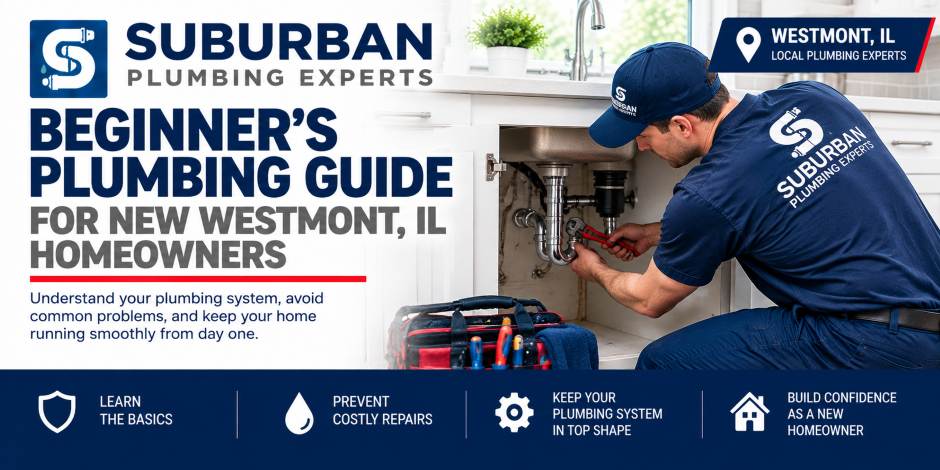
Your Westmont Home’s Plumbing Came With a History You Weren’t Handed at Closing
Moving into a new home in Westmont is exciting, and it also means inheriting a plumbing system with its own age, quirks, and local context you didn’t get a manual for. This guide is built specifically for that first stretch of homeownership: finding what you need to know fast, understanding the basics well enough to handle small issues yourself, and knowing exactly when to stop and call a professional instead of guessing.
Find Your Shutoffs Before You Need Them
Locate your main water shutoff valve on day one, not during an emergency. It’s typically near where the water line enters the house, in a basement, utility closet, or crawl space. Know which direction closes it, and test it once so you’re not fumbling with a stuck or unfamiliar valve while water is actively flooding a room. Individual shutoff valves under sinks and behind toilets let you isolate a single fixture without killing water to the whole house, worth checking that each one actually turns freely rather than assuming it works. Your water heater has its own shutoff as well, for the water supply and, separately, for gas or electrical power, both worth locating now.
Understand Your Home’s Water Pressure
Residential water pressure is generally considered acceptable in the 40 to 80 psi range, with most plumbing codes requiring a pressure-reducing valve once static pressure exceeds 80 psi, since sustained high pressure stresses fittings, supply lines, and appliances well before it causes an obvious failure. A simple pressure gauge that threads onto an outdoor spigot tells you where your home actually sits in that range. If you’re consistently on the high end, a pressure-reducing valve is a worthwhile investment rather than something to wait on until a fitting fails.
Know Your Water Heater
Set the thermostat to around 120°F, a setting the U.S. Consumer Product Safety Commission recommends to reduce scald risk while still staying hot enough to limit bacterial growth in water kept too cool. Check for leaks, rust, or unusual noises periodically, popping or rumbling sounds specifically point to sediment buildup, and our full breakdown of what causes water heater sediment covers why that happens and what an annual flush actually prevents. Our water heater maintenance service handles this along with a broader check of the anode rod and relief valve while the tank is already drained.
The Westmont-Specific Context Worth Knowing on Day One
Westmont runs a separate sanitary sewer system through the Downers Grove Sanitary District, which means the combined-sewer surcharge backups that drive flooding in parts of Chicago are largely not the mechanism here. When a Westmont basement floods, it’s almost always one of two things: groundwater intrusion through DuPage County’s clay-heavy soil, or a condition within your own private sewer lateral. If your home dates to before 1980, there’s a real chance you still have an original clay tile lateral, worth confirming with a camera inspection rather than assuming. The village’s response to its April 2013 flood, including a voter-approved stormwater infrastructure sales tax, has meaningfully improved the public system, but your sump pump, your lateral, and your surface drainage remain entirely your own responsibility regardless of what the village invests. Our complete guide to flood control and plumbing in Westmont covers all of this in depth, including the specific diagnostic signs for each flooding type. If you haven’t already had your plumbing inspected as part of buying the home, our guide on what to check before buying a Westmont home is worth reading even after closing, since it covers exactly what an inspection should have caught.
Essential Plumbing Tools Every New Homeowner Should Have
A plunger (a flange-style one for toilets specifically works better than a flat cup plunger), an adjustable wrench, a pipe wrench, plumber’s tape for threaded connections, a drain auger for clogs a plunger can’t reach, and a bucket and towels for the inevitable spill. Keep them somewhere accessible, not buried in a storage unit, since the moment you need one is rarely a convenient one.
Common Early Issues and the Right First Response
Leaking faucets are usually a worn washer, cartridge, or O-ring, a straightforward DIY repair once you shut off the fixture’s supply valve. Clogged drains respond to a plunger or auger; skip chemical drain cleaners entirely, they’re corrosive, don’t remove the buildup actually coating the pipe wall, and make it more hazardous for a plumber to work on the line later if the clog doesn’t clear. A running toilet is often just a worn flapper or a float that needs adjusting, and our guide on unclogging a toilet without calling a plumber covers the right tools and technique if a clog is the actual issue, including the mistakes that make it worse.
When to Call a Professional
Major leaks, persistent clogs that return after you’ve cleared them, water heater problems beyond a simple reset, and anything involving a sewer line all warrant a professional rather than a repeat DIY attempt. It’s also worth knowing that for certain plumbing work, altering a system rather than swapping a simple part, Illinois law actually requires a licensed plumber rather than just recommending one; our guide to licensed plumbers versus handymen covers exactly where that line sits. Our emergency plumbing services are available for anything that can’t wait.
Energy Efficiency and Water Conservation
Low-flow showerheads and faucets cut water use without a noticeable drop in performance. Fix leaks promptly rather than letting them run, the EPA’s WaterSense program notes that a faucet dripping just once per second wastes nearly 3,200 gallons of water a year, money spent for nothing in return. Insulating hot water pipes reduces heat loss and modestly lowers your water heating costs, particularly on longer runs to distant fixtures.
Preparing for Seasonal Changes
Before winter, insulate exposed pipes in unheated spaces, disconnect and drain outdoor hoses, shut off exterior faucets, and let faucets drip during genuinely extreme cold. Our seasonal hard freeze countdown covers exactly what to do in the 48 hours before a serious cold snap hits. Heading into spring, inspect for any damage that surfaced over winter, clear gutters and downspouts, and test your sump pump before the season’s heavier rain arrives, which matters more here given Westmont’s groundwater conditions. Our sump pump services can assess or replace an aging unit before you actually need it mid-storm.
Your First 30 Days Checklist
Locate and test your main shutoff and every fixture shutoff. Check your water heater’s age, temperature setting, and listen for any popping sounds. Test your water pressure with a simple gauge. Confirm whether your home has a sump pump, and if so, check its age and whether it has battery backup. If your home predates 1980, schedule a sewer camera inspection to confirm your lateral’s condition rather than finding out during a backup. Save a professional plumber’s number in your phone before you need one in a hurry. Our residential plumbing services cover everything on this list in a single visit if you’d rather have a professional baseline from the start.
Frequently Asked Questions
What should I actually do first when I move into a new Westmont home?
Locate your main water shutoff and test it, check your water heater’s age and settings, and confirm whether you have a sump pump and its age and backup status. These three things tell you more about your plumbing’s actual condition than anything else in the first week.
What water pressure is too high for my home’s plumbing?
Above 80 psi is generally where plumbing codes require a pressure-reducing valve, since sustained high pressure stresses fittings and appliances over time. A simple gauge on an outdoor spigot tells you where your home actually falls.
Does Westmont have combined sewers like parts of Chicago do?
No. Westmont runs a separate sanitary sewer system through the Downers Grove Sanitary District, so combined-sewer surcharge backups aren’t the typical cause of flooding here. Groundwater intrusion through clay soil and private sewer lateral condition are the two most common causes instead.
How do I know if my Westmont home has an original clay tile sewer lateral?
Home age is the first clue, homes built before 1980 are more likely to have an original clay tile lateral. A sewer camera inspection is the only way to confirm the actual material and condition rather than guessing from age alone.
Is it ever safe to use chemical drain cleaners?
We don’t recommend them. They’re corrosive, don’t remove the buildup actually coating a pipe’s interior wall, and make a line more hazardous for a plumber to work on if the clog doesn’t clear on the first attempt. A plunger or drain auger is the safer first response.
The Best Time to Learn Your Plumbing Is Before It’s an Emergency
Every item in this guide is easier to handle calmly in your first month than it is during an actual emergency six months from now. Spend an afternoon locating your shutoffs, checking your water heater, and understanding your home’s specific flooding risk, and most of what could go wrong becomes a quick fix instead of a frantic call.
New to Westmont? Let’s Get Your Plumbing Set Up Right
Licensed, insured, and serving Westmont and DuPage County since 1978. Call now or fill out the form below and we’ll follow up fast to get you scheduled today.
Westmont: 630-749-9057 | Emergency: 708-518-7765 | Open 24/7
—
Suburban Plumbing Sewer Line & Drain Cleaning Experts
Licensed & Insured | Serving Westmont & DuPage County Since 1978