Before You Grab a Plunger, Know Where Your Shutoff Valve Is. That’s What Actually Prevents an Overflow.
Most guides on this topic jump straight to plunging technique and skip the step that actually prevents the disaster people are afraid of. A clogged toilet only becomes a flood if water keeps entering the bowl while it’s blocked, and that’s entirely preventable. Here’s how to actually clear a clog, using the right tools the right way, plus the corrections to a few pieces of common advice that can do more harm than good.
First, Stop the Water
Every toilet has a shutoff valve on the wall or floor behind it, usually a small oval handle on the supply line. Turn it clockwise to stop water flow immediately if the bowl is rising and looks close to overflowing. If you can’t find or reach the valve in time, take the lid off the tank and lift the float or push the flapper closed by hand, this stops the tank from refilling the bowl and buys you time to find the valve. Do this before attempting any of the methods below if there’s any real risk of overflow; a clog you can take your time clearing is a very different situation than one that’s actively flooding your bathroom floor.
The Plunger Method, Done Correctly
The tool matters more than most people realize. A flange plunger, the kind with an extra fold of rubber extending down from the cup, is built specifically for toilets and forms a proper seal inside the drain opening. A standard cup plunger, flat on the bottom, is designed for sinks and tubs and can’t create an airtight seal against a toilet’s curved drain, no matter how hard you push.
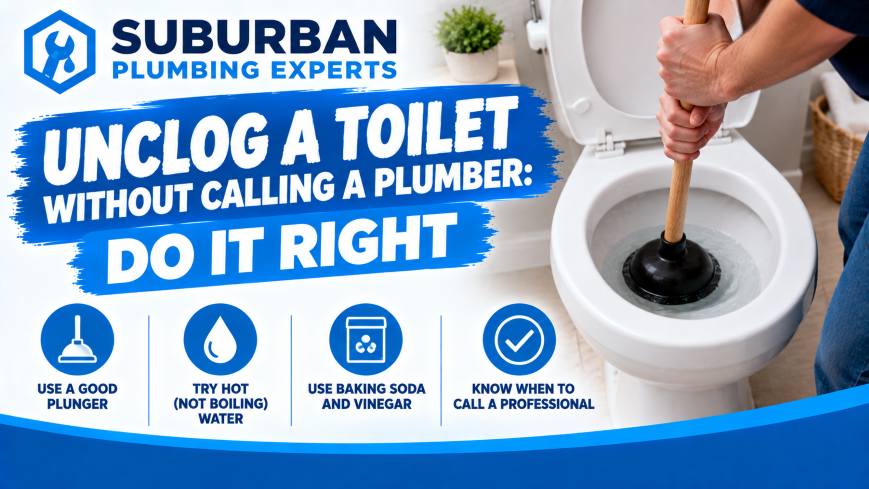
Make sure there’s enough water in the bowl to fully submerge the plunger cup before you start; plunging with too little water forces air instead of water, which doesn’t transmit pressure effectively. Push down slowly for the first stroke to expel air from the plunger without splashing, then pull up firmly and quickly, this pull is what actually dislodges the clog through suction, not the push. Repeat the motion ten to fifteen times before checking whether the water is draining.
Toilet Auger vs. Drain Snake: Why the Tool Matters
If plunging doesn’t clear it, reach specifically for a toilet auger, also called a closet auger, not a standard drain snake meant for sinks. A toilet auger has a protective sleeve around the cable specifically to avoid scratching or cracking porcelain as it’s inserted, a real risk with a bare-cable snake used directly in a toilet bowl. Insert the auger into the drain, crank the handle clockwise while feeding the cable in, and continue until you feel it break through resistance. Pull the auger back out and flush to confirm the clog is clear.
Hot Water and Dish Soap, Done Safely
Dish soap works as a lubricant here, its surfactant properties help the clog slide through the pipe rather than dissolving it outright, so this method works best on softer clogs like an excess of toilet paper rather than a solid object. The water temperature matters more than the original advice on this often gets credit for: use water that’s hot, not boiling. As This Old House notes, boiling water poured directly into a porcelain bowl can crack it through thermal shock, and it can also soften or damage the wax ring seal at the base of the toilet, which is a considerably more expensive repair than the clog you started with. Add a few tablespoons of dish soap, pour in hot tap water from about waist height, let it sit for several minutes, then flush.
Does Baking Soda and Vinegar Actually Work Here?
It’s worth being honest about this one: baking soda and vinegar’s reaction produces carbon dioxide fizzing, which has very little actual mechanical force behind it. That reaction can help with light residue in some contexts, but a toilet clog is usually a compacted mass of paper or waste, not the kind of buildup a mild acid-base fizz has much effect on. If you try it and it doesn’t clear things in half an hour, that’s not a sign to wait longer, it’s a sign to move to the plunger or auger instead.
When It’s Not Actually a Clog
If the toilet gurgles or bubbles when a different fixture drains elsewhere in the house, the problem may be a venting issue rather than a blockage in the toilet itself, and no amount of plunging fixes that. Our guide on understanding gurgling drains covers how to tell the difference. A clog that resists an auger almost immediately, rather than after several feet of cable, can also mean a foreign object rather than paper or waste, a toy, a wipe, or something else that fell in, which sometimes needs to be removed rather than pushed further into the line.
When to Stop and Call Us
A clog that returns within days of clearing it usually means the real restriction is further down the line than a plunger or auger reached. If more than one fixture in the house is draining slowly at the same time as the toilet clog, the problem likely isn’t the toilet at all, it’s the shared line downstream, and our clogged toilet drain cleaning service can diagnose and clear it properly rather than treating it as an isolated toilet issue.
A Realistic Prevention Routine
Flush only human waste and toilet paper, nothing else, regardless of what a product’s packaging claims about flushability; our breakdown of what shouldn’t go down any drain covers this in more depth. Keep a flange plunger and, ideally, a toilet auger in the house before you need them in an emergency. Know where your shutoff valve is now, not when water is already rising.
Frequently Asked Questions
Is it safe to pour boiling water into a toilet?
No. Boiling water can crack porcelain through thermal shock and can soften or damage the wax ring seal at the base of the toilet. Use hot tap water instead, well short of boiling.
Do I need a special plunger for a toilet?
Yes, ideally. A flange plunger, with the extra fold of rubber extending from the cup, forms a proper seal in a toilet’s drain opening. A standard flat cup plunger meant for sinks won’t seal nearly as effectively.
Can baking soda and vinegar actually unclog a toilet?
Rarely on its own. The fizzing reaction has very little mechanical force, and a toilet clog is usually compacted paper or waste rather than the kind of buildup that reaction is effective against. It’s worth trying briefly, but don’t wait long before moving to a plunger or auger instead.
How do I stop my toilet from overflowing right now?
Turn the shutoff valve behind the toilet clockwise immediately. If you can’t reach it in time, remove the tank lid and lift the float or hold the flapper closed by hand to stop the tank from refilling the bowl.
What’s the actual difference between a toilet auger and a drain snake?
A toilet auger has a protective sleeve around the cable specifically designed to prevent scratching or cracking porcelain. A standard drain snake, meant for sinks and tubs, lacks that protection and can damage a toilet bowl if used directly inside it.
Most Toilet Clogs Are Simple. Panic Is What Makes Them Messy.
A clogged toilet is genuinely one of the more DIY-friendly plumbing problems there is, as long as the water gets stopped before anything overflows and the right tool gets used the right way. Where people run into trouble is usually one of two things: not knowing where the shutoff valve is until they need it, or reaching for whatever’s under the sink instead of the tool actually built for the job. Get those two things right and most toilet clogs never need to become a bigger problem than they started as.
—
Suburban Plumbing Sewer Line & Drain Cleaning Experts
Licensed & Insured | Serving Chicago & the Suburbs Since 1978