
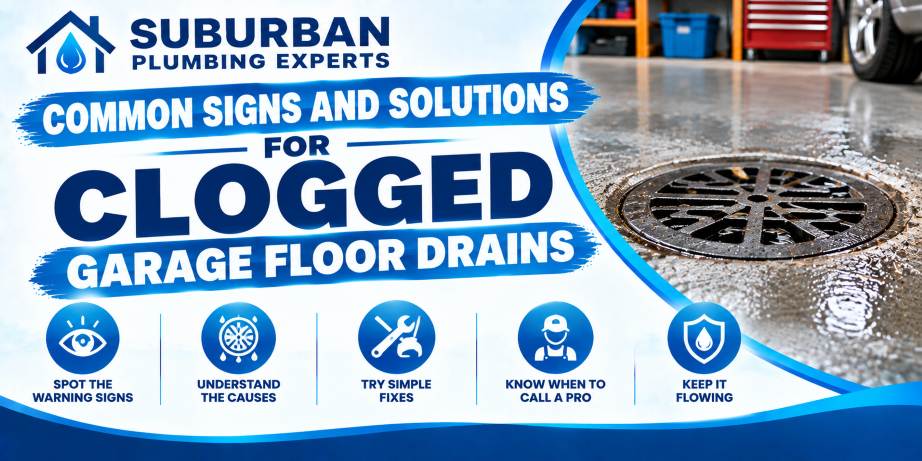
A Garage Floor Drain Dries Out Faster Than Any Other Drain in the House. That’s Usually Why It Smells, Not a Clog.
Most guides on this topic treat every symptom as a clog and jump straight to snaking and hydro jetting. But a garage floor drain is different from a kitchen or bathroom drain in one important way: it often goes weeks or months without any water passing through it. That matters more than most homeowners realize, and it’s the real explanation behind one of the most common complaints about these drains.
Why Garage Floor Drains Are Built Differently
Every drain relies on a P-trap, a curved section that holds a couple of inches of standing water specifically to block sewer gas from entering the building. That water works fine as long as it’s regularly replenished. A garage floor drain that only sees water during an occasional car wash or an unexpected flood can sit dry for months at a time, and once the trap’s water seal evaporates, sewer gas has a clear path into your garage. Trade research on floor drain trapping notes that this is exactly the scenario plumbing codes are written around, infrequently used floor drains are specifically called out because industry experience shows they dry out reliably. Illinois’ own plumbing code addresses this directly, offering a few accepted ways to keep a floor drain trap sealed: a deep-seal trap that holds more water and takes longer to evaporate, an automatic trap primer that periodically adds water, or, the simplest and cheapest option, adding a small amount of vegetable oil to the drain, which floats on top of the water and dramatically slows evaporation.
The Simple Fix Most People Never Try
If your garage floor drain smells like sewer gas but water still drains through it normally when you test it with a bucket, you likely don’t have a clog at all, you have a dry trap. Pour a gallon or so of water down the drain to refill it, then add a cup of vegetable oil on top to slow the next round of evaporation. For a drain that’s used so rarely this becomes a recurring issue, a proper trap primer device is a permanent fix rather than something you have to remember to redo every few months.
What an Automatic Trap Primer Actually Does
A trap primer solves the evaporation problem mechanically instead of relying on a homeowner to remember it. The most common residential type is pressure-drop activated: it taps into a nearby water line, and whenever that line experiences a brief pressure drop, using a sink or flushing a toilet elsewhere in the house, it releases a small measured dose of water into the floor drain trap automatically. Electronic, timer-based primers work on a set schedule regardless of household water use, useful for a garage that’s genuinely disconnected from the rest of the plumbing system. A simpler, lower-cost option in some configurations is a gravity-fed line tied to a nearby fixture’s drain, which sheds a small amount of water into the floor drain every time that fixture is used. Any of these removes the guesswork of a manual refill and is generally worth the modest upfront cost for a drain that reliably dries out between uses.
When It’s Actually a Clog, Not a Dry Trap
The distinction matters because the fix is completely different. A dry trap produces odor without any drainage problem, water still flows through normally when you test it. An actual clog produces standing water, slow drainage, or gurgling in addition to any smell, since something is physically restricting flow rather than just letting gas through an empty seal. If pouring water down the drain reveals slow drainage or pooling, that’s a real blockage, not an evaporation issue.
The Bucket Test: A Real Diagnostic Step
Before assuming the worst, pour roughly a gallon of water down the drain steadily and watch what happens. If it drains at a normal rate with no pooling, backup, or gurgling, and the odor was your only symptom, you’re almost certainly dealing with a dry trap rather than a clog, and the vegetable oil fix above is likely all you need. If the water drains slowly, pools around the drain opening, or you hear gurgling as it goes down, that points to an actual restriction somewhere in the line, and it’s worth noting how slow, a mild delay versus water that barely moves at all, since that gives a plumber a head start on whether this is a minor buildup or something more established.
What’s Actually Causing the Clog
Debris tracked in on tires and shoes, dirt, leaves, small stones, accumulates over time and narrows the drain opening. In this region specifically, winter brings its own version of this problem: sand and de-icing salt residue tracked in from the driveway settle into the drain and compact over a season of freeze-thaw cycles. Oil and other automotive fluids that aren’t cleaned up promptly can solidify inside the pipe much like grease does in a kitchen line. Hard water can leave mineral deposits that gradually narrow the pipe from the inside. And if the drain connects to an aging underground line, tree roots can infiltrate through small cracks or joints the same way they do in a sewer lateral.
When the “Clog” Is Actually Ice
A drain that worked fine in November and suddenly won’t take water in January isn’t always experiencing a new blockage, it may be frozen. Snowmelt tracked in from a car sitting in the garage runs into the drain, and if the pipe run isn’t well insulated or sits close to an exterior wall, that water can freeze solid inside the trap or the pipe itself before it ever reaches the main line. This looks identical to a debris clog from the surface, standing water, no drainage, but it resolves differently: it often clears on its own as temperatures rise, and attempting to snake a frozen line can do more harm than good. If a garage floor drain backs up specifically during or right after a deep freeze and drains normally the rest of the year, ice is a more likely explanation than an actual obstruction.
Attached vs. Detached Garage: Different Plumbing Entirely
An attached garage’s floor drain is often tied into the same drainage infrastructure as the rest of the house, sometimes the sanitary sewer, sometimes a dedicated sump, which is part of why backflow risk is worth taking seriously there. A detached garage more often has its own independent drainage, a dry well or a simple gravel bed underneath, with no connection to the house’s plumbing at all. That difference matters for troubleshooting: a detached garage drain backing up is almost certainly a local, self-contained issue, while an attached garage drain backing up alongside slow drains elsewhere in the house points to a shared line problem rather than something isolated to the garage.
Where the Drain Actually Connects Matters
Not every garage floor drain empties the same way. Some connect to a dry well or a dedicated sump; older installations sometimes tie directly into the sanitary sewer line, occasionally without a backflow prevention device in place. That distinction matters most during a heavy storm or a main sewer line blockage: if your garage floor drain is the lowest point connected to that line, a backup elsewhere in the system can push sewage up through it before it surfaces anywhere else in the house, the same back-pressure mechanism covered in our guide on understanding gurgling drains. A backwater valve is the actual fix for this specific risk: it’s a one-way flapper installed in the line that allows water to flow out toward the main sewer normally but closes automatically if pressure ever pushes back the other way, physically blocking sewage from reaching the drain at all rather than just reducing the odds. Installation typically runs a few hundred to around a thousand dollars depending on access and pipe configuration, modest compared to the cleanup cost of even one backup event. If you don’t know how your garage drain is plumbed, a backflow prevention assessment is worth having done, particularly in an older home.
Fixing an Actual Clog
For debris and sediment buildup, a plumber’s snake or drain auger clears the immediate blockage. For grease, oil residue, or the kind of compacted seasonal sediment common in this region, hydro jetting scours the full interior of the pipe rather than just punching a path through the center, which matters more here than in a typical kitchen drain given what a garage floor drain accumulates over a winter. If roots have worked into an aging connection, our tree root removal service clears the root mass mechanically rather than relying on jetting alone, which won’t remove an established root system by itself. We don’t recommend chemical drain cleaners for this or any drain; they’re corrosive, they don’t address buildup coating the pipe wall, and they make it considerably more hazardous for a plumber to work on the line if the clog doesn’t clear on the first attempt.
A Realistic Maintenance Routine
Run a gallon of water down the drain every few weeks if it doesn’t otherwise see regular use, and add vegetable oil on top if it’s prone to drying out between uses. Install a drain cover to catch debris before it enters the pipe. Clean up oil, antifreeze, and other automotive fluids immediately rather than letting them reach the drain at all. After winter, check the drain for accumulated sand and salt residue before it has a chance to compact. If you don’t know whether your garage drain has backflow protection, particularly in an older home, it’s worth finding out before the next major storm rather than after a backup.
Frequently Asked Questions
Why does my garage floor drain smell bad even though nothing seems clogged?
The most likely cause is a dry trap, not a clog. Garage floor drains go long stretches without water passing through them, and once the water seal in the trap evaporates, sewer gas has a clear path into the garage. Refilling the trap, and adding a layer of vegetable oil to slow future evaporation, usually resolves it.
How do I stop my garage floor drain from drying out?
Pour water down it periodically if it doesn’t see regular use, and add a cup of vegetable oil on top to slow evaporation between uses. For a permanent fix, an automatic trap primer device maintains the seal without you having to remember to do it manually.
Can I pour used motor oil or antifreeze down my garage floor drain?
No. These need proper hazardous waste disposal. Motor oil and antifreeze can solidify inside the pipe similarly to kitchen grease, and both are genuinely harmful if they reach a septic system or municipal wastewater treatment.
Could sewage actually back up through my garage floor drain?
In some homes, yes, particularly older ones where the drain ties directly into the sanitary sewer without a backflow prevention device. Since it’s often the lowest connected point, a backup elsewhere in the system can surface there first. A backflow prevention assessment can confirm whether your home is protected.
Is it safe to use chemical drain cleaner on a garage floor drain?
We don’t recommend it for any drain. Chemical cleaners are corrosive, don’t remove the buildup actually coating the pipe wall, and make the line more hazardous to work on if a professional needs to clear it afterward.
What’s the difference between a manual fix and a trap primer?
Pouring water and vegetable oil down the drain works, but it depends on you remembering to do it. A trap primer, whether pressure-activated, timer-based, or gravity-fed from a nearby fixture, refills the trap automatically without any ongoing effort, which matters most for a drain that’s easy to forget about until it starts smelling again.
My garage drain won’t take water at all, but only in winter. Is that a clog?
It might be ice rather than debris. Snowmelt sitting in the trap or pipe can freeze solid during a deep cold snap, blocking the drain the same way a physical clog would, but it often resolves on its own as temperatures rise. If the drain works fine the rest of the year and only backs up during the coldest stretches, ice is a more likely cause than an obstruction.
How does a backwater valve actually stop sewage from coming up through my drain?
It’s a one-way flapper installed in the line that lets water flow out toward the sewer normally but closes automatically if pressure ever reverses. Instead of relying on the main system never backing up, it physically blocks the path back into your garage if it does.
A Garage Floor Drain Doesn’t Need Much. It Just Needs to Not Be Forgotten.
Most garage floor drain problems come down to one of two very different causes: a trap that dried out from disuse, or an actual blockage from debris, seasonal residue, or an aging connection. Telling the two apart before doing anything else saves you from snaking a drain that just needed a gallon of water. Our drain cleaning services handle whichever one it actually turns out to be.
—
Suburban Plumbing Sewer Line & Drain Cleaning Experts
Licensed & Insured | Serving Chicago & the Suburbs Since 1978