
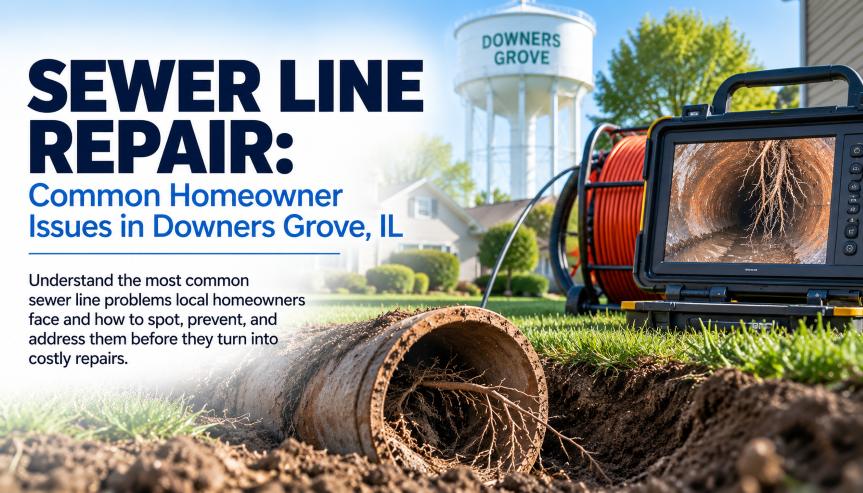
A Sewer Line Rarely Fails Without Warning — It Sends Signals for Weeks or Months Before It Actually Backs Up. Here’s What Those Signals Actually Look Like in a Downers Grove Home, What Causes Them, and How a Camera Inspection — Not a Guess — Determines Whether Repair or Replacement Is the Honest Answer.
Sewer line problems are among the more disruptive issues a Downers Grove homeowner can face. Left unaddressed, a failing sewer line leads to backups, unpleasant odors, and water damage that can affect flooring, walls, and even a home’s foundation. The good news: sewer line failure is rarely sudden. It develops gradually, and understanding the actual warning signs gives you real time to act before a manageable repair becomes an emergency.
What Actually Causes Sewer Line Damage
Tree Root Intrusion
Downers Grove’s mature, tree-lined neighborhoods make root intrusion one of the most common causes of sewer line failure here specifically. Roots are drawn toward the moisture and warmth inside a sewer line, and any existing crack or loose joint gives them an entry point. Once inside, continued root growth widens the original opening, catches debris, and eventually restricts or blocks flow entirely.
Age and Corrosion
Every sewer line has a practical service life, and that lifespan varies significantly by material. Clay and cast iron lines, common in older Downers Grove homes, are more prone to corrosion and joint deterioration than modern PVC. As a line ages, its structural integrity weakens gradually — a process that’s often invisible from the surface until it produces an actual symptom.
Ground Shifting and Soil Conditions
Soil movement around a buried sewer line can crack or misalign it independent of the pipe’s own condition. Clay-heavy soil, common throughout much of DuPage County, holds water and shifts more than sandier ground, particularly after heavy rainfall — a real, regionally specific factor in how often ground movement contributes to line damage here.
Blockages From Debris and Grease
Grease, non-flushable materials, and general household debris accumulate inside a sewer line over time, gradually narrowing its effective diameter until flow slows and eventually stops. This is also the most preventable cause on this list — what actually goes down your drains has a direct, cumulative effect on how often your line needs attention.
Recognizing the Warning Signs
A sewer line problem typically announces itself well before an actual backup. Watch for:
- Slow drains throughout the home — not just one fixture, but multiple, which points downstream to the shared line rather than an isolated clog.
- Gurgling sounds from drains or toilets, especially when running water elsewhere in the house — a sign of trapped air from a developing blockage.
- Persistent sewage odor indoors or in the yard, which shouldn’t be masked or ignored.
- Unusually lush or soggy patches in the yard along your line’s path — effluent surfacing or leaking into the surrounding soil.
- Backups in any fixture, which is the clearest and most urgent sign that the problem has already progressed.
Any one of these on its own is worth a professional look. Multiple signs together — especially slow drains paired with gurgling — usually mean the issue has moved past something a simple DIY attempt will resolve.
How a Sewer Camera Inspection Actually Determines the Right Fix
Guessing at a sewer line’s condition wastes both time and money. A professional sewer camera inspection shows the actual interior condition of your line — root intrusion, a cracked section, an offset joint, or a collapsed run — so the recommended fix matches what’s actually wrong rather than a generic assumption based on your home’s age.
What the camera shows determines the honest path forward. A single, isolated crack or joint separation in an otherwise sound line is often a straightforward, targeted repair. A line with damage spread across a long run, a fully collapsed section, or a significant belly (a low spot where the grade has sagged and collects debris) is a genuine case for full replacement — because no amount of localized repair actually corrects a structural problem in the pipe’s overall condition. Sewer line repair and replacement, when it’s the right call, means excavating and replacing the pipe correctly — not patching a section that’s going to need attention again within a few years regardless.
One of the next questions homeowners usually ask is how much those findings will cost to fix. The answer depends on the extent of the damage, the depth and location of the sewer line, accessibility, and whether a repair or full replacement is needed. Our guide to sewer line repair costs in the Chicago area explains the factors that influence pricing and what homeowners can realistically expect to pay.
Freeze-Related Sewer and Drain Issues in Downers Grove Winters
Illinois winters add a seasonal dimension to sewer and drain problems. Shallow-buried lines or pipes running near an exterior wall are more vulnerable to freeze-related stress, and freeze-thaw cycling over multiple winters gradually weakens joints that were already aging. According to the American Red Cross’s own guidance on frozen pipes, water expands as it freezes, and that expansion is what creates the pressure capable of cracking a pipe outright — the same basic mechanism that stresses an aging sewer lateral over repeated winters, not just interior supply lines. Keeping vulnerable areas insulated and maintaining consistent indoor temperatures reduces this risk, though it doesn’t eliminate damage that’s already accumulated in an older line from winters past.
Why Prompt Attention Actually Matters
Ignoring early sewer line symptoms doesn’t make the underlying cause go away — it gives it more time to get worse. A single crack that goes unaddressed continues collecting debris and inviting further root growth. A minor blockage that isn’t cleared accumulates into a full backup. The cost difference between addressing a documented, early-stage issue and responding to an actual sewage backup with water damage is significant, and it’s almost always in favor of acting on the first warning sign rather than the last one. If you’re wondering whether your homeowners insurance may help cover the cost of repairs, our guide explaining whether sewer line repair is covered by homeowners insurance can help you understand what is and isn’t typically covered.
Frequently Asked Questions
How do I know if my sewer line issue is a simple repair or something that needs full replacement?
A camera inspection is the only reliable way to know. An isolated crack or a single offset joint is typically repairable. Damage spread across a long section of the line, a collapsed run, or a significant belly usually means replacement is the more honest long-term answer, since a localized repair won’t correct a structural problem affecting the whole line.
Is tree root intrusion really as common in Downers Grove as this guide suggests?
Yes — the village’s mature, established tree canopy is a genuine, frequent factor in the sewer line issues we find here, particularly in older neighborhoods with clay or cast iron laterals that have had decades for nearby root systems to find their way in.
Can cold weather actually damage a sewer line, not just my home’s water supply pipes?
Yes, particularly for shallow-buried lines or laterals running near an exterior wall. The same freeze-expansion mechanism that bursts an interior pipe stresses an aging sewer lateral over repeated winters, which is why an older line already showing wear is more vulnerable during a hard freeze than a newer, sound one.
What’s the most preventable cause of sewer line problems on this list?
Blockages from grease and debris — this is almost entirely within a homeowner’s control through disposal habits, unlike root intrusion, aging, or soil conditions, which are more about proactive monitoring than day-to-day prevention.
Sewer Line Repair & Camera Inspection in Downers Grove, IL
Licensed, insured, and experienced with the real causes of sewer line failure in Downers Grove’s housing stock. Camera inspection first, then an honest recommendation — repair or replacement, based on what’s actually there. Our Downers Grove plumbers can help! Reach out to us today!
Emergency: 708-518-7765 | Downers Grove: 630-749-9057 | Open 24/7
—
Suburban Plumbing Sewer Line & Drain Cleaning Experts
Licensed & Insured | Open 24 Hours | Serving Downers Grove & the Suburbs Since 1978
📞 Downers Grove: 630-749-9057 | 🚨 Emergency: 708-518-7765