
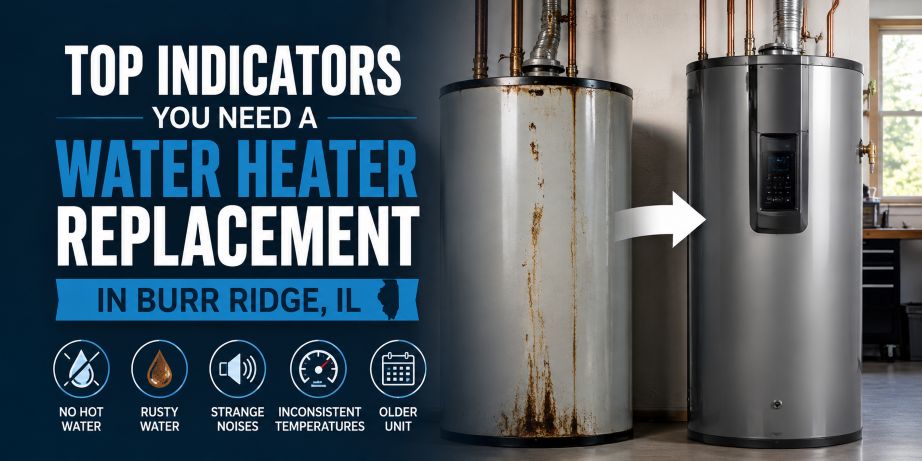
A Water Heater Doesn’t Fail Without Warning — It Tells You First, Through Rising Bills, Strange Noises, Inconsistent Temperature, and Water That Doesn’t Look or Smell Right. Here’s How to Read Those Signs Accurately Before You’re Standing in a Cold Shower or Cleaning Up a Flooded Basement.
One of the earliest and most telling signs that you may need a water heater replacement in Burr Ridge is a noticeable decrease in system efficiency, accompanied by a spike in your utility bills. If your water heater is struggling to perform its basic functions — heating water adequately or sustaining the desired temperature — it’s likely working harder than ever before, consuming more power in the process. This unnecessary strain on your appliance can lead to significantly higher energy expenses.
Keep an eye on your monthly energy statement. A noticeable increase that can’t be explained by seasonal changes or increased household usage can indicate your water heater is no longer operating efficiently. Longer wait times for hot water or a reduced supply duration are strong indicators too.
At a Glance
- Typical lifespan: 8 to 12 years for a conventional tank-style water heater, depending on usage and maintenance.
- The most overlooked sign: Loud bangs, pops, or rumbling — almost always sediment buildup at the bottom of the tank, not a random mechanical issue.
- The most urgent sign: Any leak or pooling water at the base of the unit — this points to internal tank failure, not a fixable fitting.
- Repair vs. replace: A unit under 8 years old with a single component failure is usually worth repairing. A unit over a decade old showing multiple symptoms at once is usually worth replacing.
- Maintenance that extends life: Annual anode rod inspection and periodic tank flushing, per water heater manufacturers’ own maintenance guidance.
Understanding the Causes of Inconsistent Water Temperature
Are you frequently experiencing cold showers despite setting your water heater to a specific temperature? Inconsistent water temperature is a prime indicator that your water heater is nearing the end of its lifecycle. Various issues can cause temperature fluctuations, but aging components within the unit are often the root cause.
Thermostats, heating elements, or burners deteriorate over time, leading to irregular heating regardless of whether you have a gas or electric unit. If you’ve had recurring temperature issues despite multiple repairs, it may be more cost-effective and reliable to replace the entire unit rather than continuing to fix individual parts. If you want a deeper breakdown of all the warning signs a water heater shows before it fails completely, our full guide on water heaters in Chicago covers every sign in detail.
Identifying and Interpreting Strange Noises
A low hum during operation is completely normal. Loud bangs, pops, or rumbling are not — these sounds typically come from sediment buildup at the bottom of the tank. Over time, minerals from the water supply settle inside the tank, hardening into layers. When water gets trapped under these layers, it heats up and eventually causes the popping or banging you hear. Ignoring these noises can lead to further damage, including ruptured tanks — timely attention is what actually prevents that outcome.
Recognizing Visible Rust and Corrosion
Rust and corrosion are clear indicators of a deteriorating water heater. Inspect the tank and the water inlet and outlet pipes for signs of rust — older units are more susceptible due to prolonged exposure to water and its minerals. If you detect rusty water from the hot tap, the inside of your tank has likely started to decay. Some corrosion can be addressed by replacing the anode rod, but extensive rust usually signals a more serious issue that requires full replacement. Don’t wait until rust has visibly spread.
Detecting Leaks and Excess Moisture
Leaks are among the most urgent signs you need a water heater replacement. Regularly inspect your unit and the surrounding area for water leakage or excessive moisture — even a small leak can escalate into water damage and potential mold growth. Drips or pooling near the base, or dampness on the tank’s exterior, should be addressed immediately. Sometimes leaks originate from connections or valves rather than the tank itself, but if the fault is in the tank, replacement is the safest option. If you suspect a leak isn’t visibly obvious yet, our leak detection service can confirm it before it causes real damage.
Knowing When Your Water Heater Is Older Than a Decade
Age is a critical factor. The average lifespan of a traditional water heater is approximately 8 to 12 years, depending on usage and maintenance. If your unit exceeds this range, it’s more susceptible to breakdowns and inefficiencies, even if it’s still functioning without an obvious problem. As components age and deteriorate, an aging unit costs more in both repairs and utility bills — which is why it’s often financially smarter to replace a decade-plus water heater proactively rather than run it to failure. If you’re planning ahead and want to understand real installation pricing, our full guide on water heater replacement cost in Chicago suburbs breaks down labor ranges and what actually drives total pricing.
Identifying the Need for Frequent Repairs
If you find yourself calling for repairs more often than you used to, that frequency itself is a signal worth acting on. Occasional repairs are expected over a unit’s life, but a water heater that’s regularly breaking down represents escalating cost and inconvenience that a replacement typically resolves for good — a modern unit offers reliability the aging one can no longer provide.
Observing Discolored or Foul-Smelling Water
An often-overlooked but critical sign is the quality of the hot water itself. Discolored water or a foul odor usually indicates the tank’s interior has deteriorated significantly — rust, sediment, or bacterial growth inside the tank can alter both appearance and smell, making the water unpleasant or unsafe to use. Annual inspections and flushes can sometimes remedy this temporarily, but persistent water quality problems usually mean the tank itself is compromised.
Spotting Signs of Mineral Buildup
Mineral buildup affects water heaters everywhere, but it’s worth understanding your specific water source. Burr Ridge draws Lake Michigan water, treated and delivered through the Village’s Water Division — the Village became the first in DuPage County to fully convert to Lake Michigan water back in 1984. That’s generally a more moderate mineral profile than a harder groundwater source, but “moderate” doesn’t mean mineral-free — sediment and scale still accumulate inside a tank over years of normal use regardless of source water hardness. Signs of buildup include reduced hot water supply, popping noises, and higher energy bills. Regular flushing manages it; if the problem is severe, replacement is usually the more reliable long-term fix.
Speaking with a Burr Ridge Plumber for Assessment
When in doubt, it’s always worth speaking with a professional. Experienced Burr Ridge, IL plumbers can provide a detailed inspection and a real recommendation based on what they actually find — not a default toward whichever option is easier to sell. A professional assessment uncovers underlying issues that aren’t apparent to the untrained eye, and can guide you through selecting a new unit that fits your household’s needs and current efficiency standards. Basic upkeep matters here too — our water heater maintenance service, including anode rod checks and tank flushing, is what actually extends a unit’s life long enough to avoid a premature replacement decision in the first place.
Exploring Modern Water Heater Options
If replacement is the right call, today’s water heaters offer real advantages — improved energy efficiency, advanced safety features, and better performance overall. Tankless units provide continuous hot water on demand and take up meaningfully less space than a traditional tank. Electric models have also advanced, with smart controls enabling better energy management. Our water heater replacement service walks you through weighing tank capacity, energy source, and technology features against what your household actually needs, not just what’s cheapest upfront.
Frequently Asked Questions
How do I know if I should repair my water heater instead of replacing it?
Generally, a unit under 8 years old with a single, clearly identified component failure — a thermostat, a heating element — is a reasonable repair candidate. A unit over a decade old showing multiple symptoms at once (noise, inconsistent temperature, and discoloration together, for example) is usually a stronger case for replacement, since fixing one symptom doesn’t address the others already in progress.
Does Burr Ridge’s water make water heaters last longer or shorter than average?
Burr Ridge’s Lake Michigan-sourced water is generally more moderate than a harder groundwater supply, which can be gentler on a tank over time — but it doesn’t eliminate normal sediment accumulation, and a unit here still follows the same realistic 8-to-12-year lifespan as anywhere else without regular maintenance.
Is it worth replacing a water heater before it fully fails?
In most cases, yes. A proactive replacement happens on your schedule, with time to choose the right unit and installer. A reactive replacement after a full failure often means no hot water for days and, in the case of a tank leak, potential water damage on top of the replacement cost itself.
What’s the actual maintenance that extends a water heater’s life?
Annual inspection and replacement of the anode rod when it’s deteriorated, along with periodic tank flushing to clear sediment, are the two maintenance tasks that make the biggest realistic difference — both are standard guidance from water heater manufacturers themselves, not just a plumber’s opinion.
Water Heater Replacement & Repair in Burr Ridge, IL
Licensed, insured, and serving Burr Ridge. Honest repair-vs-replace assessments, same-day service in most cases, and upfront pricing before any work begins. Emergency line answered 24 hours a day.
Emergency: 708-518-7765 | Burr Ridge: 630-749-9057 | Open 24/7
—
Suburban Plumbing Sewer Line & Drain Cleaning Experts
Licensed & Insured | Open 24 Hours | Serving Burr Ridge & the Suburbs Since 1978
📞 Burr Ridge: 630-749-9057 | 🚨 Emergency: 708-518-7765