
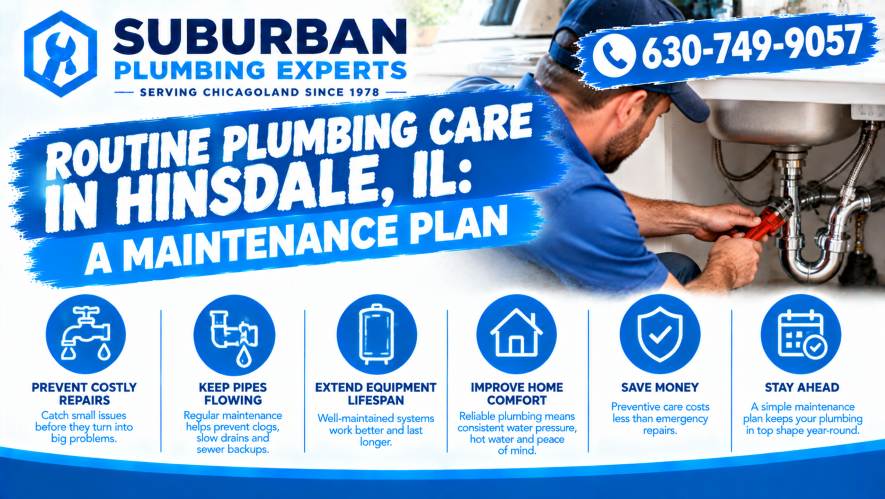
In Hinsdale, a Slow Leak Isn’t a Plumbing Problem. It’s a Restoration Project That Hasn’t Happened Yet.
A plumbing repair costs about the same in any house. What changes from home to home is what’s sitting in the path of the water. In a house with plaster walls, hardwood floors, custom millwork, and a finished lower level, a fitting that weeps for a few months doesn’t produce a plumbing bill, it produces a restoration bill, and the gap between those two numbers is the entire argument for routine care. This guide is a maintenance plan for exactly that kind of home: what to know about your system, what to check and when, which add-ons are worth having, and where a licensed plumber is genuinely needed. For the flooding side of the picture, groundwater, sewer backup, and the Salt Creek watershed, our guide to plumbing and flood control in Hinsdale covers it in depth. This one is about the everyday system inside your walls.
Know What’s Actually Behind Your Walls
Hinsdale’s housing stock runs from homes with roots in the village’s earliest decades to recent teardown-and-rebuild construction, and the plumbing in each is genuinely different. An older home may still have original cast iron drain lines, galvanized steel supply pipe, and a clay tile sewer lateral. A newer build is more likely to run copper or PEX supply lines with PVC drains. None of that is a problem on its own, but it changes what to watch for, so four facts are worth pinning down once: where your main shutoff is and whether it actually turns, what your supply and drain pipes are made of, how old your water heater is, and where your sewer cleanout is located. Write them down somewhere everyone in the household can find them.
A Maintenance Calendar Built for a Home With Finished Spaces
Most routine-care advice is a list of topics. A schedule works better, because it tells you what to do and when.
Every Quarter: The Ten-Minute Walkthrough
Look under every sink and behind every toilet for moisture, mineral crust, or corrosion on shutoff valves and supply lines. Check the area around the water heater and the washing machine hookup. Press gently on finished surfaces near plumbing walls: soft drywall, a stained ceiling corner, or flooring that feels slightly spongy near a tub or dishwasher can be the only early sign of a leak inside a wall. Unscrew showerheads and faucet aerators and clear any mineral buildup. If you have a sump pump, pour a bucket of water into the pit and confirm it starts and discharges.
Every Fall: Winter-Proofing
Disconnect and drain garden hoses, shut off and drain exterior hose bibs, and have any irrigation system winterized. Insulate pipes that run through exterior walls, garages, crawl spaces, or unheated basement areas, and confirm those spaces will stay above freezing during a cold snap. Our seasonal hard freeze countdown covers the 48 hours before a serious cold event, and if a pipe does freeze and split anyway, our burst pipe repair team handles the emergency.
Every Spring: The Post-Winter Check
Look for new stains, damp spots, or reduced water pressure that freeze-thaw cycles may have caused. Clear gutters and extend downspouts, then test your sump pump and its battery backup before heavy-rain season starts. If your pump is more than about seven years old, our sump pump services can assess it before a storm makes the decision for you.
Every Year: The Items That Need a Professional
Have the water heater serviced: a flush, an anode rod check, and a relief valve test. Our water heater maintenance service covers all of it, and our guide on what causes water heater sediment explains why the annual flush matters more than most homeowners expect. If any fixture has been draining slowly, have the line evaluated, since gradual buildup is far cheaper to clear than a full blockage; our drain cleaning services handle that. Check static water pressure, which should sit in the 40 to 80 psi range, and operate the main shutoff valve so it doesn’t seize from disuse. For a home that predates 1960, add a camera inspection of the sewer lateral; if you’ve never had one, a sewer camera inspection establishes a baseline so you know what you’re maintaining.
Why a Finished Home Changes the Math
A slow leak inside a wall can run for months before it surfaces, and by then it has often saturated insulation, stained plaster, and lifted finish flooring. That changes what you can safely ignore. A ceiling stain that’s growing, a musty smell with no visible source, or a water bill that creeps upward with no change in usage are all worth a professional look rather than a watch-and-wait. Our leak detection services locate the actual source with acoustic and thermal methods before anyone opens a wall, which matters most in a home where opening a wall is expensive.
Leak Sensors and Automatic Shutoff Valves: Worth Having in a Home Like This
Two layers of protection are worth knowing about. Battery-powered leak sensors, placed near the water heater, washing machine, under sinks, in the sump pit, and anywhere near a finished lower level, send an alert to your phone the moment they get wet. A whole-house automatic shutoff valve goes further: installed on the main supply line, it monitors water flow and closes the supply when it detects a pattern consistent with a leak or burst, such as water running continuously. Installing one means cutting into the main supply, which is plumbing alteration work that belongs with a licensed plumber, and some home insurers offer discounts for these devices, so it’s worth asking yours. In a house with custom finishes below grade, the cost is modest next to what they protect.
Water Quality: What Your Pipes Add on the Way to the Tap
The water at your faucet is affected by the pipes it travels through, not just by what the utility delivers. Original galvanized steel supply lines can shed rust and mineral flakes as their interiors corrode, and older properties may still have a lead service line connecting the house to the water main. Hinsdale’s remaining lead lines are most likely to be found in its oldest homes, and our look at Hinsdale’s lead pipe replacement question covers who is expected to pay for the fix. Under the EPA’s Lead and Copper Rule Improvements, water systems must inventory service lines, including privately owned portions, and replace lead lines on a defined timeline, so it’s worth knowing what your own line is made of before a utility letter asks. Cleaning aerators, replacing filter cartridges on schedule, and servicing any whole-house or under-sink filtration all count as routine care. If you’re considering a system, our water filtration installation service can match one to your home.
If Your Home Has Specialty Systems
Larger and custom homes often carry plumbing add-ons that standard checklists skip, each with its own upkeep. A hot water recirculation pump should be checked annually, including the timer or temperature control that tells it when to run. An irrigation system needs seasonal startup and winterization, and its backflow preventer protects your drinking water from the irrigation side, so confirm what testing your village requires and keep the records. Whole-house filtration or softening equipment has its own service interval. Outdoor kitchens and exterior hose bibs need to be shut off and drained every fall. None of these are exotic. They’re just easy to forget because they sit outside the usual “sinks, toilets, water heater” mental list.
Efficiency Without the Fluff
Efficiency is mostly a byproduct of fixing small things early. The EPA’s WaterSense program notes that a faucet dripping once per second wastes nearly 3,200 gallons of water a year, so a washer replaced in an afternoon is also a water-bill decision. Replace a running toilet’s flapper before it becomes a constant trickle, keep aerators clear, and choose WaterSense-labeled fixtures when you’re already replacing something. Keeping the water heater thermostat around 120°F saves energy and reduces scald risk, and insulating hot water lines cuts both the wait for hot water and the heat lost along the way.
Choosing the Right Plumber for a Hinsdale Home
Look for a company that asks about your home before recommending anything: its age, what the pipes are made of, what’s already been replaced. Confirm the work will be done by licensed plumbers. In Illinois that isn’t just a preference for most plumbing work, and our guide to licensed plumbers versus handymen explains where the legal line sits. A good inspection ends with written findings sorted into what needs attention now, what to monitor, and what’s fine, so you can make decisions instead of reacting to a sales pitch. If you’re buying rather than maintaining, our guide to what to know about plumbing inspections before buying a home in Hinsdale covers what a thorough inspection should catch before closing.
Make It a Household Habit
Everyone in the house is a sensor. Ask family members to mention slow drains, new noises, pressure changes, a musty smell, or moisture where it doesn’t belong, and make sure they know where the main shutoff is. Most serious plumbing problems announce themselves quietly for weeks before they announce themselves loudly.
Frequently Asked Questions
How often should a Hinsdale home have a professional plumbing inspection?
A reasonable baseline is once a year for an older home with original pipes or a finished lower level, and every two to three years for newer construction with no history of problems. Add a visit after any major event, such as a hard freeze, a flood, or a renovation that touched the plumbing.
What can I safely check myself every few months?
Look under sinks and behind toilets for moisture or corrosion, check around the water heater, clear faucet aerators and showerheads, press on finished surfaces near plumbing walls for softness, and test the sump pump with a bucket of water. Anything unusual is a reason to call, not to keep watching.
Is an automatic water shutoff valve worth it?
In a home with finished spaces that water could damage, it’s a modest cost relative to the exposure. It monitors flow on the main supply line and closes it when the pattern looks like a leak or burst. It has to be installed by a licensed plumber, and it’s worth asking your insurer whether they offer a discount for one.
Do older Hinsdale homes still have lead service lines?
Some do. Hinsdale’s remaining lead service lines are most likely to be in its oldest homes. The EPA’s Lead and Copper Rule Improvements require water systems to inventory service lines, including the private side, so the practical step for you is finding out what your own line is made of.
Should I get a sewer camera inspection if I’ve never had a sewer problem?
For a home that predates 1960, yes, as a baseline, since a clay tile or cast iron lateral can be in poor condition long before it causes a visible problem. For newer homes, a camera inspection makes sense when you’re buying, when symptoms appear, or before a major renovation.
If a drain is slow but still drains, does it really matter?
Yes. A slow drain usually means buildup is narrowing the pipe. Clearing it early is considerably cheaper than waiting until it becomes a full blockage, and in an older line, recurring slowness is worth a camera look rather than another round of home remedies.
A Maintenance Plan Is Quieter and Cheaper Than a Restoration Project
A Hinsdale home that’s been maintained on a schedule holds its value, performs reliably, and rarely produces the kind of surprise that sends you scrambling at midnight. The difference between a plumbing system that serves a household for decades and one that fails early almost always comes down to attention paid along the way. Suburban Plumbing Experts has served Hinsdale homeowners since 1978, and our Hinsdale, IL plumbing team can build a maintenance plan around your specific home, or simply tackle the item that’s been on your list longer than it should have been.
Overdue for a Plumbing Checkup in Hinsdale?
Licensed, insured, and serving Hinsdale and DuPage County since 1978. Call now or fill out the form below and we’ll follow up fast to get you scheduled today.
Hinsdale: 630-749-9057 | Emergency: 708-518-7765 | Open 24/7
—
Suburban Plumbing Sewer Line & Drain Cleaning Experts
Licensed & Insured | Open 24 Hours | Serving Hinsdale & DuPage County Since 1978
📞 Hinsdale: 630-749-9057 | 🚨 Emergency: 708-518-7765