
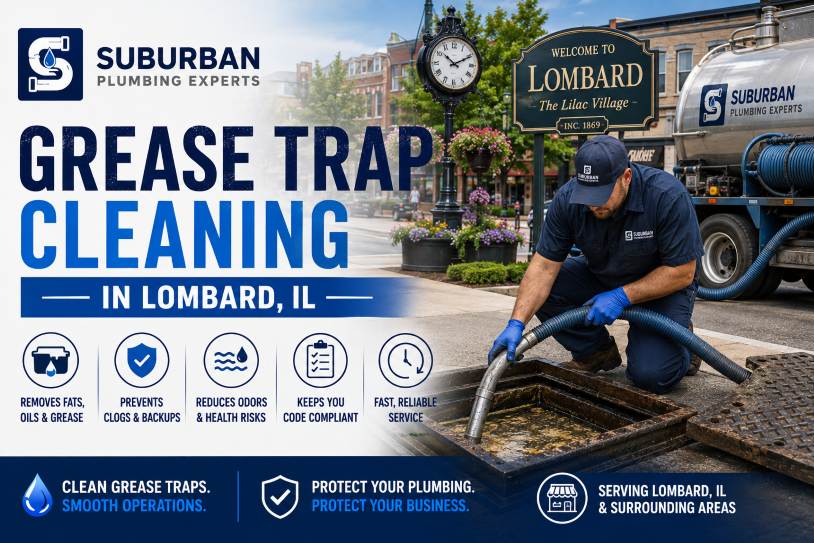
A Grease Trap Doesn’t Fail When It’s Full. It Fails Right Before, When Nobody’s Watching Closely Enough.
A grease interceptor works by slowing wastewater down long enough for fats, oils, and grease to separate and float, while solids sink and water passes through to the sewer. That works perfectly, until the trap fills close enough to capacity that separation stops happening cleanly and FOG starts passing through into your lateral instead of staying contained. According to Wastewater Digest’s reporting on FOG, citing EPA data, grease from restaurants, homes, and industrial sources causes roughly 47 percent of reported sewer blockages nationwide, and once FOG hardens against a pipe wall downstream of a trap that’s overdue for service, clearing it is a considerably bigger job than the pumping that would have prevented it.
What’s Actually Happening Inside the Trap
Wastewater entering a grease interceptor separates into three layers as flow slows: FOG rises and forms a layer at the top, water passes through the middle, and solid food particles settle to the bottom. Capacity isn’t really about the tank filling with liquid, it’s about how much of that top FOG layer and bottom solids layer has accumulated relative to the trap’s total depth. Once that combined layer reaches roughly a quarter of the trap’s depth, industry standard practice calls for pumping, since beyond that point there isn’t enough clear space left for new wastewater to slow down and separate properly. A trap serviced on a fixed calendar schedule without ever checking this ratio can still fail between visits if volume was heavier than usual, which is why measuring actual accumulation matters more than just following a generic timetable.
Why Accessibility Is Part of the Cleaning Problem, Not Just the Installation Problem
Under DuPage County’s food service code, an interior grease interceptor has to be recessed into the floor so the lid sits flush, with a minimum 3-inch inlet and outlet, and it has to remain genuinely accessible without interfering with fixed equipment like the required 3-compartment sink. That requirement exists precisely because a trap that’s technically present but buried under equipment or difficult to reach doesn’t get cleaned properly, or gets skipped entirely when a service visit is rushed. We cover the full installation code in more depth in our Lombard restaurant plumbing code guide, but the maintenance-side implication is worth repeating here: an inaccessible trap is a trap that’s effectively unmaintained no matter how often it’s technically scheduled for service.
Signs a Grease Trap Needs Attention Now, Not at the Next Scheduled Visit
Slow-draining sinks in the kitchen, especially ones that were fine a week ago, mean the trap or the line just past it is losing capacity to handle flow. A sewage or rotten-egg smell near the trap or floor drains means FOG and solids have accumulated enough to start producing gas rather than just sitting contained. Gurgling from floor drains during dishwasher or sink use means air is being displaced past a restriction the trap should be preventing. Visible grease around the trap lid or in nearby floor drains means the trap has already overflowed its practical capacity, not just approached it. Any of these warrants an unscheduled service call rather than waiting for the next date on the calendar.
What Professional Service Actually Involves
A real cleaning goes beyond pumping out liquid. The technician removes and properly disposes of both the FOG layer and the solids layer, scrapes and cleans the interior walls where residue clings even after pumping, and inspects the trap’s condition, baffles, inlet and outlet fittings, lid seal, while it’s fully accessible. Collected waste is transported for disposal or rendering in accordance with environmental regulations rather than simply discharged elsewhere, since dumping collected grease is its own separate violation distinct from an undermaintained trap. A visit that only pumps liquid without addressing the solids layer and interior residue isn’t a complete service, even if it temporarily restores flow.
How Often This Actually Needs to Happen
Frequency depends on kitchen volume, trap size, and how much FOG the specific operation produces, which is why a single blanket number doesn’t fit every establishment. Our guide to grease trap cleaning requirements and frequency across the Chicago area covers this in depth, including how to determine the right interval for your specific kitchen rather than defaulting to a generic quarterly schedule that may not match your actual volume.
What Happens When It’s Skipped
A neglected trap doesn’t fail gracefully. FOG that passes through an overloaded interceptor accumulates in the lateral downstream, exactly the mechanism behind the national blockage statistic above, and by the time symptoms show up as a backup, the fix is no longer a routine pump-out, it’s hydro jetting or worse to clear a line that’s already coated. A backup during service hours also means an unplanned closure, a health inspection complication, and cleanup costs that dwarf what routine maintenance would have cost. Our guide to why regular drain and sewer cleaning matters for Lombard businesses covers the broader liability picture beyond grease traps specifically.
Trap or Interceptor? The Distinction That Changes Everything About Cost and Service
“Grease trap” gets used loosely, but there’s a real, meaningful difference between the two categories of equipment. A grease trap is a small unit, typically 20 to 50 gallons, installed indoors under a sink or near a dishwasher, serving a smaller kitchen or lower-volume operation. A grease interceptor is a much larger unit, often 750 to 1,500 gallons or more, usually installed underground outside the building, and built for higher-volume commercial kitchens. Beyond size, they’re serviced differently: a trap is pumped with smaller equipment and can often be serviced quickly with minimal disruption, while an interceptor requires a vacuum truck and specialized access. If you don’t know which category your establishment has, checking the manifest from your last service or the plumbing schematics filed with your building permit will confirm it, and it’s worth knowing before comparing service quotes, since pricing between the two categories isn’t remotely comparable.
What Service Actually Costs
Pricing varies considerably by equipment type, size, and how neglected the trap was before the visit, but general market ranges hold fairly consistent: a standard indoor grease trap typically runs $175 to $500 per scheduled pump-out, while a larger outdoor interceptor typically runs $250 to $950 depending on gallon capacity and FOG content at time of service. A trap that’s gone significantly past its service interval, with solidified buildup rather than manageable liquid FOG, can run two to three times the standard rate due to the extra labor involved. Emergency, after-hours, or same-day service commonly carries a 50 to 100 percent premium over standard scheduled rates, which is the practical cost difference between staying on a routine schedule and waiting for a problem to force an unscheduled call.
Choosing a Service Provider
Look for a provider that removes and properly disposes of both the FOG and solids layers, not just the liquid, documents the service with a record you can produce if a health inspector asks, and can speak specifically to DuPage County’s installation and accessibility requirements rather than generic advice. A provider familiar with commercial kitchens specifically, not just residential plumbing, will also recognize early warning signs during a routine visit before they become a call between scheduled services. Our Lombard, IL plumbing team handles both trap types and can confirm which category your equipment falls into if you’re not sure.
Frequently Asked Questions
How do I know when my grease trap actually needs pumping?
Industry standard practice calls for service once the combined FOG and solids layer reaches about a quarter of the trap’s total depth, rather than relying solely on a fixed calendar schedule that may not match actual volume.
Is pumping out the liquid enough, or does more need to happen?
A complete service removes both the FOG layer and the solids layer, scrapes interior residue, and inspects the trap’s condition. Pumping liquid alone without addressing solids and residue isn’t a complete cleaning.
Why does trap accessibility matter for cleaning, not just installation?
A trap that’s technically installed but hard to reach tends to get skipped or rushed during service visits, which defeats the purpose of having one in the first place. DuPage County’s code specifically requires traps to remain genuinely accessible for exactly this reason.
What actually causes most sewer blockages tied to FOG?
According to EPA data reported by Wastewater Digest, grease accounts for roughly 47 percent of sewer blockages nationwide, occurring when fats, oils, and grease pass an overloaded trap and harden against pipe walls further downstream.
What happens to the grease that’s pumped out?
It’s transported for proper disposal or rendering under environmental regulations. Improperly disposing of collected grease is a separate violation from simply having an undermaintained trap.
What’s the difference between a grease trap and a grease interceptor?
A grease trap is a small, typically 20 to 50 gallon indoor unit for smaller kitchens. A grease interceptor is a much larger unit, often 750 to 1,500 gallons or more, usually installed underground for higher-volume operations. They’re serviced with different equipment and priced very differently.
How much does grease trap cleaning actually cost?
A standard indoor trap typically runs $175 to $500 per scheduled visit, while a larger outdoor interceptor typically runs $250 to $950 depending on size and condition. A significantly neglected trap can cost two to three times the standard rate, and emergency service commonly adds a 50 to 100 percent premium.
Licensed Grease Trap Cleaning for Lombard, IL
Suburban Plumbing Experts has served Lombard and the surrounding suburbs since 1978. We hold Illinois Plumbing License #055-044116 and Sewer License #2565, and every technician on our team is a trained, background-checked employee, not a subcontractor. Our grease trap cleaning service handles full FOG and solids removal, interior cleaning, and documented service records for your compliance file.
Ready to Schedule Grease Trap Service in Lombard?
Licensed, insured, and serving Lombard’s commercial kitchens since 1978. Complete FOG and solids removal, documented for your records, on a schedule that actually fits your kitchen’s volume.
Lombard: 630-749-9057 | Emergency: 708-518-7765 | Open 24/7
—
Suburban Plumbing Sewer Line & Drain Cleaning Experts
Licensed & Insured | Open 24 Hours | Serving Lombard & the Suburbs Since 1978
📞 Lombard: 630-749-9057 | 🚨 Emergency: 708-518-7765